Showing posts with label Simeon. Show all posts

Saturday, April 12, 2025

The Continuing Conquest of Canaan

Continuing a chronological Bible study:

(Judges 1:1) Now after the death of Joshua, it came to pass that the children of Israel asked the Lord, saying, "Who shall go up for us against the Canaanites first, to fight against them?"

Joshua had died in the last chapter and post.  As he left no successor, no commander in chief, the people inquired of the Lord, either by prayer or the Urim and Thummim, which were some sort of objects worn by the high priest that were used to determine God's will, about who would go first to fight the Canaanites that remained in their land.

(2) And the Lord said, "Judah shall go up; behold, I have delivered the land into his hand."

The Lord said that the tribe of Judah should go first against the Canaanites that remained in their land.  He said He had already delivered that Canaanite land into their hand.

(3) And Judah said to Simeon his brother, "Come up with me into my lot that we may fight against the Canaanites, and I likewise will go with you into your lot." So Simeon went with him.

As the tribe of Simeon lay in the middle of the tribe of Judah, Judah's tribe asked the tribe of Simeon to go with them to fight the Canaanites, and in turn, Judah would go with Simeon when they were called to fight.  The tribe of Simeon agreed and went with the tribe of Judah.

(4) And Judah went up, and the Lord delivered the Canaanites and the Perizzites into their hand, and they slew of them in Bezek ten thousand men.

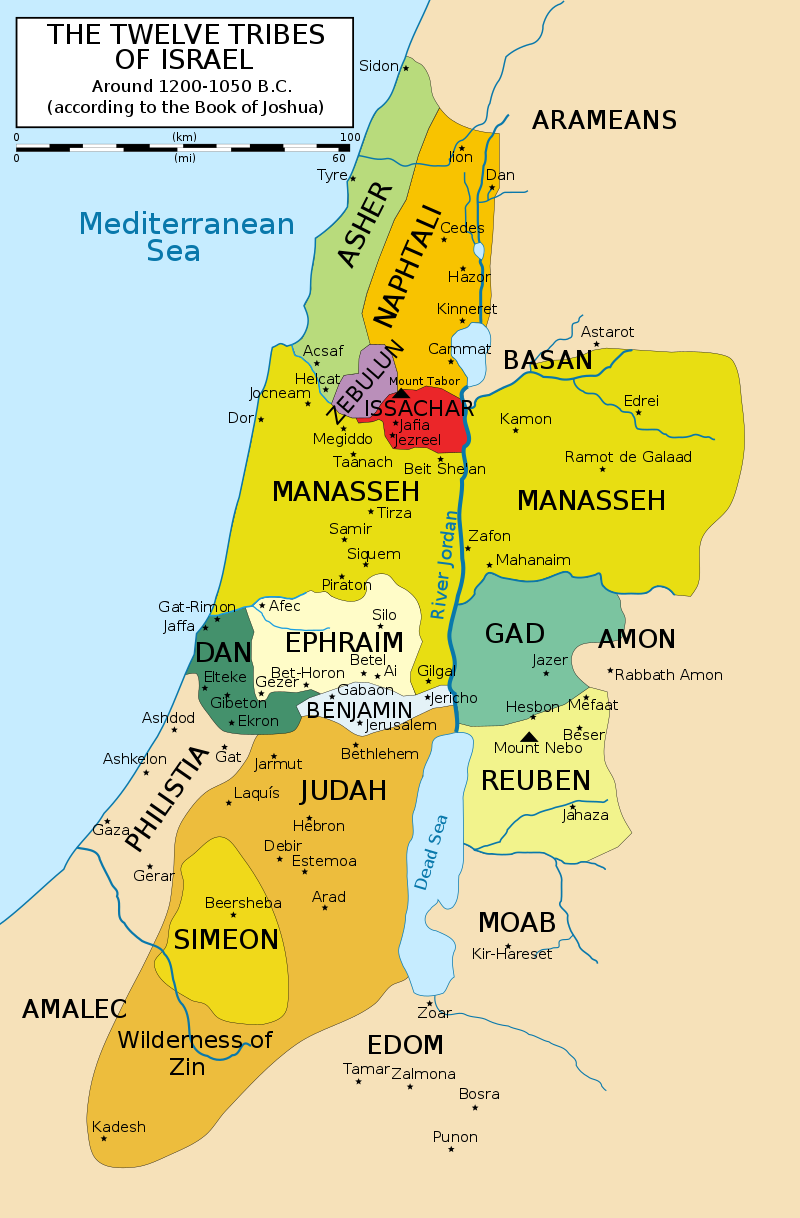
Judah with Simeon went up against the Canaanites and the Perizzites.  The term "Canaanites" often referred to the seven nations that occupied Canaan as a whole, but there was one nation of Canaanites, and it, as well as the nation of Perizzites, were delivered into Israel's hand by the Lord.  The Israelites killed ten thousand men in and around the area of Bezek which was just west of Jerusalem.  This section of a map borrowed from Psalms to God shows the tribes of Judah and Simeon and where they went up to fight in the northeastern part of Judah:


(5) And they found Adoni-Bezek in Bezek, and they fought against him, and they slew the Canaanites and the Perizzites. (6) But Adoni-Bezek fled, and they pursued after him and caught him and cut off his thumbs and his big toes.

The Israelites found the king of Bezek there and fought against him.  They slew the Canaanites and the Perizzites, but King Adoni-Bezek fled from them.  They pursued him and eventually caught him, and they cut off his thumbs and his big toes.  This would have disabled him from fighting as he would not be able to hold a weapon, and he would no longer be able to run.  It was unusual for the Israelites to inflict such torture and punishment, but it may have been God's will as the king himself recognized:

(7) And Adoni-Bezek said, "Seventy kings with their thumbs and big toes cut off gathered scraps under my table; as I have done, so God has requited me." And they brought him to Jerusalem, and there he died.

The king confessed that he had cut off the thumbs and big toes of seventy kings who were then left to gather scraps from under his table.  He said that as he had done so cruelly to others, God had repaid him by doing the same to him.  It's interesting that a pagan king would realize that God had done that to him, so it may be that he spoke under the influence of God's Holy Spirit.  The Israelites brought him to Jerusalem where he died.

(8) Now the children of Judah had fought against Jerusalem and had taken it and struck it with the edge of the sword and set the city on fire.

Judah had previously conquered Jerusalem which was how they were able to take the king there.  During the time of Joshua, the Israelites had not yet been able to drive the Jebusites out of Jerusalem (Joshua 15:63), but apparently Judah had been able to do it.

(9) And afterward the children of Judah went down to fight against the Canaanites who dwelt in the mountains, and in the south, and in the valley.

After the death of King Adoni-Bezek, the Israelites went southward to fight against the Canaanites who still dwelt in other areas of Judah, in the mountains, in the valley, and in the southern part of Judah.

(10) And Judah went against the Canaanites who dwelt in Hebron (now the name of Hebron before was Kirjath Arba), and they killed Sheshai, and Ahiman, and Talmai.

The tribe of Judah went against the Canaanites who still dwelt in Hebron.  The city of Hebron was before named Kirjath Arba for Arba, a chief among the Anakims who were giants in the city.  Caleb had previously driven out the giants, Sheshai, Ahiman, and Talmai (Joshua 15:14), but it seems they must have regained at least parts of the city.  This time the tribe of Judah killed the three giants.

(11) And from there he went against the inhabitants of Debir, and the name of Debir before was Kirjath Sepher.

This and what follows in the next few verses appears to be a retelling of Joshua 15:15-19.  It couldn't have happened after Joshua died because Joshua wrote about it.  Since Jewish tradition considers the prophet Samuel to be the author of Judges, and he would have written this about 300 years after the fact, it may be reasonable to believe he might not have gotten the chronology exactly right.  However, here Samuel was writing about the lands that were conquered after Joshua's initial conquest, and the conquest of Hebron did happen after that.  It was after the tribe of Judah had been given their allotment that Caleb (of Judah) went against the inhabitants of Debir.  Before it was renamed Debir the city was called Kirjath Sepher.

(12) And Caleb said, "He who strikes Kirjath Sepher and takes it, to him I will give Achsah my daughter to wife."

Caleb had said at the time that whoever was able to take Kirjath Sepher would be given his daughter Achsah in marriage (Joshua 15:16).

(13) And Othniel the son of Kenaz, Caleb's younger brother, took it, and he gave him Achsah his daughter to wife.

It was Caleb's nephew Othniel, the son of Kenaz who was Caleb's younger brother, who took Kirjath Sepher, and Caleb indeed gave him his daughter Achsah in marriage.

(14) And it came to pass when she came, that she moved him to ask of her father a field, and she dismounted, and Caleb said to her, "What do you want?" (15) And she said to him, "Give me a blessing, for you have given me a south land; give me also springs of water." And Caleb gave her the upper springs and the lower springs.

When Achsah came to Othniel on her donkey, she persuaded him to ask for a field from her father.  She dismounted her donkey, and Caleb asked her what she wanted.  She asked for an extra blessing.  He had already given her a south land, which might indicate a dry land, so she now asked for springs of water.  Caleb gave her upper springs and lower springs.

The fact that this account was written twice made me look harder at the reason why it was so important.  I read many commentaries and understood what others had found.  It was an illustration of how we can boldly approach our Father in heaven with our requests.  Imagine that!  The holy God of the universe wants to have a father/child relationship with us sinful creatures, and He urges us to come to Him with our petitions.  However, we must remember that the only way we unclean sinners are able to approach Him is because of the blood sacrifice of Jesus Christ that purifies us when we accept His gift.  Jesus said in Matthew 7:11, “If you then, being evil, know how to give good gifts to your children, how much more will your Father who is in heaven give good things to those who ask Him?"  However, we are to use wisdom and discernment as Achsah did.  She didn't ask for a gold-plated castle, but for springs for her dry land to make it more fruitful for her family.  James said in James 4:3, "You ask and do not receive, because you ask amiss, that you may spend it on your pleasures."  Our Father in heaven wants to bless us with the things that will help us grow and be more effective servants for His church, not with worthless trinkets.  He knows what is best for us, but He invites us to come confidently to Him with our requests, having faith that He will give us what we need, but perhaps not always what we want.

(16) And the children of the Kenite, Moses's father-in-law, went up out of the city of palm trees with the children of Judah into the wilderness of Judah, which is in the south of Arad, and they went and dwelt among the people.

Moses's father-in-law was Jethro, a Kenite.  There is no consensus for whom the Kenites were named, but they were an ancient people living in Canaan in the time of Abraham (Genesis 15:19).  They were among ten tribes whose land God said He was giving to Abram.  However, during the time of Moses and Joshua, only seven nations were named as occupying Canaan.  The Kenites, the Kenizzites, and the Kadmonites, had either become extinct, moved out of Canaan, or mixed with other nations.  Jethro's daughter Zipporah married Moses.  Jethro and his son Hobab had joined with Moses, and Hobab's descendants lived among the Israelites in the land of Canaan; they were the Kenites.  The city of palm trees was Jericho (Deuteronomy 34:3).  The Kenites had apparently resided in Jericho, but they now left it to go with the tribe of Judah and settled in the wilderness of Judah which was south of Arad, which would put them east of the tribe of Simeon according to the map above.  According to Albert Barnes in his Notes on the Bible, the rabbinical story was that Jericho had been given to Hobab.  Joshua had cursed that city and any person who rose up to rebuild it (Joshua 6:26), so apparently the descendants of Hobab had determined to leave that cursed city and dwell among the tribe of Judah in the wilderness.

(17) And Judah went with Simeon his brother, and they slew the Canaanites that inhabited Zephath and utterly destroyed it. And the name of the city was called Hormah.

As the tribe of Judah had promised, they went with the tribe of Simeon and killed the Canaanites who inhabited a city called Zephath in eastern Simeon, and they renamed it Hormah.

(18) Also Judah took Gaza with its territory, and Ashkelon with its territory, and Ekron with its territory.

Judah also took Gaza and Ashkelon on the Mediterranean coast and Ekron in the north.  The Biblical scholars I study wrote that the cities were later retaken and possessed by the Philistines.  John Wesley in his Notes on the Bible, observed that the scripture did not say they slew the people as it did in the verse before it.  The people, being spared, regained their control of the cities.

(19) And the Lord was with Judah, and he drove out the mountaineers, but could not drive out the inhabitants of the valley because they had chariots of iron.

The Lord was with Judah, and the tribe was able to drive out the inhabitants of the mountainous region of Judah.  However, it appears their faith failed when they feared the chariots of iron, and they were unable to drive out the inhabitants of the valley.  The Lord was with them, and there was no reason to believe that He wouldn't be with them to drive out those people, but it appears they didn't even try because of their fear.

(20) And they gave Hebron to Caleb, as Moses said, and he expelled from there the three sons of Anak.
 
Once again, the author of this book wrote in this chapter about the areas that had been left unconquered after Joshua's conquest. He referred again to Hebron which had been given to Caleb.  Caleb had driven out the three giants, Sheshai, Ahiman, and Talmai, whom Judah later killed (v.10).

(21) And the children of Benjamin did not drive out the Jebusites that inhabited Jerusalem, but the Jebusites dwell with the children of Benjamin in Jerusalem to this day.

The tribe of Benjamin did not drive out the Jebusites that inhabited Jerusalem.  Although the tribe of Judah had previously taken the city (v. 8), it appears it was reinhabited by the Jebusites.  They remained dwelling with the tribe of Benjamin to the day the author, probably Samuel, wrote this.  John Gill, in his Exposition of the Bible, wrote that Samuel wrote the book of Judges before the reign of David who would dispossess the Jebusites.

(22) And the house of Joseph, they also went up against Bethel, and the Lord was with them.

The house of Joseph, Ephraim and Manasseh, went up against Bethel in the southern portion of Ephraim.  The inhabitants of Bethel had been driven away from the city by Joshua (Joshua 8:17), but apparently the city had become reinhabited by the Canaanites.  The Lord was with Ephraim and Manasseh as they went against the inhabitants of Bethel.  This map borrowed from Precept Austin, shows all of the tribes, and Bethel is seen in southern Ephraim:


(23) And the house of Joseph sent to descry Bethel. (Now the name of the city before was Luz.)

The tribes of Ephraim and Manasseh sent spies into Bethel to examine the conditions.  The name of Bethel was formerly Luz.

(24) And the spies saw a man come forth out of the city, and they said to him, "Show us, we pray you, the entrance into the city, and we will show you mercy."

The spies saw a man coming out of Bethel.  They asked him to tell them how to get into the city, and they in turn would show him mercy.

(25) And when he showed them the entrance into the city, they struck the city with the edge of the sword, but they let the man and all of his family go.

The man showed the spies a way into the city, and the tribes of Joseph struck the city and killed its inhabitants, but they let the man and his entire family go free.

(26) And the man went into the land of the Hittites and built a city and called its name Luz, which is its name to this day.

The man and his family went into the land of the Hittites where the Hittites apparently dwelt after being expelled from Canaan.  He built a city and called it Luz after the city he had been forced to leave.  Luz was still there at the writing of this book, although it was no longer there at the writing of the Biblical scholars I study, as they didn't know where this city of Luz would have been.

(27) Neither did Manasseh drive out Beth Shean and her towns, nor Taanach and her towns, nor the inhabitants of Dor and her towns, nor the inhabitants of Ibleam and her towns, nor the inhabitants of Megiddo and her towns, but the Canaanites would dwell in that land.

Beth Shean, Taanach, Ibleam, Dor, and Megiddo, were cities given to the half tribe of Manasseh west of the Jordan River out of the lots of Issachar and Asher (Joshua 17:11).  Apparently, they never made any attempt to drive out the inhabitants of the cities and inhabit them as their cities, so the Canaanites dwelt in their land.  The map above shows most of these cities in northern West Manasseh.

(28) And it came to pass, when Israel was strong, that they put the Canaanites to tribute and did not utterly drive them out.

When Israel became strong, they still did not drive out the Canaanites but made them tributaries under them.

(29) Neither did Ephraim drive out the Canaanites that dwelt in Gezer, but the Canaanites dwelt in Gezer among them.

Neither did Ephraim, the other son of Joseph, drive out Canaanites in his land, specifically Gezer, and the Canaanites lived in Gezer among them.  

(30) Neither did Zebulun drive out the inhabitants of Kitron nor the inhabitants of Nahalol, but the Canaanites dwelt among them and became tributaries.

Zebulun did not drive out the inhabitants of Kitron or Nahalol, and the Canaanites there became tributaries.

(31) Neither did Asher drive out the inhabitants of Accho, nor the inhabitants of Zidon, nor of Ahlab, nor of Achzib, nor of Helbah, nor of Aphik, nor of Rehob, (32) But the Asherites dwelt among the Canaanites, the inhabitants of the land, for they did not drive them out.

The tribe of Asher appears especially slothful in driving the Canaanites out of their land as God had instructed.  Out of 22 cities they had been given (Joshua 19:30), they failed to drive the enemy out of seven of them, about one third of their allotted cities.

(33) Neither did Naphtali drive out the inhabitants of Beth Shemesh nor the inhabitants of Beth Anath, but he dwelt among the Canaanites, the inhabitants of the land; nevertheless, the inhabitants of Beth Shemesh and Beth Anath became tributaries to them.

The tribe of Naphtali failed to drive out the Canaanites from Beth Shemesh and Beth Anath, so they dwelt among the Canaanites, but they did make the Canaanites in those cities tributaries to them.

(34) And the Amorites forced the children of Dan into the mountain, for they would not allow them to come down to the valley.

The Amorites in the tribe of Dan's territory forced their tribe into the mountains and would not allow them to go down to the valley.  There must have been a serious lack of faith in God to drive out their enemies that their enemies were able to drive them from their land.

(35) But the Amorites would dwell in Mount Heres in Aijalon, and in Shaalbim, yet the hand of the house of Joseph prevailed so that they became tributaries.

It appears that the Amorites even dwelt among Dan in the mountains.  However, the house of Joseph helped its brother tribe, as Ephraim and Manasseh bordered Dan.  They at least made the Amorites tributaries in Mount Heres in Aijalon and in Shaalbim, however it doesn't appear that they were ever able to make tributaries of the Amorites in the valley.

(36) And the coast of the Amorites was from the going up to Akrabbim, from the rock and upward.

Akrabbim means "scorpion," so this is believed to be the Scorpion Pass, a pass between the south end of the Dead Sea and Zin.  "The rock" is believed to be Petra which was located east of that region on the east side of the Dead Sea.  Looking at the map above, I believe the territory of the Amorites at this time was from the eastern edge of the Wilderness of Zin, eastward below the Dead Sea, and upward on the east side of the Dead Sea, the regions of Edom and Moab.  The Amorites were said to be the most powerful people among the Canaanites and would prove to be very troublesome to Israel.

The Israelites were very careless with their duty to drive out all the Canaanites from their land.  Whether it was laziness or fear and a lack of faith, they did not do as their Lord God had told them to do.  Some of the cities where the Israelites failed to remove the Canaanites were cities that had been given to the Levites, including Taanach, Gezer, Nahalal, and Rehob, which may have been the reason they were lax in driving out the Canaanites.  However, you would think they would take better care of their priests and ministers who served their Lord God.  There may have been some covetousness on Israel's part as well, as they decided making the Canaanites pay tribute was more advantageous to them than driving them out.  However, God's way is always the best way, and by disobeying Him in their total conquest of Canaan, they brought troubles on themselves.  However, this may have been by divine design.  The Israelites had proved to be a people lacking faith and easily drawn away from their Lord.  Perhaps they needed adversity to keep them in check.  It's most often in adversity that people turn toward God.  It's not that God purposely designed things the way they were in order to punish His people.  He just allowed them to do or not do according to their own desires, letting them learn great lessons as He brought them through their adversities.

Friday, March 21, 2025

Cities Allotted to Levi

Continuing a chronological Bible study:

(Joshua 21:1) Then came near the heads of the fathers of the Levites to Eleazar the priest and to Joshua the son of Nun and to the heads of the fathers of the tribes of the children of Israel.

In the past chapters and posts, Eleazar the high priest and Joshua, along with heads of the tribes, had divided the land and given inheritance to each of the tribes.  Then the people appointed cities of refuge among their tribes.  Now the heads of the Levites came to Eleazar, and Joshua, and those heads of the other tribes.

(2) And they spoke to them at Shiloh in the land of Canaan, saying, "The Lord commanded by the hand of Moses to give us cities to dwell in, with the suburbs of them for our cattle."

The Levites reminded them that the Lord had commanded through Moses that they should have cities and suburbs within the other tribes, to live in and keep livestock.  The Levites had not been given a lot of their own as had been given the other tribes, because as the priests, God was to be their inheritance.  However, God did provide for them cities in which to dwell within the other tribes (Numbers 35:2).

(3) And the children of Israel gave to the Levites out of their inheritance at the commandment of the Lord, these cities and their suburbs.

The Israelites indeed gave to the Levites cities out of their inheritance in which to dwell, descriptions of which follow.

(4) And the lot came out for the families of the Kohathites, and the children of Aaron the priest of the Levites had by lot out of the tribe of Judah, and out of the tribe of Simeon, and out of the tribe of Benjamin, thirteen cities.

The first lot came out for the Kohathites, descendants of Kohath, a son of Levi.  The children of Aaron the priest, son of Amram who was a son of Kohath, were the only priests of the Levites.  The other Levites assisted the priests and acted as ministers for the people.  The children of Aaron, the priests, were given cities out of the tribes of Judah, Simeon, and Benjamin, thirteen cities in all.

(5) And the rest of the children of Kohath had by lot out of the families of the tribe of Ephraim, and out of the tribe of Dan, and out of the half tribe of Manasseh west of the Jordan River, ten cities.

The rest of the Kohathites, Levites, but not priests, had their cities assigned by lot within the tribes of Ephraim, Dan, and the half tribe of Manasseh, ten cities in all.

(6) And the children of Gershon had by lot out of the families of the tribe of Issachar, and out of the tribe of Asher, and out of the tribe of Naphtali, and out of the half tribe of Manasseh in Bashan, thirteen cities.

The children of Gershon, another son of Levi, had cities assigned by lot within the tribes of Issachar, Asher, Naphtali, and the half tribe of Manasseh east of the Jordan River.

(7) The children of Merari by their families, had out of the tribe of Reuben, and out of the tribe of Gad, and out of the tribe of Zebulun, twelve cities.

The children of Merari, the third son of Levi, were given cities within the tribes of Reuben, Gad, and Zebulun, twelve cities in all.  All the tribes were to give cities to the Levites as a sort of tithe.  They were to provide for the priests and the ministers who attended the priests and ministered to the people within each tribe.  Although it was a benefit to the other tribes to have Levite ministers living among them, it was the fulfillment of a curse made by Jacob, that because of their anger and cruel wrath, they would be scattered throughout Israel (Genesis 49:7).  A total of forty-eight cities were given to the Levites according to the commandment of the Lord (Numbers 35:7).

(8) And the children of Israel gave by lot to the Levites these cities with their suburbs, as the Lord commanded by the hand of Moses.

The Israelites gave by lot cities along with their suburbs within each of their tribes, just as the Lord had commanded.

(9) And they gave out of the tribe of the children of Judah, and out of the tribe of the children of Simeon, these cities which are mentioned by name, (10) Which the children of Aaron of the families of the Kohathites of the children of Levi had, for theirs was the first lot. (11) And they gave them the city of Arba the father of Anak, which is Hebron, in the hills of Judah with the suburbs of it round about it.

The Israelites gave the children of Aaron who were of the Kohathites, cities, names which follow in the text, out of the tribes of Judah and Simeon.  First, they gave them the city and suburbs of Kirjath Arba, "city of Arba," Arba being a son of the Anakims, a race of giants among whom Arba was chief.  It was renamed Hebron (Joshua 14:15) and it lay in the hill country of Judah.  

(12) But the fields of the city, and its villages, they gave to Caleb the son of Jephunneh for his possession.

However, the fields and villages surrounding Hebron belonged to Caleb (Joshua 14:13).  He had been given Hebron, but as with all the tribes, he gave a city in which the Levites could dwell.  According to Biblical scholars, the suburbs of the Levitical cities were generally 2000 cubits, about 1000 yards.  Anything beyond that belonged to the tribe that was giving the city for Levitical use.

(13) Thus they gave to the children of Aaron the priest Hebron with her suburbs, a city of refuge for the slayer, and Libnah and her suburbs.

The Israelites gave the children of Aaron, the priests, the city of Hebron which was also a city of refuge (Joshua 20:7) and the city of Libnah and their suburbs.

(14) And Jattir with her suburbs, and Eshtemoa with her suburbs, (15) And Holon with her suburbs, and Debir with her suburbs, (16) And Ain with her suburbs, and Juttah with her suburbs, Beth Shemesh with her suburbs, nine cities out of those two tribes.

The priests also had the cities of Jattir, Eshtemoa, Holon, Debir, Ain, Juttah, and Beth Shemesh, in which to live and dwell.  They had a total of nine cities within the tribes of Judah and Simeon, Simeon being within Judah.

(17) And out of the tribe of Benjamin, Gibeon with her suburbs, Geba with her suburbs, (18) Anathoth with her suburbs, and Almon with her suburbs; four cities.

Out of the tribe of Benjamin, the Levitical priests had the cities of Gibeon, Geba, Anathoth, and Almon, four cities and their suburbs.  Anathoth and Almon were not listed among the cities within Benjamin's tribe in chapter 18 and must have been a couple of the smaller villages that were said to be part of the larger cities.  The cities within Benjamin were described as cities with their villages rather than cities with their suburbs.

(19) All the cities of the children of Aaron, the priests, were thirteen cities with their suburbs.

All the cities of the children of Aaron, the priests, totaled thirteen cities with their suburbs.

(20) And the families of the children of Kohath, the Levites which remained of the children of Kohath, even they had the cities of their lot out of the tribe of Ephraim.

The rest of the Kohathites, those who were not of Aaron and the priests, also had cities, theirs from the tribe of Ephraim.

(21) For they gave them Shechem with her suburbs in mount Ephraim, a city of refuge for the slayer, and Gezer with her suburbs.

The rest of the Kohathites were given the cities of Shechem, also a city of refuge (Joshua 20:7), and Gezer.

(22) And Kibzaim with her suburbs, and Beth Horon with her suburbs, four cities.

The Kohathites were also given the cities of Kibzaim and Beth Horon in the tribe of Ephraim.

(23) And out of the tribe of Dan, Eltekeh with her suburbs, Gibbethon with her suburbs, (24) Aijalon with her suburbs, Gath Rimmon with her suburbs, four cities.

Out of the tribe of Dan, the Kohathites were given the cities of Eltekeh, Gibbethon, Aijalon, and Gath Rimmon, a total of four cities.

(25) And out of the half tribe of Manasseh, Tanach with her suburbs and Gath Rimmon with her suburbs, two cities.

Two cities were given out of the half tribe of Manasseh on the west side of the Jordan River, Tanach and Gath Rimmon, which appears to be a different city than the one in the tribe of Dan.

(26) All the cities were ten with their suburbs for the families of the children of Kohath who remained.

The Kohathites who were not descendants of Aaron, and therefore not priests, had a total of ten cities within the tribes of Ephraim, Dan, and West Manasseh.

(27) And to the children of Gershon of the families of the Levites, out of the half tribe of Manasseh, Golan in Bashan with her suburbs, a city of refuge for the slayer, and Be Eshterah with her suburbs, two cities.

The Levites who were children of Gershon received the city of Golan, which was also a city of refuge, and Be Eshterah, with their suburbs, out of the half tribe of Manasseh on the eastern side of the Jordan River.

(28) And out of the tribe of Issachar, Kishon with her suburbs, Daberath with her suburbs, (29) Jarmuth with her suburbs, En Gannim with her suburbs, four cities.

The Gershonites were also given four cities out of the tribe of Issachar, Kishon, Daberath, Jarmuth, and En Gannim, with their suburbs.

(30) And out of the tribe of Asher, Mishal with her suburbs, Abdon with her suburbs, (31) Helkath with her suburbs, and Rehob with her suburbs, four cities.

They were also given four cities out of the tribe of Asher, Mishal, Abdon, Helkath, and Rehob, with their suburbs.

(32) And out of the tribe of Naphtali, Kedesh in Galilee with her suburbs, a city of refuge for the slayer, and Hammoth Dor with her suburbs, and Kartan with her suburbs, three cities.

They were given three cities out of the tribe of Naphtali, Galilee, also a city of refuge, Hammoth Dor, and Kartan.

(33) All the cities of the Gershonites according to their families were thirteen cities with their suburbs.

The total number of cities given to the Levitical tribe of the Gershonites was thirteen.

(34) And to the families of the children of Merari, the rest of the Levites, out of the tribe of Zebulun, Jokneam with her suburbs, and Kartah with her suburbs, (35) Dimnah with her suburbs, Nahalal with her suburbs, four cities.

The rest of the Levites, children of Merari, were given four cities out of the tribe of Zebulun, Jokneam, Kartah, Dimnah, and Nahalal, with their suburbs.

(36) And out of the tribe of Reuben, Bezer with her suburbs, and Jahaz with her suburbs, (37) Kedemoth with her suburbs, and Mephaath with her suburbs, four cities.

They were also given four cities out of the tribe of Reuben, Bezer, Jahaz, Kedemoth, and Mephaath.

(38) And out of the tribe of Gad, Ramoth in Gilead with her suburbs, a city of refuge for the slayer, and Mahanaim with her suburbs, (39) Heshbon with her suburbs, Jazer with her suburbs, four cities in all.

The children of Merari also received four cities out of the tribe of Gad, Ramoth, also a city of refuge, Mahanaim, Heshbon, and Jazer, with their suburbs.

(40) So all the cities for the children of Merari by their families, which were remaining of the families of the Levites, were their lot, twelve cities.

The children of Merari were given twelve cities in all.

(41) All the cities of the Levites within the possession of the children of Israel were forty-eight cities with their suburbs. (42) These cities were every one with their suburbs round about them, thus all these cities.

All the cities given to the Levites within all the other tribes of Israel numbered forty-eight, just as God had commanded (Numbers 35:7).  They were also given the suburbs, said to be about 2000 cubits, or about 1000 yards, round about the cities so that they would have space for livestock and provisions.

(43) And the Lord gave to Israel all the land which he swore to give to their fathers, and they possessed it and dwelt in it.

Thus the Lord had given to Israel all the land of Canaan as He had sworn to their fathers.  All the tribes having received their lots of inheritance, they possessed their land and dwelt in it.

(44) And the Lord gave them rest round about according to all that He swore to their fathers, and there stood not a man of all their enemies before them; the Lord delivered all their enemies into their hand.

At that time, the Lord gave Israel peace and rest in their land flowing with milk and honey as He had sworn to their forefathers.  Finally, they had settled into their promised land, that land promised so many years before, and there were no enemies before them, as the Lord had delivered all their enemies into their hand.

(45) There failed not one of any good thing which the Lord had spoken to the house of Israel; all came to pass.

Every good thing the Lord had promised Israel came to pass.  God's promises were exactly fulfilled down to the prophetic blessings and curses that told where some of the tribes might live.  "Your word is true from the beginning, and every one of Your righteous judgments endures forever" (Psalm 119:160).  Every word of promise God made from the beginning of the world is true and has never failed.  If anything has not yet been fulfilled, you can be sure it will be in the future.  The Lord is not slack concerning His promises, but is ever-patient, giving us all time to come to repentance (2 Peter 3:9).

Saturday, March 15, 2025

The Inheritance of the Tribes of Simeon and Zebulun

The past few chapters and posts have been describing each of the tribe's inheritance that was given to them by lot.  Continuing with that chronological Bible study:

(Joshua 19:1) And the second lot came forth to Simeon, for the tribe of the children of Simeon according to their families, and their inheritance was within the inheritance of the children of Judah.

The second of the seven remaining lots that were cast after a break of some time went to Simeon.  It's interesting that a lot would be made within another lot, but Simeon's inheritance was within the inheritance of Judah.  This fulfilled prophecy of Jacob when he cursed Simeon's anger and speaking the words of the Lord, said He would divide and scatter Simeon in Israel.  It may have been decided that Judah's inheritance was much larger than its tribe needed, but the prophecy of God would be fulfilled whatever the reasoning.

(2) And they had in their inheritance Beersheba, or Sheba, and Moladah,

Simeon had in their inheritance the cities of Beersheba and Moladah, cities within the tribe of Judah (Joshua 15:26, 28).  I found this map of Simeon's tribe within the tribe of Judah at If I Walked With Jesus:


(3) And Hazar Shual, and Balah, and Ezem, (4) And Eltolad, and Bethul, and Hormah, (5) And Ziklag, and Beth Marcaboth, and Hazar Susah, (6) And Beth Lebaoth, and Sharuhen, thirteen cities and their villages.

They also had these cities, thirteen cities with their villages, which appear to be in the north and east of the territory of Simeon.

(7) Ain, Remmon, and Ether, and Ashan, four cities and their villages, (8) And all the villages round about these cities to Baalath Beer, Ramath of the south. This is the inheritance of the tribe of the children of Simeon according to their families.

Four more cities and their villages were within the tribe of Simeon, and I would have assumed they were in the south of Simeon by the description above.  However, the following copy of an 1840 map borrowed from Antico Gallery shows all these cities, but interestingly they are in different locations from the first map.  This shows the difficulty of identifying the exact locations of ancient cities and explains why sometimes the scriptures detailing these places don't make sense.  Places move or they don't exist anymore.  But these are details which don't affect the big picture in a Bible study.  We know all the cities mentioned above were within the tribe of Simeon at the time it was allotted to Simeon, as well as all the smaller villages around them.


(9) Out of the portion of the children of Judah was the inheritance of the children of Simeon, for the part of the children of Judah was too much for them; therefore the children of Simeon had their inheritance within the inheritance of them.

As speculated above, indeed, the tribe of Simeon was placed within the tribe of Judah because Judah had much more land and many more cities than they could fill, and Simeon, being a small tribe, could easily exist within the area given them.

(10) And the third lot came up for the children of Zebulun according to their families, and the border of their inheritance was to Sarid.

The third lot of the seven remaining lots came up for the tribe of Zebulun.  This map borrowed from If I Walked With Jesus shows his small lot with its southern border near Sarid.


And this map used before from iBiblemaps.com shows the location of the tribe of Zebulun in relation to the other tribes:


(11) And their border went up toward the sea and Maralah and reached to Dabbasheth and reached to the river that is before Jokneam.

From Sarid in the south the border continued westward toward the Mediterranean Sea to Dabbasheth and a river that was before Jokneam, which appears to be the Kishon River in the map above.

(12) And turned from Sarid eastward toward the sunrising to the border of Chisloth Tabor and then goes out to Daberath and goes up to Japhia.

From Sarid in the south the border went eastward toward the Sea of Galilee to Daberath and a little beyond.  Zebulun was nestled between two great seas which fulfilled Jacob's prophecy that Zebulun would dwell by the sea and be a haven of ships (Genesis 49:13).

(13) And from there passed on along on the east to Gath Hepher, to Eth Kazin and goes out to Rimmon to Neah.

From the southwest corner the border went northward to Rimmon.

(14) And the border compassed it on the north side to Hannathon, and the outgoings of it are in the valley of Jiphthah El.

The language is difficult, but from the map, it appears that the northern border went around in the north and came back to Hannathon.  The original word that was translated as "compassed" was "sabab" and meant "revolve, surround," so the meaning seems to me that the northern portion of their land went in a big circle northward from Rimmon and back to Hannathon.

(15) And Kattath, and Nahallal, and Shimron, and Idalah, and Bethlehem, twelve cities with their villages.

These cities were included within the tribe of Zebulun.  Bethlehem within Zebulun is not the same place as Bethlehem in Judah where Christ was born.  Twelve cities with their villages were within the lot of Zebulun.  Since only five are mentioned in verse 15, as well as the fact that the western border was not described, some Biblical scholars have been led to think there may have been some text lost from the original manuscripts.

(16) This is the inheritance of the children of Zebulun according to their families, these cities with their villages.

Thus ended the description of the lot that fell to Zebulun.

Saturday, July 27, 2024

The Curses to be Pronounced on Mount Ebal

Continuing a chronological Bible study:

(Deuteronomy 27:1) And Moses with the elders of Israel commanded the people, saying, "Keep all the commandments which I command you this day."

In the last chapter and post, Moses had made an end to a long recitation of the laws of God.  Now he and the elders of Israel, rulers of each tribe, joined together in an exhortation to the people to observe and obey all the commandments which he had given them.

(2) "And it shall be on the day when you shall pass over Jordan to the land which the Lord your God gives you, that you shall set up great stones and plaster them with plaster."

Moses told the people that when they had crossed over the Jordan River into the land the Lord was giving to them, they were to set up some large stones and plaster them.  Whether the plaster was over the surface of the stones so that they could be written upon, or whether it was to cement the stones together to make a large lasting monument, or maybe both, we are not told exactly.

(3) "And you shall write upon them all the words of this law, when you are passed over, that you may go into the land the Lord your God gives you, a land that flows with milk and honey, as the Lord God of your fathers has promised you."

The people were to write the laws God had given them on the stones when they had crossed over the Jordan into their land.  Of course, it may have been only a summation of the laws, as they were very wordy, and perhaps only the Ten Commandments.  The way Moses spoke, it sounds as if it was a condition of their entering into the land.  The land had been promised to their forefathers and was now being given to them on the condition that they held up to their side of the covenant, remembering and obeying God's laws.  Moses constantly reminded the people that their Lord was giving them this gift of a very good and fruitful land, and the stones would display a condition and reminder to the people to obey God's laws.

(4) "Therefore it shall be when you have gone over Jordan, you shall set up these stones, which I command you this day, on Mount Ebal, and you shall plaster them with plaster."

Moses repeated his instructions that after they had crossed over Jordan into their land, they were to set up and plaster the stones, and Moses told them specifically where to set them up, on Mount Ebal.  

(5) "And there shall you build an altar to the Lord your God, an altar of stones; you shall not lift up iron upon them. (6) You shall build the altar of the Lord your God of whole stones, and you shall offer burnt offerings on it to the Lord your God."

There they were also to build an altar to the Lord.  It was to be an altar of whole stones and no iron tool was to be used on the stones.  There on the altar, the people would offer burnt offerings to the Lord.

(7) "And you shall offer peace offerings, and shall eat there, and rejoice before the Lord your God."

The people would also offer peace offerings to the Lord on that altar.  They were to eat of their offerings there before the altar in the place where the stones were placed on which God's laws were written.  Again, these made for constant reminders to be thankful to the Lord for His provision and to remember His laws they were to obey as their part of the covenant with their Lord.

(8) "And you shall write upon the stones all the words of this law very plainly."

Moses added to his instructions for the stones upon which the law was to be written.  They were to make sure all the words of the law were to be written very plainly so that they might be easily read and understood.

(9) And Moses and the priests, the Levites, spoke to all Israel, saying, "Take heed and hearken, O Israel; this day you have become the people of the Lord your God."

Then Moses with the priests, the Levites, spoke to all the people exhorting them to give attention to what they said.  That day the people had become the people of the Lord by the solemn renewing of their covenant with Him.

(10) "You shall therefore obey the voice of the Lord your God and do His commandments and His statutes, which I command you this day."

Moses with the priests reiterated that the people were to listen to their Lord and obey all His commandments and statutes which Moses had recited to them.

(11) And Moses charged the people the same day, saying, (12) "These shall stand upon Mount Gerizim to bless the people when you have come over Jordan, Simeon, and Levi, and Judah, and Issachar, and Joseph, and Benjamin; (13) And these shall stand upon Mount Ebal to curse, Reuben, Gad, and Asher, and Zebulun, Dan, and Naphtali."

Moses then charged the people with instructions that when they had crossed over the Jordan River into their land, the tribes of Simeon, Levi, Judah, Issachar, Joseph, and Benjamin, were to stand at Mount Gerizim to bless the people.  The tribes of Reuben, Gad, Asher, Zebulun, Dan, and Naphtali, were to stand at Mount Ebal to curse.  Mount Gerizim and Mount Ebal were two mountains near to one another with a valley between them.  Six tribes stood against their respective mountains facing each other where there would be pronounced blessings and curses.  There may have been purpose in how the members of these groups were selected.  The tribes chosen to stand at Mount Gerizim and bless the people all came from the two wives of Jacob, Leah and Rachel.  The tribes chosen to stand at Mount Ebal and curse the people were four tribes that came from Leah and Rachel's handmaids, Zilpah and Bilhah, respectively.  Jacob's wives had given him their handmaids to produce children because they were too impatient to wait upon God's plan, and they were even in competition with each other to give Jacob children.  John Wesley, in his Notes on the Bible, wrote that the handmaid's children may have been chosen to represent curses "to shew that the curse belongs to those of servile and disingenuous spirits."  Included with these tribes were Reuben, the son of Leah, who had defiled his father's bed (Genesis 35:22) and exposed himself to the curse of the law, and also Zebulun, the youngest son of Leah, who would have been added to make an equal division of the tribes, if for no other reason.

(14) "And the Levites shall speak and say to all the men of Israel with a loud voice,"

The Levites who were priests would stand in the valley in between the two sets of tribes.  The rest of the Levites were with their tribe on the blessings side.

(15) "'Cursed the man who makes a graven or molten image, an abomination to the Lord, the work of the hands of the craftsman, and puts it in secret.' And all the people shall answer and say, 'Amen!'"

The priests would speak in a loud voice so as to be heard by all the members of the tribes.  They would declare a man was cursed if he made engraved or molded images which were an abomination to the Lord.  This refers to the second of the Ten Commandments, referring to images or statues of God or some representative they might use in worship.  No one has seen God, so for a simple craftsman to make something that represented Him would be extremely demeaning to and unworthy of Him.  There is no way man could envision anything worthy of representing God.  Even if he put his image or statue in a private place for his eyes only, and with no plan to worship it, there would be a temptation to see it and worship it as God.  All the people from both sides were to answer, "Amen!"  That demonstrated that they accepted and knew it to be true.

Notable is the fact that only curses are mentioned here, no blessings.  Perhaps they simply were not mentioned, or could it be symbolic of something more?  John Wesley wrote, "For as many as were under the law, were under the curse" (Galatians 3:10).  He wrote that it was an honor reserved for Christ to bless us, something the law could not do.  In Jesus's Sermon on the Mount, what Wesley called "the true Mount Gerizim," we have only blessings (Matthew 5:3-12).

(16) "'Cursed he who makes light of his father or his mother.' And all the people shall say, 'Amen!'"

This referenced the fifth of the Ten Commandments (Exodus 20:12), honoring mother and father.  One who made light or mocked them or held them in low esteem was cursed, and all the people were to voice their agreement with that deserved curse, by saying, "Amen!"

(17) "'Cursed he who removes his neighbor's landmark.' And all the people shall say, 'Amen!'"

By removing a neighbor's landmark which marked his property line, one might attempt to steal part of his neighbor's property.  That was an obvious offense against the eighth commandment, "You shall not steal." (Exodus 20:15).  All the people were to say, "Amen," again voicing their agreement.

(18) "'Cursed he who makes the blind to wander out of the way.' And all the people shall say, 'Amen!'"

A man was cursed if he knowingly took advantage of a blind man by wrongly directing him or by putting a stumbling block in his way, a direct reference to the law in Leviticus 19:14.  The people were to again say, "Amen."

(19) "'Cursed he who perverts the judgment of the stranger, fatherless, and widow.' And all the people shall say, 'Amen!'"

A man was cursed if he perverted justice for the stranger, the fatherless, the widow, or any poor and defenseless person, if he knowingly took advantage of the defenseless and less fortunate.  The people were to agree with that just curse.

(20) "'Cursed he who lies with his father's wife, because he uncovers his father's garment.' And all the people shall say, 'Amen!'"

A man was cursed if he lay with his father's wife, a direct offense against the seventh commandment, "You shall not commit adultery" (Exodus 20:14), punishable by death according to the law in Leviticus 20:11, because he had "uncovered his father's nakedness."  Uncovering his father's garment or revealing his nakedness meant to expose and take what was the most private and most intimate pleasure and possession of his father.  All the people were to agree with this just curse.

(21) "'Cursed he who lies with any manner of beast.' And all the people shall say, 'Amen!'"

A man or woman was cursed if they engaged in any type of sexual relations with an animal (Leviticus 18:23), and the people were to agree.

(22) "'Cursed he who lies with his sister, the daughter of his father or the daughter of his mother.' And all the people shall say, 'Amen!'"

A man was cursed if he had sexual relations with his sister or half-sister (Leviticus 20:17).  The people were to say, "Amen," in agreement with the curse.

(23) "'Cursed he who lies with his mother-in-law.' And all the people shall say, 'Amen!'"

Likewise, a man was cursed if he had sexual relations with his mother-in-law (Leviticus 20:14), and the people were to agree in unison.

(24) "'Cursed he who strikes his neighbor secretly.' And all the people shall say, 'Amen!'"

This would indicate a brutal attack or even murder.  He who secretly assaulted or murdered his neighbor was cursed, and the people would agree with "Amen!"  Obviously, if he killed his neighbor, it was an offense against the sixth commandment, "You shall not kill" (Exodus 20:13).  There were also laws against assault not unto death (Exodus 21:18-19).  

(25) "'Cursed he who takes reward to slay an innocent person.' And all the people shall say, 'Amen!'"

Obviously, if a man killed an innocent person, he was guilty of murder, but this also refers to a judge or a witness who took a bribe that resulted in the death of an innocent person.  See Exodus 23:7-8.  All the people were to agree.

(26) "'Cursed he who does not confirm the words of this law to do them.' And all the people shall say, 'Amen!'"

To sum it all up, Moses told the people the Levite priests were to call out a curse to the one who did not confirm the words of the law by observing them and doing what the law said.  And all the people were to say, "Amen" to that.  As John Wesley pointed out, "To this we must all say, Amen! Owning ourselves to be under the curse, and that we must have perished for ever, if Christ had not redeemed us from the curse of the law, by being made a curse for us."  Amen!

Sunday, March 5, 2023

Genealogy of Jesus Continues

Continuing a Bible study of the Gospels:

(Luke 3:29) Who was of Joshua, who was of Eliezer, who was of Jorim, who was of Matthat, who was of Levi,

As Blogger only allows twenty tags per post, this genealogy of Jesus will take several posts.  The last post ended with Er, who was the son of Joshua, who was the son of Eliezer, who was of Jorim, who was of Matthat, who was of Levi.

(30) Who was of Simeon, who was of Judah, who was of Joseph, who was of Jonan, who was of Eliakim, (31) Who was of Melea, who was of Menan, who was of Mattatha, who was of Nathan, who was of David,

Levi was the son of Simeon, who was the son of Judah, continuing back through Nathan to David, which proved Jesus to be the Son of David.

(32) Who was of Jesse, who was of Obed, who was of Boaz, who was of Salmon, who was of Nahshon,

Luke carried his genealogy of Jesus past David.  David was the son of Jesse, who was the son of Obed, who was the son of Boaz, the son of Salmon, the son of Nahshon.  That is where I have to end this short post as Blogger only allows me twenty labels or tags per post.

Wednesday, February 22, 2023

The Birth of Jesus

Continuing a Bible study of the Gospels:

(Luke 2:1) And it came to pass in those days that there went out a decree from Caesar Augustus, that all the world should be taxed.

In the last chapter Mary had learned she would bear a child, the Savior of the world.  She had gone to visit her cousin Elizabeth who had learned she was also to bear a child, John the Baptist.  She stayed with Elizabeth for about three months and then returned to her home.  It was at this time that a decree went out from Caesar Augustus that all the world should be registered in a census in order to afterward lay a tax on the people.  During the reign of Augustus, the Roman empire extended itself further than ever before so that it was literally called the empire of the whole earth.

(2) (This taxing was first made when Cyrenius was governor of Syria.)

This was a parenthetical statement made by Luke.  The way it was translated is not exactly what is meant as Cyrenius was not governor of Syria when the registry was made.  However, this first registry was first made by Cyrenius who would later become governor of Syria.  Luke spoke of Cyrenius as governor as that was what he later was, and he was the first to make the registry, and later made a second when he indeed was governor.

(3) And all went to be taxed, everyone to his own city.

All the people went to be registered in their own city, that is, perhaps where they were born and where their estates might be.

(4) And Joseph also went up from Galilee out of the city of Nazareth into Judea to the city of David, which is called Bethlehem (because he was of the house and lineage of David), (5) to be taxed with Mary, his espoused wife, being great with child.

Joseph, Mary's betrothed, also went from Nazareth in Galilee, where he and Mary both lived, to Bethlehem where David was born and lived, as he was a descendant of David, to be registered.  Mary, then great with child, went with him.

(6) And so it was that while they were there, the days were completed that she should be delivered.

While Joseph and Mary were in Bethlehem to be registered, it came time for Mary to deliver her baby.  The timing for this to put Mary in Bethlehem at the time of Jesus's birth fulfilled a prophecy from Micah 5:2.

(7) And she brought forth her firstborn Son and wrapped Him in swaddling clothes and laid Him in a manger because there was no room for them in the inn.

Mary brought forth her Son, called her firstborn.  This in itself does not mean that Mary must have borne more children, although I do believe she did.  Being a firstborn according to the Bible in Exodus 13:2 meant the one who opened the womb, even if no other children came later.  After all, at the time of the firstborn's birth, no one knows if there will be more to follow.  Having no midwife, Mary would have delivered the baby herself, cutting the umbilical cord, cleaning up the baby and wrapping Him in swaddling strips of cloth.  She had to lay Him in a manger, a trough for feeding the animals in the stable where they lodged, because there was no room for them in the inn.

The circumstances surrounding Jesus's birth are remarkable in their unremarkableness, or rather perhaps better said, in their lowliness of status.  He was born at a time when Judea was at its lowest point, when it had become a Roman province, fulfilling the prophecy of Jacob in Genesis 49:10 that Shiloh would come when the scepter was departed from Judah and the lawgiver between his feet.  Not only Judah, but for the first time the whole world was in bondage to the Romans.  He was born in the little town of Bethlehem, said to be the city of David, but not because of his power and prosperity there as in Zion, also called the city of David, but because he was born there and was a lowly shepherd boy.  God chose the lowly place for Christ's birth, not the place of power and prosperity.  The literal meaning of the name Bethlehem is "house of bread."  Jesus was the bread of life born there.  Because everyone was coming back to their towns to be taxed, the inn at Bethlehem was full, and Joseph and Mary had to lodge in the stable where Jesus was born among the animals and laid in their feed trough that acted as a cradle.  Even though Joseph had gone back to his city, he evidently had no inheritance of real property there where he could lodge, or any relatives there with whom he could lodge.  Jesus was born in the stable of an inn, a symbol of the fact he had come to the world only to sojourn for a while, and to teach us to think likewise.  

(8) And there were in the same country shepherds abiding in the field, keeping watch over their flock by night.

At the same time Christ was born, there were shepherds keeping watch over their flock in the night in a nearby field.

(9) And, lo, the angel of the Lord came upon them, and the glory of the Lord shone round about them; and they were greatly afraid.

The fact that Luke stated the angel and not an angel of the Lord, led some of the old Bible commentators I study to deduce that this may have been the same angel, Gabriel, who had brought the good tidings about the conception of the Savior to Mary.  The angel appeared suddenly to the shepherds and the glory of the Lord shone around them, surely a very visible glorious light by which they could easily see the angel, and this sight made them very afraid.  

(10) And the angel said to them, "Fear not, for behold, I bring you good tidings of great joy which shall be to all people."

The angel told them not to be afraid because he was there to bring them good tidings, not bad.  In fact, they were tidings of great joy which would be to all people, and of course, that was because Jesus who could be the Savior to all people if they would only accept Him, had been born.

(11) "For to you is born this day in the city of David a Savior, who is Christ the Lord."

The angel continued with his good tidings, telling the shepherds that that very night a Savior, Christ the Lord, had been born in Bethlehem.

(12) "And this will be a sign to you, you shall find the Baby wrapped in swaddling clothes, lying in a manger."

The angel went on describing how they would know the Savior; they would find Him wrapped in swaddling clothes, lying in a manger.  Without this "sign" from the angel, the shepherds surely would have never thought to see the Savior in a stable in a manger.

(13) And suddenly there was with the angel a multitude of the heavenly host praising God, and saying, (14) "Glory to God in the highest and on earth, peace, good will toward men."

Suddenly there was with the angel a whole army of angels praising God and declaring His glory as the most high God and in the highest heavens, and on earth He was bringing peace and His good will toward men by sending them a Savior.

(15) And it came to pass, as the angels had gone away from them into heaven, the shepherds said to one another, "Let us now go to Bethlehem and see this thing that has come to pass which the Lord has made known to us."

When the angels left the shepherds and went back up to heaven, the shepherds discussed among themselves that they should go to Bethlehem and see just what had come to pass that their Lord had made known to them.

(16) And they came with haste and found Mary and Joseph, and the Baby lying in a manger.

It seems they immediately went to Bethlehem and indeed found Mary and Joseph and their Baby lying in a manger.

(17) And when they had seen Him, they made known abroad the saying which was told them concerning this Child.

When the shepherds had seen for themselves the Christ Child, they made it known far and wide what the angel had told them regarding the Child.

(18) And all those who heard it wondered at those things which were told them by the shepherds.

All those who heard what the shepherds told them, marveled and wondered about it.

(19) But Mary kept all these things and pondered them in her heart.

However, Mary didn't proclaim those things which had been told to her by the shepherds, but kept them in her heart and pondered them and weighed them against the other things she had been told about her Baby, the Christ Child.

(20) And the shepherds returned, glorifying and praising God for all the things they had heard and seen, as it was told to them.

The shepherds left Bethlehem and returned to their flock, glorifying and praising God for all the things they had been told and those things they had witnessed themselves.

(21) And when eight days were completed for the circumcising of the Child, His name was called JESUS, which was so named by the angel before He was conceived in the womb.

On the eighth day after His birth, as was the law, the Baby was to be circumcised and was given His name of Jesus as the angel had told Mary it should be when he brought her the good tidings of His birth.

(22) And when the days of her purification according to the law of Moses were completed, they brought Him to Jerusalem to present Him to the Lord, (23) (As it is written in the law of the Lord, "Every male who opens the womb shall be called holy to the Lord").

According to the law of Moses in Leviticus 12:3-4, a woman was considered impure for forty days after the birth of a son.  After that time for Mary, she and Joseph brought Jesus to Jerusalem to the temple to present Him to the Lord, as was the custom to present and sanctify to God every firstborn child (Exodus 13:2).  Additionally, in Exodus 13:12, the law stated that the firstborn males were to be the Lord's, devoted and consecrated to Him, and had to be redeemed with something of value.  This was instituted to memorialize the time God struck all the firstborn of the Egyptians and saved all the firstborn of Israel. 

(24) And to offer a sacrifice according to that which is said in the law of the Lord, "a pair of turtledoves or two young pigeons."

At that time, also according to the law, Mary was to offer a pair of turtledoves or two young pigeons.  Worthy of note is the fact that wealthier women were required to bring a lamb, but the poor, as Mary must have been, could offer the birds, another indication of the lowliness of Christ's birth.

(25) And behold, there was a man in Jerusalem whose name was Simeon, and the same man was just and devout, waiting for the consolation of Israel, and the Holy Ghost was upon him.

There was a man there in Jerusalem named Simeon, who was a just and devout man of God who was anticipating and waiting for the Messiah, who was called the consolation of Israel because He would give comfort to Israel.  The Holy Spirit was upon Simeon.

(26) And it was revealed to him by the Holy Ghost that he would not see death before he had seen the Lord's Christ.

The Holy Spirit had revealed to Simeon that he would not die before he got to see the Messiah for whom he had been waiting.

(27) And he came by the Spirit into the temple. And when the parents brought in the Child Jesus, to do for Him according to the custom of the law, 

The Holy Spirit led Simeon to the temple at the time Mary and Joseph were bringing Jesus there to present Him to the Lord, according to the law.

(28) Then he took Him up in his arms, and blessed God, and said, (29) "Lord, now You are letting Your servant depart in peace according to Your word,"

Simeon took the Christ Child up in his arms and praised God that He had indeed let him see the Messiah before he departed this world, just as the Holy Spirit had revealed to him.

(30) "For my eyes have seen Your salvation (31) Which You have prepared before the face of all people, (32) A light to lighten the Gentiles and a glory of Your people Israel."

Simeon continued praising God, thanking Him for allowing him to see His salvation, which of course was brought forth through Jesus Christ.  He added that the Lord had done this before the face of all people; God had revealed His plan for the salvation of the world through the birth of the Christ Child, the Messiah.  He would be a light to enlighten the Gentiles and the glory of His people Israel, as He was one of them, first sent to them as they were God's chosen people.

(33) And Joseph and His mother marveled at those things which were spoken of Him.

Mary and Joseph marveled at the things Simeon had said about Jesus, not because those things had not been revealed to them also, but at the fact that this stranger should instantly know those things about their child.

(34) And Simeon blessed them, and said to Mary His mother, "Behold, this Child is set for the fall and the rising again of many in Israel, and for a sign which shall be spoken against, (35) (Yea, a sword shall pierce through your own soul also), that the thoughts of many hearts may be revealed."

Then Simeon blessed Jesus's parents and spoke to His mother Mary.  He told her that her Child was destined for the fall and the rising up again of many in Israel.  I believe this means that many would fall from their high and mighty hypocritical places because they had turned the knowledge of God into something it was never meant to be.  The original word "anastasis" that was translated as "rising again" does not always mean "again," but can mean merely "rising," or if "rising again," it here referred to rising again from death to life.  I don't believe that Simeon meant to suggest that the same people who fell because of Jesus would necessarily then rise up again, although that might happen to some.  I believe the sense is that some would stumble and fall because of Him, and others would rise from their sinful deaths to live again, and in eternity with God.  This Child would also be a sign that would be spoken against, that is, a Sign from God, but rejected by men.  In a sort of parenthetical statement, Simeon said that Mary's soul would be pierced through with a sword also, probably meaning that she would suffer much through the suffering and death of her Son; just as His side would be pierced with a sword, so would her soul be pierced also.  Removing the parenthetical thought, that sign from God which would be spoken against and rejected would reveal the true hearts of many men.

(36) And there was one Anna, a prophetess, the daughter of Phanuel of the tribe of Asher. She was of great age, and had lived with a husband seven years from her virginity, (37) And she was a widow of about four score and four years, who did not depart from the temple, but served God with fastings and prayers night and day.

Also in the temple at the time Mary and Joseph and Jesus were there, was an old woman named Anna, the daughter of Phanuel of the tribe of Asher.  She had been married and had lived with her husband for seven years, but was then widowed for 84 years and spent all her time in the temple, serving God with fasting and prayers day and night.

(38) And she, coming in at that instant, gave thanks likewise to the Lord, and spoke of Him to all those who looked for redemption in Jerusalem.

Anna came into the temple at the same time Simeon was holding the Christ Child and speaking to Mary, and she likewise gave thanks to the Lord for allowing her to see the Messiah, and as a prophetess, she spoke of Him to all those she met who were also looking forward to the coming of the Messiah, said to be their redemption.  

I will stop here for now as this ends the account of Jesus's birth and infancy.  The rest of the second chapter of Luke will resume in the next post.

Sunday, November 10, 2019

The Borders of the Promised Land, Part 1

I have been studying the Bible in a chronological order suggested by Skip Andrews.  Because chapter 33 of Numbers is a summary of the journeys and encampments of the Israelites in the wilderness, most of the chapter has already been studied.  We pick up in Numbers 33:50:

(Numbers 33:50) And the LORD spoke to Moses in the plains of Moab by the Jordan, across from Jericho, saying, (51) “Speak to the children of Israel, and say to them, ‘When you have crossed the Jordan into the land of Canaan, (52) Then you shall drive out all the inhabitants of the land from before you, destroy all their pictures, destroy all their molded images, and demolish all their high places.'"

This was to be the Israelites' last station in the plains of Moab before crossing over the Jordan River into their promised land.  The Lord gave Moses instructions to give to the Israelites when they had crossed over Jordan and entered the land of Canaan.  They were to drive out all the inhabitants from before them.  The original word translated as "drive out" means "occupy" or "take possession", but can also mean "cast out, consume, destroy".  The Israelites were also to destroy all the inhabitants' pictures and statues of idolatry and all their high places of worship.

(53) "'And you shall dispossess the inhabitants of the land and dwell in it, for I have given you the land to possess.'"

Once the Israelites had destroyed all the symbols of idolatry and driven out the inhabitants, they were to take possession of their land and dwell in it, for God had given that land to them.

(54) "‘And you shall divide the land by lot as an inheritance among your families; to the larger you shall give a larger inheritance, and to the smaller you shall give a smaller inheritance; every man's inheritance shall be in the place where his lot falls; according to the tribes of your fathers you shall inherit.'"

When they took possession of the land, it was to be divided among the remaining tribes, as Gad, Reuben, and half the tribe of Manasseh had taken as their inheritances land on the current side of the Jordan.  The land was to be divided by casting lots so that God was the one who actually determined which tribe got which portion of land for its inheritance.  Part of His determination was that larger portions would go to larger tribes, and smaller ones would get smaller possessions.

(55) "‘But if you will not drive out the inhabitants of the land from before you, then it shall come to pass, that those which you let remain of them shall be pricks in your eyes and thorns in your sides, and they shall vex you in the land in which you dwell.'"

God warned that if they did not do as He had said and drive the inhabitants completely out of their land, then those who remained would be very troublesome and distressing to them and would continually harass them.

(56) "'Moreover it shall come to pass, that I shall do to you as I thought to do to them.'"

Additionally, besides what the inhabitants who remained would do to them, God Himself would do to the Israelites what He had intended for the Canaanites; He would deliver them into the hands of their enemies to drive them out of their promised land.  If the Israelites allowed some Canaanites to stay, they would surely mingle with them and fall into their pagan ways.  This is a good illustration of what sin does to us.  If we neglect to stay pure and drive sin out, sin will eventually drive us out and away from God's promise of eternal life for our souls.

(Numbers 34:1) And the LORD spoke to Moses, saying, (2) “Command the children of Israel and say to them, ‘When you come into the land of Canaan (this is the land that shall fall to you as an inheritance, that is, the land of Canaan to its boundaries), (3) Then your south quarter shall be from the wilderness of Zin along the border of Edom, and your south border shall be eastward to the outermost coast of the Salt Sea.'"

The Lord continued speaking to Moses, telling him what to say to the Israelites.  When they came into the land of Canaan, that land He had promised them as their inheritance, they were to observe the boundaries as He commanded.  The Lord Himself determined the boundaries of their promised land of Canaan.  The southern portion of their land was to extend from the wilderness of Zin, which is said to be Kadesh in particular, along the border of Edom eastward to the outermost coast of the Dead Sea.  The map below shows the approximate boundaries of the promised land.  I say "approximate" because as Adam Clarke stated in his Commentary on the Bible, the exact boundaries could only be precisely known by an actual survey. 


(4) "'And your border shall turn from the south to the ascent of Akrabbim, and continue to Zin, going forth from the south to Kadesh Barnea, and shall go on to Hazar Addar, and continue to Azmon.'"

The following map that shows a more detailed view of the southern border comes from www.bible.ca:


From this map, we see that verse 4 discusses the southeast corner of the border from Kadesh Barnea to Addar and Azmon westward, following the ascent of Akrabbim, up through the wilderness of Zin on the eastern border.

(5) "'And the border shall turn from Azmon to the river of Egypt, and the end of it shall be at the sea.'"

The southwestern boundary would be from Azmon turning northward and following the River of Egypt and ending at the Mediterranean Sea.

(6) "'And as for the western border, you shall have the Great Sea for a border; this shall be your west border.'"

The western border of their promised land would be the Mediterranean Sea.

(7) "'And this shall be your north border: from the Great Sea you shall point out for you mount Hor; (8) From mount Hor you shall point out your border to the entrance of Hamath; then the direction of the border shall be to Zedad; (9) And the border shall go on to Ziphron, and it shall end at Hazar Enan. This shall be your north border.'"

The northern border was to run westward from the Mediterranean Sea to Mount Hor.  This was not the Mount Hor on which Aaron died.  The word "hor" is actually a word for mountain.  From this Mount Hor the border was to run eastward to Hamath, then to Zedad, on to Ziphron, and ending at Hazar Enan.  This northern border can be seen on the first map above.

(10) "'And you shall point out your east border from Hazar Enan to Shepham; (11) And the border shall go down from Shepham to Riblah on the east side of Ain; and the border shall descend and shall reach to the eastern side of the Sea of Chinnereth; (12) And the border shall go down to Jordan, and it shall end at the Salt Sea. This shall be your land with its surrounding boundaries.’”

The eastern boundary of the promised land of Canaan was to go from Hazar Enan southward to Shepham.  It would then curve westward to Riblah, past Ain, to the eastern side of the Sea of Chinnereth, and then downward along the Jordan River, ending at the Dead Sea.  Thus the Lord ended the entire description of Israel's boundaries.

Matthew Henry, in his Commentary on the Whole Bible, made an interesting observation.  The border began and ended with the Dead Sea, then called the Salt Sea.  "This was the remaining lasting monument of the destruction of Sodom and Gomorrah. That pleasant fruitful vale in which these cities stood became a lake, which was never stirred by any wind, bore no vessels, was replenished with no fish, no living creature of any sort being found in it, therefore called the Dead Sea. This was part of their border, that it might be a constant warning to them to take heed of those sins which had been the ruin of Sodom..."

(13) And Moses commanded the children of Israel, saying, “This is the land which you shall inherit by lot, which the LORD commanded to give to the nine tribes and to the half-tribe.'"

Moses told the people that the land with its boundaries described above was the land that they would inherit by lot, that is, nine and a half tribes would inherit this land by lot--Judah, Simeon, Benjamin, Dan, Ephraim, Zebulun, Issachar, Asher, Naphtali, and the other half tribe of Manasseh.

(14) “For the tribe of the children of Reuben according to the house of their fathers, and the tribe of the children of Gad according to the house of their fathers, and the half-tribe of Manasseh have received their inheritance. (15) The two tribes and the half tribe have received their inheritance on this side of the Jordan, across from Jericho eastward, toward the sunrise.”

Moses explained that the two and a half tribes of Reuben, Gad, and a half tribe of Manasseh had already received their inheritance on the east side of the Jordan River across from Jericho in the promised land of Canaan.  Their inheritance lay from the Jordan River eastward.

(16) And the LORD spoke to Moses, saying, (17) “These are the names of the men who shall divide the land among you: Eleazar the priest and Joshua the son of Nun."

The Lord then told Moses that the men who would divide the land would be Eleazar the priest and Joshua.  Matthew Henry made a noteworthy observation:  "The principal commissioners...were Eleazar and Joshua...typifying Christ, who, as priest and king, divides the heavenly Canaan to the spiritual Israel; yet, as they were to go by the lot, so Christ acknowledges the disposal must be by the will of the Father..."

(18) “And you shall take one prince of every tribe to divide the land by inheritance. (19) And the names of the men are these: of the tribe of Judah, Caleb the son of Jephunneh."

A prince from each of the remaining tribes was chosen to represent their particular tribe and would witness the drawing of lots and would see to it that their tribe took possession of their inheritance according to the lot.  The prince of the tribe of Judah was to be Caleb.

(20) "And of the tribe of the children of Simeon, Shemuel the son of Ammihud."

The Lord designated Shemuel, the son of Ammihud, to be the representative prince from the tribe of Simeon.

(21) "Of the tribe of Benjamin, Elidad the son of Chislon. (22) And the prince of the tribe of the children of Dan, Bukki the son of Jogli.

From the tribe of Benjamin the Lord designated Elidad to receive the lot for his tribe; and from the tribe of Dan He assigned Bukki.

Because Blogger limits the number of labels each post may have, and I feel all these names are equally important, I will continue this study in the next post:

The Borders of the Promised Land, Part 2

Sunday, July 28, 2019

Census of Israel in the Plains of Moab, Part 2

Because Blogger limits the number of labels per post, and all these names are of importance, I have separated chapter 26 into multiple posts.  It began here:

Census of Israel in the Plains of Moab, Part 1

(Numbers 26:12) The sons of Simeon after their families: of Nemuel, the family of the Nemuelites; of Jamin, the family of the Jaminites; of Jachin, the family of the Jachinites; (13) Of Zerah, the family of the Zarhites; of Shaul, the family of the Shaulites.

In Part 1 in the last post, a census had begun of all the Israelite men twenty years and older who were able-bodied enough for war.  It now continues with the tribe of Simeon and his sons, Nemuel, Jamin, Jachin, Zerah, and Shaul, and their families.  Note that this Nemuel is not the same as the son of Eliab, from the tribe of Reuben.

(14) These are the families of the Simeonites, twenty-two thousand two hundred.

The census counted 22,200 Simeonites twenty years and older and able-bodied for war.  38 years prior when a census had been taken there were 59,300 of same such men (Numbers 1:23).  Also notable is that there is no mention of Simeon's son Ohad (Exodus 6:15). It seems his entire family became extinct in the wilderness.  Many Bible scholars believe that most of the 24,000 who died in the plague for the idolatry of Baal-peor were of the Simeonite tribe, because Zimri who showed himself to be the most depraved was a prince of that tribe (Numbers 25:14), and likely influenced those of his following.

(15) The children of Gad after their families: of Zephon, the family of the Zephonites; of Haggi, the family of the Haggites; of Shuni, the family of the Shunites; (16) Of Ozni, the family of the Oznites; of Eri, the family of the Erites; (17) Of Arod, the family of the Arodites; of Areli, the family of the Arelites.

Next were counted the tribe of Gad and his sons, Zephon, Haggi, Shuni, Ozni, Eri, Arod, and Areli, and all their families.

(18) These are the families of the children of Gad according to those who were numbered of them, forty thousand five hundred.

The census counted 40,500 able-bodied men of war twenty years and older of the tribe of Gad. Gad's numbers had decreased 5150 from the last census 38 years prior.

Again I will have to cut this post very short because Blogger limits the number of labels per post.  Chapter 26 continues here:

Census of Israel in the Plains of Moab, Part 3

Saturday, September 29, 2018

Twelve Spies Search the Promised Land

Continuing a chronological Bible study:

(Numbers 13:1) And the LORD spoke to Moses, saying, (2) “Send men, that they may search the land of Canaan, which I give to the children of Israel; of every tribe of their fathers you shall send a man, every one a ruler among them.”

The last post ended with the Israelites' journeying from one place to another, naming several various places they had stopped along the way.  At this point it appears they are nearing their destination, as the Lord instructed Moses to send men into the land of Canaan to explore the land He was giving to them.  The commentaries I study point out that in a future passage when Moses was recounting this time, we discovered that it was really the people themselves who wanted to check out the land before they actually took possession, and the Lord here was giving them permission rather than commanding them to do so.  The people did not trust God that it was a good land and that He would put them in possession of it.  They wanted to check it out for themselves first, and God allowed it, instructing Moses to send a leader from each tribe.

(3) And Moses by the commandment of the LORD sent them from the wilderness of Paran; all those men heads of the children of Israel.

As commanded by the Lord, Moses sent prominent men from each tribe out from them in the wilderness of Paran.  These men were not the princes of each tribe, but appear to have been considered leaders in their tribes.

(4) And these were their names: of the tribe of Reuben, Shammua the son of Zaccur.

Here begins a list of the leaders chosen to go search out their new land.  First named was Shammua, the son of Zaccur, who was chosen from the tribe of Reuben.

(5) Of the tribe of Simeon, Shaphat the son of Hori.

From the tribe of Simeon, Shaphat, the son of Hori, was chosen.

(6) Of the tribe of Judah, Caleb the son of Jephunneh. (7) Of the tribe of Issachar, Igal the son of Joseph. (8) Of the tribe of Ephraim, Hoshea the son of Nun.

From the tribe of Judah, Caleb, the son of Jephunneh, was chosen; Igal, the son of Joseph, was chosen from the tribe of Issachar; and from the tribe of Ephraim, Hoshea, who is Joshua, the son of Nun, was chosen.  The commentaries I study all point out there is no further significance attributed to most of these chosen leaders; only Caleb and Joshua will be mentioned again.  Actually, we have already learned that Joshua was a trusted servant of Moses.

(9) Of the tribe of Benjamin, Palti the son of Raphu. (10) Of the tribe of Zebulun, Gaddiel the son of Sodi. (11) Of the tribe of Joseph, that is, of the tribe of Manasseh, Gaddi the son of Susi.

From the tribe of Benjamin was chosen Palti, the son of Raphu; from Zebulun, Gaddiel, the son of Sodi; and from the tribe of Manasseh, Joseph's son, Gaddi, the son of Susi, was chosen.

(12) Of the tribe of Dan, Ammiel the son of Gemalli. (13) Of the tribe of Asher, Sethur the son of Michael. (14) Of the tribe of Naphtali, Nahbi the son of Vophsi. (15) Of the tribe of Gad, Geuel the son of Machi.

From the remaining tribes, Dan, Asher, Naphtali, and Gad, were chosen Ammiel, Sethur, Nahbi, and Geuel, respectively.

(16) These are the names of the men whom Moses sent to spy out the land. And Moses called Hoshea the son of Nun, Joshua.

In summation, it is stated that the preceding list of twelve men were indeed the names of the men Moses sent to spy out the land the Lord was giving the people.  It is stated here that Moses called Hoshea, Joshua, which is how we had come to know him even before this time.  Hoshea meant "deliverer" or "salvation"; Joshua, or "Yehoshua", meant "Jehovah is salvation" or "Jehovah-saved".  Evidently, he had been born Hoshea, but it was Moses who had renamed him Joshua.  It could have been partly out of affection for his protege, but it certainly placed honor on him, and would be an encouragement to him in this and all his future services with the assurances of God's presence.  It could possibly be seen as prophetic of Joshua's succession to Moses in the government.  Joshua is the same original name (Yehoshua) as Jesus, of whom Joshua was symbolic.  Joshua was the savior of God's people from the powers of Canaan, as we'll soon see, and Christ is the savior of God's people from the powers of hell.

(17) And Moses sent them to spy out the land of Canaan, and said to them, “Go up this way southward, and go up to the mountains, (18) And see what the land is like, and whether the people who dwell in it are strong or weak, few or many; (19) And whether the land they dwell in is good or bad; whether the cities they inhabit are tents or strongholds; (20) And what the land is, whether it be fat or lean, whether there be wood there, or not. And be of good courage, and bring of the fruit of the land." Now the time was the time of the firstripe grapes.

Moses sent the twelve men to spy out the land of Canaan, directing them southward and up into the hill country of southern Canaan.  He told them what to look for:  what the land was like, rich or poor; whether the people were strong or weak, and whether their numbers were few or many; whether the people dwelt in tents or fortified cities; and whether there was timber for building, fuel, etc.  He told the men to be of good courage, and not be afraid as they spied on this unknown land; after all, they had the power and protection of God.  Moses also told them to bring back samples of the fruit of the land, for it was the time that the grapes and surely other fruits were ripening.  Matthew Henry, in his Commentary on the Whole Bible, wrote that Moses's send-off, to "be of good courage", was probably not only meant to be an encouragement to them, but was a suggestion that they bring back a good report, with the samples of the fruit of the land, which would bring encouragement and excited anticipation to the people.

(21) So they went up and searched the land from the wilderness of Zin to Rehob, as men come to Hamath.

The spies went up the mountains in the south as directed by Moses.  The wilderness of Zin was not the same as the wilderness of Sin from Exodus 16:1.  Sin was nearer Egypt; this wilderness of Zin was on the south side of Canaan.  From the south they passed through the whole land to the northern parts of it; from what I have read, Rehob was a city in the northwest part, and Hamath, a city in the northeast.  The way the verse reads, it seems they went northward to Rehob, and then went eastward along the route that men took to Hamath.

(22) And they ascended by the south, and came to Hebron, where Ahiman, Sheshai, and Talmai, the children of Anak, were. (Now Hebron was built seven years before Zoan in Egypt.)

As they went up from the south, they went through Hebron, where the tribes of Anak and his three sons dwelt.  A parenthetical note was made that Hebron had been built seven years before Zoan in Egypt.  The notation declared the antiquity of Hebron, but also might have been "to humble the pride of the Egyptians, who boasted the highest antiquity, that this note concerning the higher antiquity of Hebron was introduced by Moses" (Adam Clarke's Commentary on the Bible).

(23) And they came to the brook of Eshcol, and cut down from there a branch with one cluster of grapes, and they carried it between two of them on a staff; and they brought some of the pomegranates, and some of the figs.

When they came to the brook of Eschol, they cut down a branch that had just one cluster of grapes, but was so large it had to be carried on a staff between two men.  Adam Clarke wrote of the historians who wrote of the extreme size of the grapes in that region--"each grape as large as a plum", "some bunches...weighed above forty-five pounds".  Mr. Clarke also wrote, "From the most authentic accounts the Egyptian grape is very small, and this being the only one with which the Israelites were acquainted, the great size of the grapes of Hebron would appear still more extraordinary."  The men also brought some samples of the pomegranates and figs.

(24) The place was called the brook Eshcol, because of the cluster of grapes which the children of Israel cut down from there.

It appears the name Eschol was given by the Israelites, Eschol meaning "cluster".  The brook or valley of Eschol was so named because of the cluster of grapes the Israelites cut from there.

(25) And they returned from searching the land after forty days.

They took an entire forty days to search out the whole land and then returned.

(26) And they went and came to Moses, and to Aaron, and to all the congregation of the children of Israel, to the wilderness of Paran, to Kadesh; and brought back word to them, and to all the congregation, and showed them the fruit of the land.

When they came back, they went to Moses and Aaron, and before all the congregation; they brought back word to them, and showed them the fruit of the land they had brought back with them.

(27) And they told him, and said, “We went to the land where you sent us, and surely it flows with milk and honey, and this is the fruit of it."

The men reported to Moses that they had gone where he had sent them, and the land surely flowed with milk and honey, as the Lord had promised them; the fruit they had brought back was evidence of that.

(28) “Nevertheless the people who dwell in the land are strong, and the cities are walled, and very great; and moreover we saw the children of Anak there."

Even though they had seen God's word confirmed that the land flowed with milk and honey, they couldn't accept that He was giving it to them, because of what they had seen in the strong people who dwelt there in fortified cities.  Additionally, they had seen the children of Anak there, who must have been a terrifying tribe of which they had heard.  Think about that for a moment.  We don't hear of them encountering the Anakim before they are mentioned here.  Yet the spies seem to believe reports they have heard from men over what their Lord God had told them, that He would give them the land.

(29) "The Amalekites dwell in the land of the south; and the Hittites, and the Jebusites, and the Amorites, dwell in the mountains; and the Canaanites dwell by the sea, and by the coast of Jordan."

Imagine that!  The Canaanites dwelt in Canaan!  Of course, there were inhabitants in the land.  Did they really believe that they were going to march into an uninhabited land flowing with milk and honey just waiting for only them?  Their report of each of the tribes and where they dwelt was to demonstrate that they felt there was no place they could safely enter the land.  However, God had already told them that He would drive out these tribes from the land He was giving them (Exodus 33:2).

(30) And Caleb stilled the people before Moses, and said, "Let us go up at once and possess it, for we are well able to overcome it."

Caleb calmed and quieted the people, and said that they should immediately go up and possess the land, stating they were well able to overcome the tribes there; of course, they were, with their Lord leading them, and based on His word that He would drive out those tribes.  Matthew Henry pointed out Caleb's confidence and boldness in that he said they should go in immediately and possess the land.  He didn't say they should go in and conquer it; that had already been done by their Lord who said He was driving the tribes out and giving them the land; all they needed to do was to go in and take possession.

(31) But the men that went up with him said, “We are not able to go up against the people, for they are stronger than we.”

Ten other men who had gone up with Caleb (we will see that Joshua was not included in this group) disagreed with Caleb and stated they could not go against the people of the land because they were stronger than they were.  It's really amazing how weak and cowardly these men were, besides the fact that they did not believe their Lord; were they not 600,000 able men of war?  Even of themselves they could have gone in to conquer the land, but the worse part is that they didn't believe their Lord to go in and possess it, as Caleb had said they should do.

(32) And they brought an evil report of the land which they had searched to the children of Israel, saying, “The land through which we have gone to search is a land that devours its inhabitants, and all the people whom we saw in it are men of great stature."

The land they had first reported as one flowing with milk and honey (v. 27) now was said to be a land that devoured its inhabitants, either now insinuating that the land was not fruitful enough for all its inhabitants, or perhaps their meaning was that the different tribes of people in the different corners of the land attacked each other.  They reported that all the people they saw were men of great size.

(33) "And there we saw the giants, the sons of Anak, which come from the giants; and we were in our own sight as grasshoppers, and so we were in their sight."

Here we see what must have been the reputation of the sons of Anak, that they were giants, and the men saw themselves as tiny in comparison, and so must they have seemed to the Anakim.

This promised land, Canaan, was a symbol of the kingdom of God.  The wilderness through which the Israelites journeyed was illustrative of the difficulties and trials in this present world.  The promise of the kingdom of God is given to us all, if we just believe in the One who makes the way.  However, how many, including believers, get discouraged by the dangers they see ahead?  May we all go up at once and possess the kingdom of God, as He has promised us, if only we trust His word that He will give us everlasting life if we accept His gift of Christ who covers our sins.