Showing posts with label Joshua. Show all posts

Sunday, September 7, 2025

The Philistines Return the Ark

Continuing a chronological Bible study: 

(1 Samuel 5:1) And the Philistines took the ark of God and brought it from Ebenezer to Ashdod.

At the end of the last chapter, the Philistines had defeated the Israelites in battle, killing 34,000 men including Eli's sons, Hophni and Phinehas.  The Israelites had brought the ark of the covenant of God into battle thinking it would save them, but the ark was taken by the Philistines.  Eli died at news of the taking of the ark.  The Philistines took the ark from Ebenezer where the Israelites had camped to Ashdod, a principality of the Philistines.

(2) When the Philistines took the ark of God, they brought it into the house of Dagon and set it by Dagon.

The Philistines brought the ark of God into the house of Dagon, their god, and they set it beside Dagon, which was probably some carved statue or image.

(3) And when they of Ashdod arose early the next day, behold, Dagon was fallen upon his face to the earth before the ark of the Lord. And they took Dagon and set him in his place again.

The next morning when Philistines of Ashdod went into the house of Dagon, they found that he had fallen face down before the ark of the Lord, as if in reverence and adoration.  The people supposed Dagon had just accidentally fallen, and they put him back in his place.

(4) And when they arose early on the next morning, Dagon was fallen on his face to the ground before the ark of the Lord, and the head of Dagon and both the palms of his hands were cut off upon the threshold; only the stump of Dagon was left to him.

When the people arose early on the morning after that, they not only found Dagon what would have been face down before the ark of the Lord, but his head and the palms of both his hands were cut off upon the threshold.  Only the stump of Dagon was left.  There was much symbology in this.  Obviously, both days Dagon had lain prostrate before the Lord, in submission to Him.  Additionally, the head is the seat of wisdom, and the hands are the instruments of action.  The false idol Dagon had neither the wisdom nor the strength to defend himself against the Israelite God.  Dagon was the fish god, said to have the head and arms of a human and the body of a fish.  His human parts had been cut off and all that remained was a fish.

(5) Therefore neither the priests of Dagon, nor any who came into Dagon's house, tread on the threshold of Dagon in Ashdod to this day.

Because Dagon's head and hands had been cut off on the threshold, the Philistine priests nor anyone who came into Dagon's house ever tread on the threshold to the day of Samuel's writing.  However, that didn't mean they never went into Dagon's house, but they would leap over the threshold.

(6) But the hand of the Lord was heavy upon them of Ashdod, and He destroyed them and struck them with hemorrhoids, Ashdod and the coasts of it.

The hand of the Lord was also heavy against the Philistines themselves.  He struck them with hemorrhoids, which the early Biblical historians said was very painful and bloody.  He destroyed them with either a severe case of hemorrhoids or some other calamity in addition to that.  He struck not only Ashdod, but the area around it.

(7) And when the men of Ashdod saw that it was so, they said, "The ark of the God of Israel shall not abide with us, for His hand is sore upon us and upon Dagon our god."

The men of Ashdod who had not died understood that all that calamity was the doing of the God of Israel.  They said that the ark of God could no longer abide with them because they knew it was God who struck them and their god Dagon.  It's really interesting that they could plainly see that the Israelite God was greater than their god, yet they still clung to their weak fish god.

(8) They sent therefore and gathered all the lords of the Philistines to them, and said, "What shall we do with the ark of the God of Israel?" And they answered, "Let the ark of the God of Israel be carried about to Gath." And they carried the ark of the God of Israel about.

The people called all the lords of the Philistines to them and asked what they were to do with the ark of God.  The lords said that they should carry it to Gath which was another of their principalities.  They carried the ark about, which doesn't sound like they took it directly to Gath.  Perhaps they thought carrying it about would air out the disease that it seemed to contain.

(9) And it was so, that after they had carried it about, the hand of the Lord was against the city with a very great destruction, and He struck the men of the city, both small and great, and they had hemorrhoids in their secret parts.

The Philistines carried the ark about but presumably finally placed it in Gath where the hand of the Lord was mighty against that city.  He struck all the men of that city, both great and small, with hemorrhoids.

(10) Therefore they sent the ark of God to Ekron. And it came to pass, as the ark of God came to Ekron, that the Ekronites cried out, saying, "They have brought about the ark of the God of Israel to us, to kill us and our people!"

Then the Philistines sent the ark of God to Ekron, another of the principalities of the Philistines.  Those people had heard what had happened before and were wise enough to know that it meant destruction for them, too.  It's interesting that the lords had not yet figured this out and were destroying all their principalities.

(11) So they sent and gathered together all the lords of the Philistines, and said, "Send away the ark of the God of Israel and let it go again to its own place, that it not kill us and our people," for there was a deadly destruction throughout all the city. The hand of God was very heavy there.

The people of Ekron sent for all the lords of the Philistines and asked that they send the ark of God away back to its own place so that it not kill all their people, for there had already been a deadly destruction throughout their city.  The hand of God had already been very heavy against them there.

(12) And the men who did not die were struck with the hemorrhoids, and the cry of the city went up to heaven.

The men who did not die were struck with hemorrhoids, so that sounds as if they died from some other calamity God sent.  But the ones who did not die did not escape, as they were struck with hemorrhoids so terrible that the cry of the people went up to heaven.  Not that it would be regarded there, but it was that great and loud.

(1 Samuel 6:1) And the ark of the Lord was in the country of the Philistines seven months.

It seems the Philistines moved the ark of God to the country where they thought He could not afflict so many people.  It stayed there seven months.

(2) And the Philistines called for the priests and the diviners, saying, "What shall we do to the ark of the Lord? Tell us how we shall send it to its place."

The Philistine people called for their priests and diviners, asking what they should do with the ark of the Israelite God.  If they were to send it back to its place, how should they go about it?

(3) And they said, "If you send away the ark of the God of Israel, send it not empty, but in any way return Him a trespass offering; then you shall be healed, and it shall be known to you why His hand is not removed from you."

The priests and diviners told the people that if they sent the ark back to Israel, they should not send it back empty but should return a trespass offering to God.  They thought by doing this, they would be healed.  It's interesting that the Philistines seemed to have some knowledge of the kinds of offerings made by the Israelites.  They were obviously after seven months still stricken with hemorrhoids, and once they sent the ark back to Israel, they would know that that was the reason they still had hemorrhoids, because the ark had not been returned.

(4) Then they said, "What trespass offering shall we return to Him?" They answered, "Five golden hemorrhoids and five golden mice, according to the number of the lords of the Philistines, for one plague was on you all and on your lords."

The people asked what kind of trespass offering they should send.  The priests and diviners told them they should send five golden hemorrhoids and five golden mice, five, according to the number of the lords of the Philistines, for the same plague afflicted both the people and the lords.  It was a custom in the ancient world that when a plague or some other calamity came upon a country, the magicians would form an image of the destroyer and set it up in some proper place that the evil represented by it might be driven away.  The golden hemorrhoids are understandable because of their affliction, but I do wonder what a golden hemorrhoid looked like.  However, they were a gift of gold.  But why five mice?  We have not been told about mice, but they surely were instrumental in bringing plague and death to the Philistines.

(5) "Therefore you shall make images of your hemorrhoids and images of your mice that mar the land, and you shall give glory to the God of Israel; perhaps He will lighten His hand from off you and from off your gods and from off your land."

The priests and diviners continued with their advice for the offering.  The people were to make images of hemorrhoids and mice that marred their land, giving us a hint that there had been a plague of mice.  They were to give glory to the God of Israel in hopes that He would remove His heavy hand from them, their gods, and their land.

(6) "Why then do you harden your hearts as the Egyptians and Pharaoh hardened their hearts? When He had wrought wonderfully among them, did they not let the people go, and they departed?"

The priests and diviners asked why the people would harden their hearts as the Egyptians and Pharaoh had done and not return the ark.  They reminded them that Pharaoh and the Egyptians finally did let God's people go after the Lord had performed awesome plagues and miracles among the Egyptians.  I believe their point was that eventually the people would be forced to give the ark back, but they could do it now and avoid more terrible plagues.

(7) "Now therefore make a new cart and take two milk cows on which there has come no yoke, and tie the cows to the cart, and bring their calves home from them. (8) And take the ark of the Lord and lay it upon the cart, and put the jewels of gold which you return Him as a trespass offering in a chest by its side, and send it away that it may go."

They told the people to make a new cart and take two milk cows that had never had a yoke, take their calves from them, and tie them to the cart.  They were to place the ark of the Lord in the cart.  They were to put the jewels of gold that they made in a chest and place it beside the ark.  Then they were to send away the cows with the cart.

(9) "And see if it goes up by the way of its own coast to Beth Shemesh, then He has done us this great evil. But if not, then we shall know that it is not His hand that struck us; it was a chance that happened to us."

The priests and diviners told the people that if the cows took the cart back to the Israelite borders to Beth Shemesh which was the nearest city within Israel from where the Philistines were then, then they would know that the Lord of Israel had done that great evil to them.  However, if the cows did not go that way, then they would know it had not been the Lord's doing, but just a coincidence that the calamity had come upon them.

(10) And the men did so, and took two milk cows, and tied them to the cart, and shut up their calves at home. (11) And they laid the ark of the Lord upon the cart, and the chest with the mice of gold and the images of their hemorrhoids.

The Philistines did as their priests and diviners had instructed.  They took two milk cows, took their calves away from them, and tied them to a cart.  They laid the ark of God in the cart and put a chest with gold mice and gold hemorrhoids beside it.

(12) And the cows took the straight way to the way of Beth Shemesh, and went along the highway, lowing as they went, and turned not aside to the right hand or the left, and the lords of the Philistines went after them to the border of Beth Shemesh.

One would think that the cows might go back to their calves, but they went together straight toward Beth Shemesh even though they had not been used to a yoke before, lowing as they went perhaps because of their calves, but still they did not turn aside to the left or the right when other ways presented themselves, but went straight ahead to Beth Shemesh.  The lords of the Philistines followed them to the border of Beth Shemesh.

(13) And they of Beth Shemesh were reaping their wheat harvest in the valley, and they lifted up their eyes and saw the ark and rejoiced to see it.

Inhabitants of Beth Shemesh were reaping their wheat harvest in the valley, and when they lifted up their eyes, they saw the cows with the ark coming, and they rejoiced to see it.

(14) And the cart came into the field of Joshua, a Bethshemite, and stood there where there was a great stone, and they split the wood of the cart, and offered the cows a burnt offering to the Lord.

The cows and the cart came into the field of a man named Joshua, a resident of Beth Shemesh, and it came to stand where there was a large stone.  The men who were there split the wood of the cart and offered the cows as a burnt offering to the Lord.

(15) And the Levites took down the ark of the Lord and the chest that was with it, in which the jewels of gold were, and put them on the great stone, and the men of Beth Shemesh offered burnt offerings and sacrificed sacrifices the same day to the Lord.

Levite priests were evidently called to take the ark of the Lord off the cart before the men began splitting the wood of the cart, as they were the only ones who by law could take the ark down.  They put the ark and the chest with the gold objects on the great stone.  The men of Beth Shemesh offered burnt offerings and sacrifices that same day.  The offering of the two cows that had brought the cart with the ark would be seen as having been offered by the Philistines, but the men of Beth Shemesh also offered their own offerings and sacrifices.

(16) And when the five lords of the Philistines had seen it, they returned to Ekron the same day.

When the five lords of the Philistines who had followed the cows with the ark to the border of Beth Shemesh saw that the ark had been returned to the Israelites, received joyfully, and sacrifices were offered because of its return, they were satisfied that they had accomplished their goal and returned to Ekron that same day.

(17) And these are the golden hemorrhoids which the Philistines returned for a trespass offering to the Lord, for Ashdod one, for Gaza one, for Askelon one, for Gath one, for Ekron one; (18) And the golden mice, according to the number of all the cities of the Philistines belonging to the five lords, of fenced cities and of country villages, even to the great stone of Abel on which they set down the ark of the Lord that remains to this day in the field of Joshua, the Bethshemite.

The five golden hemorrhoids and the five golden mice, representing the Philistines' five principalities, Ashdod, Gaza, Askelon, Gath, and Ekron, were given by the Philistines as a trespass offering to the Lord of Israel.  The gold items not only represented their principal cities, but all the cities and villages within those principalities, that reached to the great stone where the Levites had placed the ark, called the great stone of Abel, that remained in the field of Joshua, the Bethshemite, to the writing of this passage.

(19) And He struck the men of Beth Shemesh because they had looked into the ark of the Lord; He struck of the people fifty thousand and seventy men, and the people lamented because the Lord had struck the people with a great slaughter.

The Lord struck 50,070 men of Beth Shemesh because they looked into the ark of the Lord which was forbidden or else they would die (Numbers 4:20).  The people were surely overjoyed to see the return of the ark and may have wanted to look inside to be sure the Philistines had not taken or added anything.  However, the fact that over 50,000 people had looked into it indicates that there had been a more selfish motive in looking inside the ark.  They were probably curious to look inside the ark, and this was an opportunity that would never come again.  The Lord would not tolerate such a trifling of His law.  The historian Josephus wrote that the Lord killed the people with a thunderbolt, according to Dr. John Gill in his Exposition of the Bible.  The people mourned because the Lord had struck the people with so great a slaughter.

(20) And the men of Beth Shemesh said, "Who is able to stand before this holy Lord God? And to whom shall it go up from us?"

The men of Beth Shemesh questioned who was able to stand before their holy Lord God.  It seemed to be a complaint toward God because of the severity of His punishment.  However, they had known the law but decided to disregard it for their one chance to sneak a peek.  However, God will not be mocked; whatever a man sows, he will reap (Galatians 6:7).  The men wondered aloud to whom they should send the ark.

(21) And they sent messengers to the inhabitants of Kirjath Jearim, saying, "The Philistines have brought again the ark of the Lord; come down and fetch it up to you."

The men of Beth Shemesh sent messengers to the inhabitants of Kirjath Jearim, telling them that the Philistines had brought the ark back.  They told them to come to Beth Shemesh and take it.  They knew that surely it would be good news to them that the ark had been returned, but they did not tell them why they wanted it moved from Beth Shemesh to Kirjath Jearim.  Shiloh had undoubtedly been destroyed when the Philistines took the ark, so it did need a new home.

As Christians, we must never forget that we serve an awesome and holy God who demands complete and holy reverence, not because He is arrogant, but by His very nature, He cannot be in the presence of sin.  It is only by the most precious and gracious gift of Jesus that we are allowed to come to God with our cries and our petitions without being struck dead as our filthy sin deserves.  Thank you, Jesus!  Thank you, dear God, for providing a way for us to be in Your holy presence.

Friday, April 18, 2025

Introduction to the Judges

Continuing a chronological Bible study:

(Judges 2:1) And an Angel of the Lord came up from Gilgal to Bochim, and said, "I made you to go up out of Egypt and have brought you into the land which I swore to your fathers, and I said, 'I will never break My covenant with you.'"

The end of the last chapter described all the places in their promised land where the Israelites had failed to drive the Canaanites out.  Now an Angel of the Lord was said to have come up from Gilgal to a place called Bochim.  He said that He had made the people leave Egypt and had brought them into the land He had sworn to give their forefathers.  This Angel of the Lord appears to be Jesus Christ who last appeared at Gilgal to Joshua (Joshua 5:14).  Some people believe that these words were spoken by the prophet Phinehas, but as the angel did not say, "Thus says the Lord," it appears more likely that this was Jesus Christ, the only one who could have ascribed these words to Himself.  He referred to the past when He had told His people He would never break His covenant with them, that it was an everlasting covenant (Genesis 17:7, Leviticus 26:42).

(2) "'And you shall make no league with the inhabitants of this land; you shall throw down their altars,' but you have not obeyed My voice. Why have you done this?"

The Lord reminded the people that He had specifically commanded them not to make any covenant with the inhabitants of Canaan (Deuteronomy 7:2).  They were to destroy their pagan altars (Deuteronomy 7:5).  However, they had disobeyed Him, and He asked why they had done such a thing.

(3) "Therefore I also said, 'I will not drive them out from before you, but they shall be thorns in your sides, and their gods shall be a snare to you.'"

However, He also reminded them that He had said if they did not drive the inhabitants out of their land, He was not going to do it for them.  He had warned that those inhabitants would be thorns in their sides (Numbers 33:55), and their gods would ensnare them, drawing them away from the worship of the one true God.

(4) And it came to pass when the Angel of the Lord spoke these words to all the children of Israel, that the people lifted up their voices and wept.

After the Angel of the Lord had spoken those words to them, the people wept.  One wonders if they cried out of conviction in their consciences that they had sinned against their Lord, or if they cried because they selfishly feared what was coming to them because they had sinned.  I imagine it was a combination of the two.

(5) And they called the name of that place Bochim, and they sacrificed there to the Lord.

The people called that place where the Lord had spoken to them Bochim, which literally meant "weeping" or "weepers."  They then sacrificed there to the Lord.

(6) And when Joshua had let the people go, the children of Israel went every man to his inheritance to possess the land.

This is not to be understood as happening after the Angel of the Lord spoke to them.  This subject begins with the retelling of what had happened after Joshua had divided the land and everyone went to their own inheritance, and it will continue to explain how the people had behaved after that time.

(7) And the people served the Lord all the days of Joshua and all the days of the elders who outlived Joshua who had seen all the great works of the Lord which He did for Israel.

During the life of Joshua and the lives of the elders who had served with Joshua and had outlived him, the people served the Lord.  Joshua and the elders had personally seen all the great works of the Lord and could continually remind the people of them.  This is an almost precise retelling of Joshua 24:31.

(8) And Joshua the son of Nun, the servant of the Lord, died one hundred and ten years old. (9) And they buried him in the border of his inheritance in Timnath Heres in the mount of Ephraim on the north side of the hill Gaash.

Joshua died at 110 years of age, and the people buried him in his inherited land in Timnath Heres in the mountains of Ephraim on the north side of Mount Gaash.  The account in Joshua called the place Timnath Serah, but "heres" and "serah" mean the same thing, "sun."

(10) And also all that generation was gathered to their fathers, and there arose another generation after them who did not know the Lord nor the works which He had done for Israel.

That entire generation died out, and there arose another generation after them who did not know the Lord nor the great works He had done for Israel.  I have to say, it seems the people of Joshua's generation must not have done a very good job of teaching their children the way they were supposed to (Deuteronomy 11:19).

(11) And the children of Israel did evil in the sight of the Lord and served Baalim.

That next generation of Israelites did evil in the sight of their Lord and served the false god, Baal.  Baalim was the plural of Baal as there were many Baals, Baal Peor (Numbers 25:3), Baal-Berith (Judges 9:4), Baal-Zebub (2 Kings 1:2), etc.

(12) And they forsook the Lord God of their fathers who brought them out of the land of Egypt, and followed other gods of the gods of the people who were all around them, and bowed themselves to them, and provoked the Lord to anger.

The people abandoned the worship of their Lord God and followed the false gods of the Canaanites who remained in their land all around them.  They bowed themselves to the false gods, giving them religious worship and honor, provoking the true God to jealous anger.  God's jealousy is not petty; it's zealous and passionate.  Because He loves us so fervently, He does not want us to fall under the spell of false gods that will only hurt and eventually kill us.  Those pagan gods are of Satan who only wants to steal, kill, and destroy (John 10:10).

(13) And they forsook the Lord and served Baal and Ashtaroth.

The people forsook the worship of their Lord and served the gods of Baal and Ashtaroth.  The Baals were male gods and the Ashtaroths were female gods.

(14) And the anger of the Lord was hot against Israel, and He delivered them into the hands of spoilers who spoiled them, and He sold them into the hands of their enemies round about so that they could not any longer stand before their enemies. (15) Wherever they went out, the hand of the Lord was against them for evil, as the Lord had said, and as the Lord had sworn to them, and they were greatly distressed.

The anger of the Lord was hot against His people; it burned as a flame that consumed them.  He delivered them into the hands of their enemies all around them and allowed those enemies to plunder them of their goods and substance.  They could no longer stand before their enemies.  Wherever they went, in anything they undertook, the Lord was against them, as He had warned them He would be (Leviticus 26:15-25).  The people were greatly distressed.  The Lord used His punishment to bring His people back to Him, their only source of life and blessing (Deuteronomy 30:19, Leviticus 26:23-24).  It's because of His love for His people that He chastises them in order to save them from eternal damnation.

(16) Nevertheless, the Lord raised up judges who delivered them out of the hand of those who spoiled them.

However, in His mercy, the Lord raised up judges who delivered His people out of the hands of their enemies.  That is the subject of this book of the Bible, the judges who ruled Israel in the times between the death of Joshua and the rise of Samuel.

(17) And yet they would not hearken to their judges, but they went a whoring after other gods and bowed themselves to them. They turned quickly out of the way which their fathers walked in, obeying the commandments of the Lord; they did not do so.

Yet the people would not listen to their judges but went after other gods and bowed down before them.  The Bible calls it whoring because it was spiritual adultery.  They turned from the way of their fathers who walked in the way of the Lord, obeying His commandments.  This generation of people did not do as their fathers had done.

(18) And when the Lord raised them up judges, then the Lord was with the judge and delivered them out of the hand of their enemies all the days of the judge, for it repented the Lord because of their groanings by reason of them who oppressed them and vexed them.

When the Lord raised up a judge, He was with that judge and would deliver His people out of the hands of their enemies all the days of that judge.  This repenting of the Lord just meant that He changed course.  He felt compassion for His people who groaned under the oppression of their enemies and turned back toward them, sending them judges to guide them and deliver them from their oppressors.

(19) And it came to pass, when the judge was dead, they returned and corrupted themselves more than their fathers in following other gods to serve them and to bow down to them; they did not cease from their own doings nor from their stubborn way.

However, when that judge died, the people returned to their corruption and served other gods.  They became more corrupted than their fathers ever were, probably seeking new gods and being more constant in their worship of those false gods.  Even though the Lord had been with the judge and therefore with them, they never ceased from their corrupt doings and were stubborn in their own ways.

(20) And the anger of the Lord was hot against Israel, and He said, "Because this people has transgressed My covenant which I commanded their fathers and have not hearkened to My voice, (21) I also will not henceforth drive out any from before them of the nations which Joshua left when he died, (22) That through them I may prove Israel, whether they will keep the way of the Lord to walk in it, as their fathers did keep, or not."

The anger of the Lord was hot against His people every time they fell back into idolatry after He had sent them a judge.  He said that because that generation of people had transgressed His covenant with their forefathers and would not hearken to His commandments, He would not continue to drive out the nations that still remained in their land after Joshua's conquest.  Through those nations that remained in Israel, He would try His people's faith, whether they would return to the ways of their one true God and walk in His ways as their forefathers had done, or if they would not do so.

(23) Therefore the Lord left those nations without driving them out hastily, neither did He deliver them into the hand of Joshua.

Because God knew from the beginning that His people would repeatedly fall back into their corrupt ways, He purposely left some of those nations and did not deliver all of them into the hand of Joshua.  They were designed to be a check on His people.  It was obvious that had He completely driven out all the inhabitants of the land, the people would have completely abandoned their God.  By allowing them to be persecuted by their enemies, it made the people dependent on their Lord, realizing that He was their only source of life and supplier of all their needs.  It's an important lesson to learn that God, in His mercy, does not give us all that we desire, for if He did, we would not recognize our need for Him, and we would surely fall into the ways of the world which lead only to destruction and death.

Saturday, April 12, 2025

The Continuing Conquest of Canaan

Continuing a chronological Bible study:

(Judges 1:1) Now after the death of Joshua, it came to pass that the children of Israel asked the Lord, saying, "Who shall go up for us against the Canaanites first, to fight against them?"

Joshua had died in the last chapter and post.  As he left no successor, no commander in chief, the people inquired of the Lord, either by prayer or the Urim and Thummim, which were some sort of objects worn by the high priest that were used to determine God's will, about who would go first to fight the Canaanites that remained in their land.

(2) And the Lord said, "Judah shall go up; behold, I have delivered the land into his hand."

The Lord said that the tribe of Judah should go first against the Canaanites that remained in their land.  He said He had already delivered that Canaanite land into their hand.

(3) And Judah said to Simeon his brother, "Come up with me into my lot that we may fight against the Canaanites, and I likewise will go with you into your lot." So Simeon went with him.

As the tribe of Simeon lay in the middle of the tribe of Judah, Judah's tribe asked the tribe of Simeon to go with them to fight the Canaanites, and in turn, Judah would go with Simeon when they were called to fight.  The tribe of Simeon agreed and went with the tribe of Judah.

(4) And Judah went up, and the Lord delivered the Canaanites and the Perizzites into their hand, and they slew of them in Bezek ten thousand men.

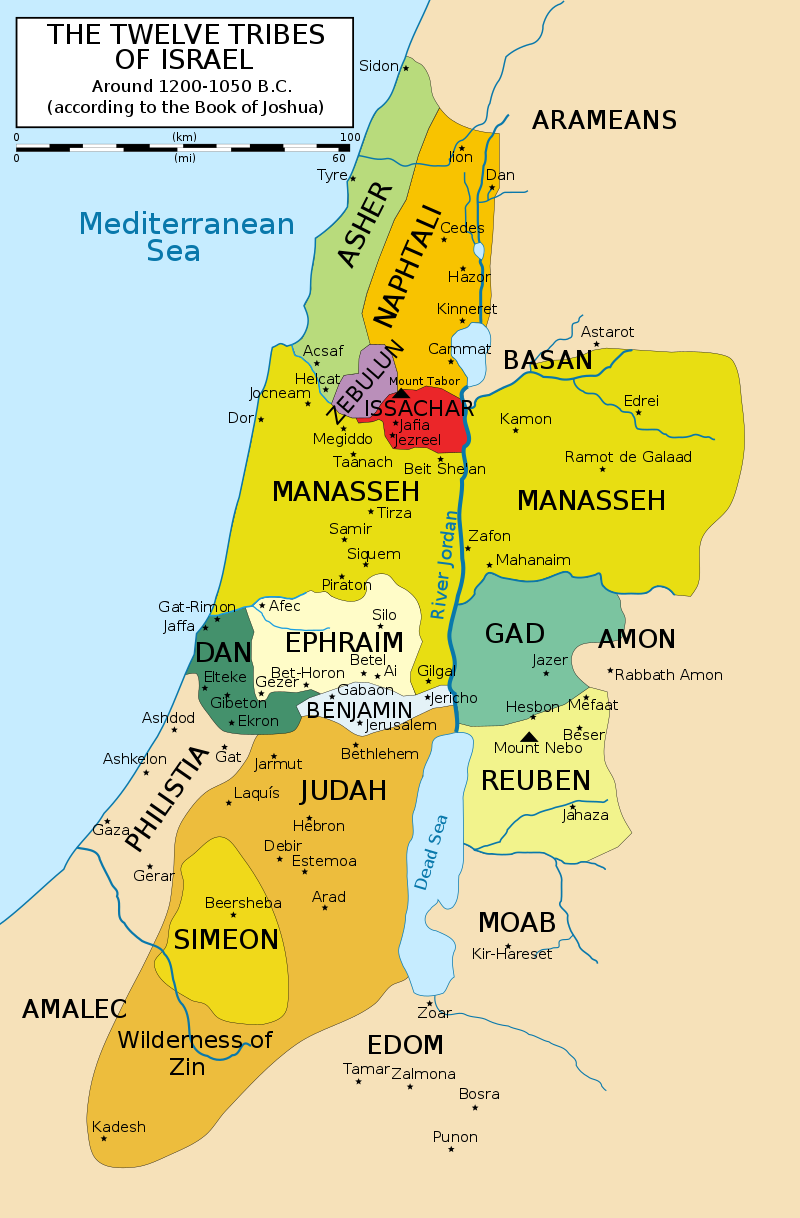
Judah with Simeon went up against the Canaanites and the Perizzites.  The term "Canaanites" often referred to the seven nations that occupied Canaan as a whole, but there was one nation of Canaanites, and it, as well as the nation of Perizzites, were delivered into Israel's hand by the Lord.  The Israelites killed ten thousand men in and around the area of Bezek which was just west of Jerusalem.  This section of a map borrowed from Psalms to God shows the tribes of Judah and Simeon and where they went up to fight in the northeastern part of Judah:


(5) And they found Adoni-Bezek in Bezek, and they fought against him, and they slew the Canaanites and the Perizzites. (6) But Adoni-Bezek fled, and they pursued after him and caught him and cut off his thumbs and his big toes.

The Israelites found the king of Bezek there and fought against him.  They slew the Canaanites and the Perizzites, but King Adoni-Bezek fled from them.  They pursued him and eventually caught him, and they cut off his thumbs and his big toes.  This would have disabled him from fighting as he would not be able to hold a weapon, and he would no longer be able to run.  It was unusual for the Israelites to inflict such torture and punishment, but it may have been God's will as the king himself recognized:

(7) And Adoni-Bezek said, "Seventy kings with their thumbs and big toes cut off gathered scraps under my table; as I have done, so God has requited me." And they brought him to Jerusalem, and there he died.

The king confessed that he had cut off the thumbs and big toes of seventy kings who were then left to gather scraps from under his table.  He said that as he had done so cruelly to others, God had repaid him by doing the same to him.  It's interesting that a pagan king would realize that God had done that to him, so it may be that he spoke under the influence of God's Holy Spirit.  The Israelites brought him to Jerusalem where he died.

(8) Now the children of Judah had fought against Jerusalem and had taken it and struck it with the edge of the sword and set the city on fire.

Judah had previously conquered Jerusalem which was how they were able to take the king there.  During the time of Joshua, the Israelites had not yet been able to drive the Jebusites out of Jerusalem (Joshua 15:63), but apparently Judah had been able to do it.

(9) And afterward the children of Judah went down to fight against the Canaanites who dwelt in the mountains, and in the south, and in the valley.

After the death of King Adoni-Bezek, the Israelites went southward to fight against the Canaanites who still dwelt in other areas of Judah, in the mountains, in the valley, and in the southern part of Judah.

(10) And Judah went against the Canaanites who dwelt in Hebron (now the name of Hebron before was Kirjath Arba), and they killed Sheshai, and Ahiman, and Talmai.

The tribe of Judah went against the Canaanites who still dwelt in Hebron.  The city of Hebron was before named Kirjath Arba for Arba, a chief among the Anakims who were giants in the city.  Caleb had previously driven out the giants, Sheshai, Ahiman, and Talmai (Joshua 15:14), but it seems they must have regained at least parts of the city.  This time the tribe of Judah killed the three giants.

(11) And from there he went against the inhabitants of Debir, and the name of Debir before was Kirjath Sepher.

This and what follows in the next few verses appears to be a retelling of Joshua 15:15-19.  It couldn't have happened after Joshua died because Joshua wrote about it.  Since Jewish tradition considers the prophet Samuel to be the author of Judges, and he would have written this about 300 years after the fact, it may be reasonable to believe he might not have gotten the chronology exactly right.  However, here Samuel was writing about the lands that were conquered after Joshua's initial conquest, and the conquest of Hebron did happen after that.  It was after the tribe of Judah had been given their allotment that Caleb (of Judah) went against the inhabitants of Debir.  Before it was renamed Debir the city was called Kirjath Sepher.

(12) And Caleb said, "He who strikes Kirjath Sepher and takes it, to him I will give Achsah my daughter to wife."

Caleb had said at the time that whoever was able to take Kirjath Sepher would be given his daughter Achsah in marriage (Joshua 15:16).

(13) And Othniel the son of Kenaz, Caleb's younger brother, took it, and he gave him Achsah his daughter to wife.

It was Caleb's nephew Othniel, the son of Kenaz who was Caleb's younger brother, who took Kirjath Sepher, and Caleb indeed gave him his daughter Achsah in marriage.

(14) And it came to pass when she came, that she moved him to ask of her father a field, and she dismounted, and Caleb said to her, "What do you want?" (15) And she said to him, "Give me a blessing, for you have given me a south land; give me also springs of water." And Caleb gave her the upper springs and the lower springs.

When Achsah came to Othniel on her donkey, she persuaded him to ask for a field from her father.  She dismounted her donkey, and Caleb asked her what she wanted.  She asked for an extra blessing.  He had already given her a south land, which might indicate a dry land, so she now asked for springs of water.  Caleb gave her upper springs and lower springs.

The fact that this account was written twice made me look harder at the reason why it was so important.  I read many commentaries and understood what others had found.  It was an illustration of how we can boldly approach our Father in heaven with our requests.  Imagine that!  The holy God of the universe wants to have a father/child relationship with us sinful creatures, and He urges us to come to Him with our petitions.  However, we must remember that the only way we unclean sinners are able to approach Him is because of the blood sacrifice of Jesus Christ that purifies us when we accept His gift.  Jesus said in Matthew 7:11, “If you then, being evil, know how to give good gifts to your children, how much more will your Father who is in heaven give good things to those who ask Him?"  However, we are to use wisdom and discernment as Achsah did.  She didn't ask for a gold-plated castle, but for springs for her dry land to make it more fruitful for her family.  James said in James 4:3, "You ask and do not receive, because you ask amiss, that you may spend it on your pleasures."  Our Father in heaven wants to bless us with the things that will help us grow and be more effective servants for His church, not with worthless trinkets.  He knows what is best for us, but He invites us to come confidently to Him with our requests, having faith that He will give us what we need, but perhaps not always what we want.

(16) And the children of the Kenite, Moses's father-in-law, went up out of the city of palm trees with the children of Judah into the wilderness of Judah, which is in the south of Arad, and they went and dwelt among the people.

Moses's father-in-law was Jethro, a Kenite.  There is no consensus for whom the Kenites were named, but they were an ancient people living in Canaan in the time of Abraham (Genesis 15:19).  They were among ten tribes whose land God said He was giving to Abram.  However, during the time of Moses and Joshua, only seven nations were named as occupying Canaan.  The Kenites, the Kenizzites, and the Kadmonites, had either become extinct, moved out of Canaan, or mixed with other nations.  Jethro's daughter Zipporah married Moses.  Jethro and his son Hobab had joined with Moses, and Hobab's descendants lived among the Israelites in the land of Canaan; they were the Kenites.  The city of palm trees was Jericho (Deuteronomy 34:3).  The Kenites had apparently resided in Jericho, but they now left it to go with the tribe of Judah and settled in the wilderness of Judah which was south of Arad, which would put them east of the tribe of Simeon according to the map above.  According to Albert Barnes in his Notes on the Bible, the rabbinical story was that Jericho had been given to Hobab.  Joshua had cursed that city and any person who rose up to rebuild it (Joshua 6:26), so apparently the descendants of Hobab had determined to leave that cursed city and dwell among the tribe of Judah in the wilderness.

(17) And Judah went with Simeon his brother, and they slew the Canaanites that inhabited Zephath and utterly destroyed it. And the name of the city was called Hormah.

As the tribe of Judah had promised, they went with the tribe of Simeon and killed the Canaanites who inhabited a city called Zephath in eastern Simeon, and they renamed it Hormah.

(18) Also Judah took Gaza with its territory, and Ashkelon with its territory, and Ekron with its territory.

Judah also took Gaza and Ashkelon on the Mediterranean coast and Ekron in the north.  The Biblical scholars I study wrote that the cities were later retaken and possessed by the Philistines.  John Wesley in his Notes on the Bible, observed that the scripture did not say they slew the people as it did in the verse before it.  The people, being spared, regained their control of the cities.

(19) And the Lord was with Judah, and he drove out the mountaineers, but could not drive out the inhabitants of the valley because they had chariots of iron.

The Lord was with Judah, and the tribe was able to drive out the inhabitants of the mountainous region of Judah.  However, it appears their faith failed when they feared the chariots of iron, and they were unable to drive out the inhabitants of the valley.  The Lord was with them, and there was no reason to believe that He wouldn't be with them to drive out those people, but it appears they didn't even try because of their fear.

(20) And they gave Hebron to Caleb, as Moses said, and he expelled from there the three sons of Anak.
 
Once again, the author of this book wrote in this chapter about the areas that had been left unconquered after Joshua's conquest. He referred again to Hebron which had been given to Caleb.  Caleb had driven out the three giants, Sheshai, Ahiman, and Talmai, whom Judah later killed (v.10).

(21) And the children of Benjamin did not drive out the Jebusites that inhabited Jerusalem, but the Jebusites dwell with the children of Benjamin in Jerusalem to this day.

The tribe of Benjamin did not drive out the Jebusites that inhabited Jerusalem.  Although the tribe of Judah had previously taken the city (v. 8), it appears it was reinhabited by the Jebusites.  They remained dwelling with the tribe of Benjamin to the day the author, probably Samuel, wrote this.  John Gill, in his Exposition of the Bible, wrote that Samuel wrote the book of Judges before the reign of David who would dispossess the Jebusites.

(22) And the house of Joseph, they also went up against Bethel, and the Lord was with them.

The house of Joseph, Ephraim and Manasseh, went up against Bethel in the southern portion of Ephraim.  The inhabitants of Bethel had been driven away from the city by Joshua (Joshua 8:17), but apparently the city had become reinhabited by the Canaanites.  The Lord was with Ephraim and Manasseh as they went against the inhabitants of Bethel.  This map borrowed from Precept Austin, shows all of the tribes, and Bethel is seen in southern Ephraim:


(23) And the house of Joseph sent to descry Bethel. (Now the name of the city before was Luz.)

The tribes of Ephraim and Manasseh sent spies into Bethel to examine the conditions.  The name of Bethel was formerly Luz.

(24) And the spies saw a man come forth out of the city, and they said to him, "Show us, we pray you, the entrance into the city, and we will show you mercy."

The spies saw a man coming out of Bethel.  They asked him to tell them how to get into the city, and they in turn would show him mercy.

(25) And when he showed them the entrance into the city, they struck the city with the edge of the sword, but they let the man and all of his family go.

The man showed the spies a way into the city, and the tribes of Joseph struck the city and killed its inhabitants, but they let the man and his entire family go free.

(26) And the man went into the land of the Hittites and built a city and called its name Luz, which is its name to this day.

The man and his family went into the land of the Hittites where the Hittites apparently dwelt after being expelled from Canaan.  He built a city and called it Luz after the city he had been forced to leave.  Luz was still there at the writing of this book, although it was no longer there at the writing of the Biblical scholars I study, as they didn't know where this city of Luz would have been.

(27) Neither did Manasseh drive out Beth Shean and her towns, nor Taanach and her towns, nor the inhabitants of Dor and her towns, nor the inhabitants of Ibleam and her towns, nor the inhabitants of Megiddo and her towns, but the Canaanites would dwell in that land.

Beth Shean, Taanach, Ibleam, Dor, and Megiddo, were cities given to the half tribe of Manasseh west of the Jordan River out of the lots of Issachar and Asher (Joshua 17:11).  Apparently, they never made any attempt to drive out the inhabitants of the cities and inhabit them as their cities, so the Canaanites dwelt in their land.  The map above shows most of these cities in northern West Manasseh.

(28) And it came to pass, when Israel was strong, that they put the Canaanites to tribute and did not utterly drive them out.

When Israel became strong, they still did not drive out the Canaanites but made them tributaries under them.

(29) Neither did Ephraim drive out the Canaanites that dwelt in Gezer, but the Canaanites dwelt in Gezer among them.

Neither did Ephraim, the other son of Joseph, drive out Canaanites in his land, specifically Gezer, and the Canaanites lived in Gezer among them.  

(30) Neither did Zebulun drive out the inhabitants of Kitron nor the inhabitants of Nahalol, but the Canaanites dwelt among them and became tributaries.

Zebulun did not drive out the inhabitants of Kitron or Nahalol, and the Canaanites there became tributaries.

(31) Neither did Asher drive out the inhabitants of Accho, nor the inhabitants of Zidon, nor of Ahlab, nor of Achzib, nor of Helbah, nor of Aphik, nor of Rehob, (32) But the Asherites dwelt among the Canaanites, the inhabitants of the land, for they did not drive them out.

The tribe of Asher appears especially slothful in driving the Canaanites out of their land as God had instructed.  Out of 22 cities they had been given (Joshua 19:30), they failed to drive the enemy out of seven of them, about one third of their allotted cities.

(33) Neither did Naphtali drive out the inhabitants of Beth Shemesh nor the inhabitants of Beth Anath, but he dwelt among the Canaanites, the inhabitants of the land; nevertheless, the inhabitants of Beth Shemesh and Beth Anath became tributaries to them.

The tribe of Naphtali failed to drive out the Canaanites from Beth Shemesh and Beth Anath, so they dwelt among the Canaanites, but they did make the Canaanites in those cities tributaries to them.

(34) And the Amorites forced the children of Dan into the mountain, for they would not allow them to come down to the valley.

The Amorites in the tribe of Dan's territory forced their tribe into the mountains and would not allow them to go down to the valley.  There must have been a serious lack of faith in God to drive out their enemies that their enemies were able to drive them from their land.

(35) But the Amorites would dwell in Mount Heres in Aijalon, and in Shaalbim, yet the hand of the house of Joseph prevailed so that they became tributaries.

It appears that the Amorites even dwelt among Dan in the mountains.  However, the house of Joseph helped its brother tribe, as Ephraim and Manasseh bordered Dan.  They at least made the Amorites tributaries in Mount Heres in Aijalon and in Shaalbim, however it doesn't appear that they were ever able to make tributaries of the Amorites in the valley.

(36) And the coast of the Amorites was from the going up to Akrabbim, from the rock and upward.

Akrabbim means "scorpion," so this is believed to be the Scorpion Pass, a pass between the south end of the Dead Sea and Zin.  "The rock" is believed to be Petra which was located east of that region on the east side of the Dead Sea.  Looking at the map above, I believe the territory of the Amorites at this time was from the eastern edge of the Wilderness of Zin, eastward below the Dead Sea, and upward on the east side of the Dead Sea, the regions of Edom and Moab.  The Amorites were said to be the most powerful people among the Canaanites and would prove to be very troublesome to Israel.

The Israelites were very careless with their duty to drive out all the Canaanites from their land.  Whether it was laziness or fear and a lack of faith, they did not do as their Lord God had told them to do.  Some of the cities where the Israelites failed to remove the Canaanites were cities that had been given to the Levites, including Taanach, Gezer, Nahalal, and Rehob, which may have been the reason they were lax in driving out the Canaanites.  However, you would think they would take better care of their priests and ministers who served their Lord God.  There may have been some covetousness on Israel's part as well, as they decided making the Canaanites pay tribute was more advantageous to them than driving them out.  However, God's way is always the best way, and by disobeying Him in their total conquest of Canaan, they brought troubles on themselves.  However, this may have been by divine design.  The Israelites had proved to be a people lacking faith and easily drawn away from their Lord.  Perhaps they needed adversity to keep them in check.  It's most often in adversity that people turn toward God.  It's not that God purposely designed things the way they were in order to punish His people.  He just allowed them to do or not do according to their own desires, letting them learn great lessons as He brought them through their adversities.

Monday, March 31, 2025

Joshua's Farewell Address and Death

Continuing a chronological Bible study:

(Joshua 23:1) And it came to pass a long time after that the Lord had given rest to Israel from all their enemies round about, that Joshua waxed old, stricken in age.

Israel had divided the land of Canaan among the tribes, and the people lived in peace and rest from all their enemies surrounding them.  Several years had passed, and Joshua had become very old.

(2) And Joshua called for all Israel, for their elders, and for their heads, and for their judges, and for their officers, and said to them, "I am old, stricken in age."

Joshua called to him all the elders and chief people in Israel, including heads of the tribes, judges, and officers.  He began by telling them that he had become very old.

(3) "And you have seen all that the Lord your God has done to all these nations because of you, for the Lord your God is He who has fought for you."

He reminded them that they had seen all that the Lord had done to the nations of Canaan for His people Israel.  He had fought for His people and had brought them to this point of peace and rest.

(4) "Behold, I have divided to you by lot these nations that remain, to be an inheritance for your tribes, from Jordan, with all the nations that I have cut off, even to the Great Sea westward."

I believe Joshua's point was that all of Canaan had been divided by lot to them, even the nations that remained unconquered.  Those unconquered parts, along with all the nations Joshua had cut off with the sword, all the way to the Mediterranean Sea, had been divided as an inheritance to the tribes.

(5) "And the Lord your God, He shall expel them from before you and drive them from out of your sight, and you shall possess their land, as the Lord your God has promised you."

Joshua encouraged the leaders of Israel that the Lord willed that they should inherit all of the land of Canaan, and He would drive the rest of the Canaanites out of their land, and they would be able to possess all of it, as their Lord had promised them.  It has been discussed before that they never did fully possess all the land that God had promised them because they were not obedient to the Lord to hold up their side of the covenant.  However, God said they would possess their land, and a passage in the book of the prophet Amos confirms that they eventually will possess it (Amos 9:15).

(6) "Be therefore very courageous to keep and to do all that is written in the book of the law of Moses, that you not turn aside from it to the right hand or to the left."

Joshua was giving the leaders of Israel the same words he had received from the Lord when the reins were handed over to him after the death of Moses (Joshua 1:7).  He cautioned them to be courageous in keeping the commandments of the law, that they not turn aside from it.

(7) "That you do not come among these nations, these that remain among you, neither make mention of the name of their gods nor cause to swear, neither serve them nor bow yourselves to them."

Specifically, Joshua cautioned them against going among the pagan nations of people that remained and acknowledging their gods.  They were not to even speak their names, much less swear by them, serve them, or bow down to them.

(8) "But cleave to the Lord your God as you have done to this day."

They were to cleave only to their Lord God through their obedience, service, and worship of Him alone, as they had done since their time in Canaan to that point.  It can't be said that they were always so faithful while in the wilderness.

(9) "For the Lord has driven out from before you great nations and strong, but you, no man has been able to stand before you to this day."

The reason Joshua gave for them always cleaving to their Lord was because of the good things He had done for them.  He had driven out great and strong nations from before them so that no man was able to stand before them even to that day.

(10) "One man of you shall chase a thousand, for the Lord your God is He who fights for you, as He promised you."

One man of them would be able to chase a thousand of his enemies only because it was their Lord who fought for them as He had promised He would (Leviticus 26:8, Deuteronomy 1:30).

(11) "Take good heed therefore to yourselves, that you love the Lord your God."

Joshua impressed upon them the need to be careful and on guard that they always love, honor, and obey their Lord God.

(12) "Else if you do in any way go back and cleave to the remnant of these nations, these that remain among you, and shall make marriages with them and go in to them and they to you, (13) Know for a certainty that the Lord your God will no more drive out these nations from before you, but they shall be snares and traps to you and scourges in your sides and thorns in your eyes, until you perish from off this good land which the Lord your God has given you."

For if they turned away from their Lord and attached themselves to the remnant of the pagan nations in their land and made and consummated marriages with them, they could know for absolute certain that their Lord would no longer go before them to drive out those remaining nations.  They would remain as snares and traps to them, very troublesome and distressing, drawing them into idolatry and immorality.

(14) "Behold this day, I am going the way of all the earth, and you know in all your hearts and in all your souls that not one thing has failed of all the good things which the Lord your God spoke concerning you; all have come to pass to you, and not one thing of it has failed."

Joshua told them that he was going to die just as all living things eventually do.  He was about to leave them without a human leader, but he reiterated why they should put all their love and faith and trust in their Lord God to lead them.  They knew in their hearts that He had not failed to give them any good thing He had promised.  All He had promised had come to pass; therefore, they should continue to have total faith in Him.

(15) "Therefore it shall come to pass, as all good things have come upon you, which the Lord your God promised you, so shall the Lord bring upon you evil things until He has destroyed you from off this good land which the Lord your God has given you. (16) When you have transgressed the covenant of the Lord your God which He commanded you and have gone and served other gods and bowed yourselves to them, then shall the anger of the Lord be kindled against you, and you shall perish quickly from off the good land which He has given to you."

However, Joshua warned them, just as the Lord had given them all good things as He had promised, He also most assuredly would bring bad things to them until they were destroyed off that good land if they turned away from Him and their covenant with Him to serve idols.  If they did that, His anger would burn against them, and they would perish quickly from off their good land that He had given them.  Just because they had all good things at that time, didn't mean they could keep them always if they chose to turn from their Lord.

I take note here that the number one sin that will always kindle God's anger against His people is idolatry.  It is just one of ten big commandments of the Lord, yet it is the one He always mentions that will cause Him to turn away from His people.  However, is not every sin rooted in idolatry?  It may be idolatry of money or power or even self, but there is always something that we choose to make more important than God and His commandments when we sin.  And when we choose something else over God, He may let us have our way, and He will turn away from us.  He will never force Himself on us; He gives us a choice.  However, we must live with the consequence of our choice.  When we begin to see all good things in our lives as blessings from Him, we naturally want to love and follow Him.  Why would we want to follow after some empty idol that can never give us more than some brief pleasure?  In God there is a lifetime of joy and fulfillment and eternal life.  Money and power or anything that we build of ourselves can never do that.

Joshua's farewell address continued in the next and last chapter of Joshua:

(Joshua 24:1) And Joshua gathered all the tribes of Israel to Shechem and called for the elders of Israel, and for their heads, and for their judges, and for their officers, and they presented themselves before God.

Joshua then gathered all the tribes, and especially the leaders of Israel, the elders, the judges, the officers, and the heads of the tribes, to Shechem, and they presented themselves before God.  Shechem was a significant place in Israel's history as it was the place where the Lord made His promise to Abraham that He would give his descendants that land, and he built an altar there (Genesis 12:6-7).  Jacob had also built an altar there (Genesis 33:18-20).  Mount Gerizim and Mount Ebal, where they shouted blessings and cursings (Joshua 8:33), were at Shechem.

(2) And Joshua said to all the people, "Thus says the Lord God of Israel, 'Your fathers dwelt on the other side of the flood in old time, Terah, the father of Abraham and the father of Nachor, and they served other gods.'"

Joshua spoke prophetically to the people the words of the Lord.  He began by telling them about their ancestors on the other side of the flood, or rather river, including Terah, the father of Abraham and Nachor, who served other gods.  The original word translated as "flood" most often meant "river" and was most of the time transcribed that way by the KJV translators, but for some reason they translated it as "flood" this time.  Perhaps the meaning might be that the people's ancestors since the flood had served other gods.  It was understood that before the flood all people except Noah and his family had served other gods, but for their fathers more recently to have turned to false gods would be a very grievous thing.  However, most Biblical scholars believe the meaning should be river rather than flood, and that Joshua spoke of their ancestors who had lived on the other side of the Euphrates River.

Some Biblical scholars think that the verse should read that their fathers, Terah, Abraham, and Nahor, served other gods.  Of course, it is possible that Abram served other gods as he saw his father do until God called him away from his family, but I saw no actual example of his serving other gods.  I read the verse as your fathers, including Terah, served other gods.  "The father of Abraham and Nachor" just described who Terah was.

(3) "'And I took your father Abraham from the other side of the flood and led him throughout all the land of Canaan, and multiplied his seed, and gave him Isaac.'"

The Lord took Abraham out of that idolatrous family and place, telling him to get out of his country and away from his family and his father's house (Genesis 12:1).  He took him through the land of Canaan and told him He would give his descendants that land (Genesis 12:7).  The Lord indeed gave Abraham many descendants, and he had given him his son Isaac.

(4) "'And I gave to Isaac, Jacob and Esau, and I gave to Esau Mount Seir to possess it, but Jacob and his children went down to Egypt.'"

Isaac had two sons, twins, Jacob and Esau, who had been "two nations" in their mother's womb (Genesis 25:23).  God gave Esau an inheritance in Mount Seir, leaving the promised land of Canaan to Jacob's descendants alone.  However, first Jacob and his children went to Egypt.

(5) "'I sent Moses also and Aaron, and I plagued Egypt, according to that which I did among them, and afterward I brought you out.'"

God sent Moses and Aaron to Egypt also to demand the release of His people who were in bondage in Egypt.  He plagued Egypt with ten plagues because they refused to let His people go, and then He brought them out.

(6) "'And I brought your fathers out of Egypt, and you came to the sea, and the Egyptians pursued after your fathers with chariots and horsemen to the Red Sea.'"

The Lord brought His people out of Egypt, and the Egyptians chased them with chariots and horsemen which would suggest they would soon be able to overtake the people on foot.  They chased them to the Red Sea.

(7) "'And when they cried to the Lord, He put darkness between you and the Egyptians, and brought the sea upon them, and covered them, and your eyes have seen what I have done in Egypt, and you dwelt in the wilderness a long time.'"

The people cried out in distress at the Red Sea.  The pillar of cloud that led them then went behind them and was a cloud of darkness to the Egyptians and light to the Israelites.  He then parted the sea and after His people crossed the Red Sea on dry land, He then let the waters back down to cover the Egyptians.  Many of the people who had been children at the time had seen what their Lord had done in Egypt.  They had been in the wilderness a long time, forty years, because of the unbelief of their fathers, and until those fathers had died in the wilderness.

(8) "'And I brought you into the land of the Amorites who dwelt on the other side of the Jordan, and they fought with you, and I gave them into your hand, that you might possess their land, and I destroyed them from before you.'"

The Lord brought His people to the kingdoms of Sihon and Og on the eastern side of the Jordan River.  Those nations fought with them, but the Lord had delivered their enemies into their hand and destroyed them so that they might possess that land.

(9) "'Then Balak the son of Zippor, king of Moab, arose and warred against Israel and sent and called Balaam the son of Beor to curse you.'"

Then Balak, the king of Moab, warred against the Israelites.  He called for the prophet Balaam to curse the Israelites.

(10) "'But I would not hearken to Balaam; therefore he blessed you still, so I delivered you out of his hand.'"

However, the Lord would not allow Balaam to speak curses to Israel, and he instead blessed them; thus the Lord had delivered His people out of the hand of Balaam and likewise, Balak.

(11) "'And you went over the Jordan and came to Jericho, and the men of Jericho fought against you, the Amorites, and the Perizzites, and the Canaanites, and the Hittites, and the Girgashites, the Hivites, and the Jebusites, and I delivered them into your hand.'"

Then the Israelites crossed over the Jordan River and came into their promised land where the men of Jericho fought against them, but the Lord delivered their enemies into their hand.

(12) "'And I sent the hornet before you which drove them out from before you, even the two kings of the Amorites, not with your sword nor with your bow.'"

The Lord sent hornets before them to drive out the Canaanites including two kings of the Amorites.  I'm not sure if these were actual hornets or figurative speech about how the Lord drove out their enemies, not by the Israelites' swords or bows, but by the Lord's power only.  Twice the Lord spoke prophetically about sending hornets to drive out their enemies (Exodus 23:28, Deuteronomy 7:20), and here the Lord through Joshua said that He had done just that.  However, in the actual battles, it doesn't say that the Lord sent hornets.  Joshua 10:10 told how the Lord discomfited their enemies and chased them, but it said nothing about Him sending hornets.  However, it did say that He then sent hailstones.  Again in Joshua 11:8 it says the Lord chased their enemies, but it doesn't say it was with hornets.  Of course, that might be an ideal way to chase soldiers and kings, but I think if actual hornets were sent, scripture would have specifically said so.  In many other places in the Bible, scripture said specifically what sort of pest was being sent, and immediately after Joshua 10:10, scripture was specific about sending hailstones, so I just believe it would have been specific about sending hornets, as well, if He had sent them.  I truly believe this was figurative speech or perhaps a word that the translators were not familiar with, and it just meant that God Himself chased and drove out the enemy by His own power.

(13) "'And I have given you a land for which you did not labor and cities which you did not build, and you dwell in them; of the vineyards and oliveyards which you did not plant, you do eat.'"

The Lord had given His people a ready-made land that they did not have to dig and cultivate, and He had given them cities they did not have to build, and He had given them fruits of the land that they did not plant.  He had given them, as He had promised, a land flowing with milk and honey and many good things.

(14) "Now therefore, fear the Lord and serve Him in sincerity and in truth, and put away the gods which your fathers served on the other side of the flood and in Egypt, and serve the Lord."

Having concluded the words of the Lord in verse 13, these are the words of Joshua telling the people that because of their Lord's mercies and goodness in all that He had done for them, they should reverence Him and serve only Him in sincerity with no hypocrisy and in the truth found only in His word.  He had told them in verse 2 about how their fathers since the flood had served other gods, and he urged them to put away those false gods and serve their Lord God.

(15) "And if it seems evil to you to serve the Lord, choose you this day whom you will serve, whether the gods which your fathers served on the other side of the flood, or the gods of the Amorites in whose land you dwell, but as for me and my house, we will serve the Lord."

Joshua challenged the people that if it seemed evil, or say just burdensome and unpleasant, to serve the Lord, then they should choose whom they would rather serve.  Did they wish to serve the gods of their fathers or the gods of the Amorites who had been in their land before them?  Let their choice be whatever they wished, but as for Joshua, he was resolute in the fact that he and his house would serve the Lord.

(16) And the people answered and said, "God forbid that we should forsake the Lord to serve other gods."

The people answered that they would never think of forsaking their Lord to serve other gods.

(17) "For the Lord our God, He who brought us up and our fathers out of the land of Egypt from the house of bondage, and who did those great signs in our sight and preserved us in all the way in which we went and among all the people through whom we passed, (18) And the Lord drove out from before us all the people, even the Amorites who dwelt in the land; we will also serve the Lord for He is our God."

The people went on to explain why they would never think of forsaking their Lord, because of all the great things He had done for them.  He had freed them from bondage, preserved them wherever they went among enemies, and then drove out the enemies who had dwelt in the land He was giving them.  They declared their choice was to also serve the Lord their God.

(19) And Joshua said to the people, "You cannot serve the Lord for He is a holy God; He is a jealous God; He will not forgive your transgressions nor your sins. (20) If you forsake the Lord and serve strange gods, then He will turn and do you hurt and consume you after He has done you good."

I believe both verses should be taken as one sentence.  I think Joshua's point was that the people would not be able to serve a holy God jealous that His people be only His and serve only Him, if they continued in sin.  As Jesus said in Matthew 6:24, "no man can serve two masters..."  They must wholeheartedly choose to serve their Lord or they would be forsaking Him, choosing another master, and then the Lord would turn away from them and that in itself would destroy them.  The Lord God is our only choice for life.  Since the beginning of time, since Adam and Eve brought sin on man, we sinful creatures are unable to stand before such a holy God.  It is only by His love and mercy that He gave us a way to be acceptable in His presence, but if we choose not to go that way, then we are doomed to be left in our sin, and in the righteous judgment of God, we have chosen to accept the consequences of sin, which is death.  God has set before each of us two choices, life and death, and He urges that we choose life if we want to live (Deuteronomy 30:19).  The other choice leads only to death.

(21) And the people said to Joshua, "No, but we will serve the Lord."

The people declared that they would not serve other gods but would serve their Lord God only.

(22) And Joshua said to the people, "You are witnesses against yourselves that you have chosen for you the Lord, to serve Him." And they said, "Witnesses!"

Joshua declared that they would be witnesses against themselves if they should turn away from their Lord after their testimony that day.  They would be self-condemned by their own words.  The people agreed that they were indeed witnesses to that truth.

(23) "Now therefore put away the strange gods which are among you and incline your heart to the Lord God of Israel."

Joshua told them therefore they were to put away the strange gods among them.  There may have been actual physical small idols of worship that had been kept from their fathers before them, or it might rather be that Joshua spoke of idols of the heart, secret sentiments they had toward some idol.  Whatever the idol that took their hearts away from their Lord, they were to put away, and they were to incline their hearts toward the Lord God of Israel only.

(24) And the people said to Joshua, "The Lord our God we will serve, and His voice we will obey."

The people confirmed that they would serve and obey their Lord God.

(25) So Joshua made a covenant with the people that day and set them a statute and an ordinance in Shechem.

Joshua established that covenant with the people and made it a permanent law that they and their descendants would always bind themselves to God only.

(26) And Joshua wrote these words in the book of the law of God, and took a great stone, and set it up there under an oak that was by the sanctuary of the Lord.

Joshua wrote the words of their covenant established that day in the book of the law that would have been in the ark of the covenant which must have been with him at Shechem that day.  He took a great stone and set it up under an oak tree that was by that holy place of the Lord.  I don't believe this was meant to have been at the actual sanctuary.  The word that was translated as "sanctuary" also means "a consecrated thing or place, holy place."  Joshua had brought the people to Shechem to a holy place of their fathers, and there he placed a memorial stone which wouldn't have been necessary if they were at the actual sanctuary.

(27) And Joshua said to all the people, "Behold, this stone shall be a witness to us, for it has heard all the words of the Lord which He spoke to us; it shall be therefore a witness to you, lest you deny your God."

Joshua told the people that that stone would act as a witness of the covenant they had made, as it was a symbolic reminder of the words of the Lord that had been spoken there that day and of the witness against the people should they turn from Him.

(28) So Joshua let the people depart, every man to his inheritance.

With that, Joshua let the people go back to their lands that they possessed as their inheritance from God.

(29) And it came to pass after these things that Joshua the son of Nun, the servant of the Lord, died a hundred and ten years old.

It was shortly after this that Joshua died at 110 years of age.  I think now is a good time to reflect on the reason why Joshua is always identified as the son of Nun.  Joshua is such an important figure in the Bible in his own right, and Nun is never mentioned other than being the father of Joshua.  As studied previously, I found that the original words were "Joshua bin Nun" rather than "Joshua ben Nun," which would have meant Joshua was the son of Nun.  "Bin Nun" or "binnun" meant the "understanding one."  From the beginning, Joshua was an excellent student of Moses and wouldn't leave the tabernacle even after Moses did (Exodus 33:11).  Additionally, he always demonstrated complete faith in God when others failed in their faith.  Perhaps this moniker of "Joshua the understanding one" did demonstrate that Joshua was a man in his own right.  

This time, in my study, I reflected on just the word "nun" which means "perpetuity."  The name Joshua, "yehoshua," means "Jehovah-saved."  Jehovah, the name of the Lord, the self-existent eternal God, which is what Jehovah means, saves eternally.  Was Joshua Jehovah-saved in perpetuity?  Biblical scholars often speak of Joshua being an Old Testament type of Jesus.  Actually, their names are the same in Hebrew, but in Greek in the New Testament, Jesus (in English) became Ieous.  Joshua was the one who brought the people into their promised land on earth, but Jesus brings them into the heavenly promised land.  Joshua succeeded Moses who represented the law, and Jesus's gospel succeeded the law.  Joshua made a new covenant with the people before he died, and Jesus brought a New Covenant of grace.  While names are very important in the Bible, and Joshua being eternally saved by Jehovah who saves, and being an Old Testament type of Jesus who was the one who ultimately fulfilled that salvation through His death and resurrection, I have to note that according to the genealogy in 1 Chronicles 7:27, Joshua was indeed the son of Nun.  Perhaps Joshua was always referred to as the son of Nun because all the symbology in both those names was the very essence of who he was.

(30) And they buried him in the border of his inheritance in Timnath Serah, which is in Mount Ephraim, on the north side of the hill of Gaash.

The people buried Joshua in his own inheritance in the mountains of Ephraim in the city which he built, Timnath Serah, on the north side of Mount Gaash in the mountainous region.

(31) And Israel served the Lord all the days of Joshua and all the days of the elders who outlived Joshua and who had known all the works of the Lord that He had done for Israel.

The Israelites kept their covenant and served the Lord all the days of Joshua and all the days of the elders who had lived during the time of Joshua and beyond, men who had known all the things the Lord had done for His people.

(32) And the bones of Joseph which the children of Israel brought up out of Egypt, they buried in Shechem in a parcel of ground which Jacob bought from the sons of Hamor, the father of Shechem, for a hundred pieces of silver, and it became the inheritance of the children of Joseph.

The Israelites had brought the bones of Joseph out of Egypt as he had requested (Genesis 50:25) and as Moses directed (Exodus 13:19).  They buried them in Shechem in a parcel of ground that Jacob had bought from the sons of Hamor, the father of Shechem, for a hundred pieces of silver (Genesis 33:19), in the land that became the inheritance of the sons of Joseph, specifically Ephraim.

(33) And Eleazor the son of Aaron died, and they buried him in a hill of Phinehas his son which was given him in Mount Ephraim.

Eleazar the priest, the son of Aaron, also died, and they buried him in a hill of Phinehas, Eleazar's son, which had been given to him in Mount Ephraim.  The priests had no land of their own but were given cities in which to live, so the Ephraimites had undoubtedly given this piece of land to either Eleazar or his son, Phinehas.

So ends the book of Joshua.  Obviously, the last five verses couldn't have been written by him but were added after his death.  Once again, I can't help but reflect on what a great man Joshua was and how like Jesus he was, the perfect illustration of the Christ to come.  In addition to the similarities before mentioned, it doesn't appear that Joshua ever married or had any children.  He devoted his entire life to the service of God, from his time as a young man learning from Moses up until his death.  Of course, Joshua was only human and must have sinned sometime in his life, but I don't recall any such thing being recorded thus far in the Bible.  Joshua never worked to provide for himself and never asked for much.  Even the inheritance he had apparently once asked for (Joshua 19:50), he didn't ask for when the time came to divide up the inheritance, but the people gave it to him.  And it wasn't even a choice land but rather a rough mountainous region where he built the city of Timnath Serah.  He lived as a servant of the people and most importantly of his God, and he led his people to their rest in their promised land.  Jesus, about 1400 years later, would bring people to that true eternal rest.

Also notable in the last chapter of Joshua is the retelling of history and of the marvelous things the Lord had done for His people.  Throughout the Bible, the people were retold history so that they would never forget the goodness of the Lord, and so should we always reflect on the good things the Lord has done for us.  No matter what circumstances we find ourselves in, we can always be thankful for the greatest gift of all, eternal salvation in Him that was only possible through the sacrifice and death of Jesus Christ.

Sunday, March 23, 2025

The Eastern Tribes' Altar of Witness

Continuing a chronological Bible study:

(Joshua 22:1) Then Joshua called the Reubenites, and the Gadites, and the half tribe of Manasseh,

In the past few chapters, all of the promised land had been divided and given to each of the tribes.  Cities of refuge had been established, and each tribe gave some of their cities to the Levites where they could dwell since they did not have their own land.  Then Joshua called to him the two and a half tribes who had their inheritance east of the Jordan River.

(2) And said to them, "You have kept all that Moses the servant of the Lord commanded you and have obeyed my voice in all that I commanded you."

When the tribes of Reuben, Gad, and the half tribe of Manasseh desired their lots to be east of the Jordan River, Moses agreed because they said they would leave their families there in safety but would fight with the other tribes west of the Jordan, and they promised not to return to their lots on the east until the land was subdued and every tribe had its inheritance (Numbers 32:18).  The two and a half tribes had obeyed Joshua's every command and went wherever he told them to go (Joshua 1:16).

(3) "You have not left your brethren these many days until this day but have kept the charge of the commandment of the Lord your God."

Joshua commended the men of the tribes of Reuben, Gad, and East Manasseh, for staying with their brethren on the west side of the Jordan up to that point.  It had been very many days according to Dr. John Gill in his Exposition of the Bible, who wrote that the consensus of the Jews was that it had been fourteen years, seven years subduing the land and seven years dividing it.

(4) "And now the Lord your God has given rest to your brethren as He promised them; therefore now return and go to your tents to the land of your possession which Moses the servant of the Lord gave you on the other side of Jordan."

Now that the Lord had given all Israel rest from their enemies and every tribe had been given his lot, Joshua gave the tribes of Reuben, Gad, and East Manasseh, permission to return to their homes on the east side of the Jordan.  They had fulfilled the condition that they wait until the land of Canaan was subdued and only then would they be given their inheritance east of the Jordan (Numbers 32:22).

(5) "But take diligent heed to do the commandment and the law which Moses the servant of the Lord charged you, to love the Lord your God and to walk in all His ways, and to keep His commandments, and to cleave to Him, and to serve Him with all your heart and with all your soul."

Joshua advised his brethren to make sure that they diligently followed the commandments of their Lord to love, honor, and serve Him with all their hearts and souls, and to cleave to Him, walk in His ways, and obey all His commandments.

(6) So Joshua blessed them and sent them away, and they went to their tents. (7) Now to the half of the tribe of Manasseh Moses had given in Bashan, but to the other half Joshua gave among their brethren on this side of Jordan westward. And when Joshua sent them away also to their tents, then he blessed them.

It appears that all of Manasseh had come before Joshua, but as only half of them had received land on the east of the Jordan, Bashan, the kingdom of Og, Joshua sent the half tribe living on the west side of the Jordan to their tents.  Then he sent the two and a half tribes back to their tents on the east of Jordan, and he blessed them.

(8) And he spoke to them, saying, "Return with much riches to your tents, and with very much cattle, with silver, and with gold, and with brass, and with iron, and with very much clothing; divide the spoil of your enemies with your brethren."

Joshua told them to return to their homes with a division of the spoil they had acquired from their enemies, of the cattle, silver, gold, brass, iron, and fine clothing.  Some Biblical scholars think this meant they were to divide the spoil with their brethren who had remained at home on the east of the Jordan to protect the women, children, and livestock.  That may be, as only 40,000 (Joshua 4:13) of the approximately 110,000 able to go to war, according to the census taken in Numbers 26, went to help their brethren in the west. 

(9) And the children of Reuben and the children of Gad and the half tribe of Manasseh returned and departed from the children of Israel out of Shiloh, which is in the land of Canaan, to go to the country of Gilead, to the land of their possession which they possessed according to the word of the Lord by the hand of Moses.

And so the men of the tribes of Reuben, Gad, and the half tribe of Manasseh, departed Shiloh in Canaan to return to their land east of the Jordan River, the country of Gilead (and Bashan), the land they were given according to the word of the Lord through Moses.

(10) And when they came to the borders of Jordan in the land of Canaan, the children of Reuben and the children of Gad and the half tribe of Manasseh built there an altar by Jordan, a great altar to see.

When the two and a half tribes arrived at the Jordan River, they built a great altar built very high to be seen from far away.  Although verse 10 makes it sound as if they built the altar in the land of Canaan, the next verse indicates they built it on their own side of the Jordan, but perhaps visible from Canaan.

(11) And the children of Israel heard say, "Behold, the children of Reuben and the children of Gad and the half tribe of Manasseh have built an altar across from Canaan in the borders of Jordan at the passage of the children of Israel."

The Israelites on the west side of the Jordan River learned by hearsay that the tribes of Reuben, Gad, and the half tribe of Manasseh, had built an altar across from Canaan on the banks of the Jordan where they had passed over when they first came into Canaan.

(12) And when the children of Israel heard, the whole congregation of the children of Israel gathered themselves together at Shiloh, to go up to war against them.

When the Israelites in the land of Canaan learned about the altar, they gathered themselves together at Shiloh where the tabernacle and altar of the Lord were.  They considered the altar built by the two and a half tribes an offense to the Lord that needed to be avenged, and they discussed going to war against them.

(13) And the children of Israel sent to the children of Reuben, and to the children of Gad, and to the half tribe of Manasseh, to the land of Gilead, Phinehas, the son of Eleazar the priest, (14) And with him ten princes, of each chief house a prince throughout all the tribes of Israel, and each one a head of the house of their fathers among the thousands of Israel.

The Israelites in Canaan on the west of the Jordan sent Phinehas, the son of Eleazar the priest, and ten princes, one from each tribe, each from the chief house in their tribe, over the Jordan River to Reuben, Gad, and the half tribe of Manasseh.

(15) And they came to the children of Reuben, and to the children of Gad, and to the half tribe of Manasseh, to the land of Gilead, and they spoke with them, saying, (16) "Thus says the whole congregation of the Lord, 'What trespass is this that you have committed against the God of Israel, to turn away this day from following the Lord, in that you have built you an altar, that you might rebel this day against the Lord?'"

The delegation came to the eastern tribes, telling them that the entire congregation in Canaan wanted to know why they had committed such iniquity against their Lord by building an altar to rebel against Him.  Many people before them had built altars to honor God, but God had said in Deuteronomy 12:13-14, that they were not to offer burnt offerings in any place they wanted, but only in the one place that the Lord Himself would choose.  The western Israelites must have assumed that the tribes on the east wanted to sacrifice at the altar they had made.

(17) "'Is the iniquity of Peor too little for us from which we are not cleansed until this day, although there was a plague in the congregation of the Lord? (18) But that you must turn away this day from following the Lord? And it will be, if you rebel today against the Lord, that tomorrow He will be angry with the whole congregation of Israel.'"

They asked if the sin of worshipping the idol Peor in the plains of Moab (Numbers 25:2) was so small a sin that they must add to it a much greater sin of what they assumed to be continuous idol worship.  They said they had not been cleansed from the shame and disgrace of that sin until this time when they started anew in their promised land, although there had been 24,000 people killed by a plague because of it (Numbers 25:9).  They were convinced that if the two and a half tribes continued with their altar the Lord would be angry with the entire congregation.

(19) "'Nevertheless, if the land of your possession is unclean, pass over to the land of the possession of the Lord where the Lord's tabernacle dwells and take possession among us, but do not rebel against the Lord, nor rebel against us, in building an altar besides the altar of the Lord our God.'"

I believe the sense is that if the two and a half tribes felt their land was unclean because it had not been cleansed from the sins of the former inhabitants, and they felt a need for an altar where they could sacrifice for the atonement of sin, then they should go back to the land of Canaan on the west of the Jordan and possess land there.  But they asked that they not rebel against the Lord and their brethren by building an altar besides the one altar of their Lord God.

(20) "'Did not Achan the son of Zerah commit a trespass in the accursed thing, and wrath fell on all the congregation of Israel? And that man did not perish alone in his iniquity.'"

They reminded them of the sin of Achan when he sinned against the Lord by taking of the accursed things against the commandment of the Lord (Joshua 7:11).  Achan had not perished alone in his iniquity.  The Israelites had lost their first battle with Ai where they fled before their enemies, and thirty-six of them were killed by the men of Ai (Joshua 7:5).

(21) Then the children of Reuben, and the children of Gad, and the half tribe of Manasseh, answered and said to the heads of the thousands of Israel, (22) "The Lord God of gods, He knows, and Israel shall know; if it is in rebellion or if in transgression against the Lord, do not save us this day, (23) That we have built us an altar to turn from following the Lord, or if to offer on it burnt offering or meat offering, or if to offer peace offerings on it, let the Lord Himself require it."

Then the tribes of Reuben, Gad, and the half tribe of Manasseh, answered their accusers.  Their Lord God knew their hearts, and now all of Israel would know, because if they had rebelled against the Lord or transgressed against Him, they asked that the Lord not save them alive that day.  If they had built that altar in order to turn away from following the Lord or to offer sacrifices on it, even if to their Lord God, then let the Lord Himself require their punishment.

(24) "And if we have not done it for fear of this, saying, 'In time to come your children might speak to our children, saying, "What have you to do with the Lord God of Israel? (25) For the Lord has made Jordan a border between us and you, you children of Reuben and children of Gad, you have no part in the Lord." So shall your children make our children cease from fearing the Lord.'"

However, they declared they had rather built the altar because they feared their children might turn away from the Lord.  They saw a time when the children of the Israelites in Canaan would notice a border between them and the two and a half tribes east of the Jordan and determine that it must mean the eastern tribes had no part in the Lord, that He Himself had placed a border between them.  They feared that their children might then cease from fearing and following their Lord God.

(26) "Therefore we said, 'Let us now prepare to build us an altar, not for burnt offering nor for sacrifice, (27) But as a witness between us and you and our generation after us, that we might do the service of the Lord before Him with our burnt offerings and with our sacrifices and with our peace offerings, that your children may not say to our children in time to come, "You have no part in the Lord."'"

Therefore the two and a half tribes built an altar, not for offerings or sacrifice, but as a symbol of their solidarity with Israel and in the worship of the Lord God of Israel.  In the future, children of the tribes in Canaan would know that the two and a half tribes indeed had a part in their Lord God and would allow them to come to Canaan to the altar of the Lord with their offerings and sacrifices.

(28) "Therefore we said that it shall be when they should say so to us or to our generations in time to come, that we may say, 'Behold the pattern of the altar of the Lord which our fathers made, not for burnt offerings, nor for sacrifices, but as a witness between us and you.'"

They built the altar so that in generations to come if the tribes in Canaan suggested that they had no part in their Lord, that they could point to the pattern of their altar built by their fathers, that it was an exact replica of the altar in Canaan, not for offerings or sacrifices, but as a witness between the tribes that they all worshipped the same God.

(29) "God forbid that we should rebel against the Lord and turn this day from following the Lord, to build an altar for burnt offerings, for meat offerings, or for sacrifices, besides the altar of the Lord our God that is before His tabernacle."

The two and a half tribes proclaimed that God forbid they should do such an abhorrent thing as to rebel against their Lord God and build an altar at which to bring sacrifices and offerings, besides the one true altar of the Lord at His tabernacle.  

(30) And when Phinehas the priest and the princes of the congregation and heads of the thousands of Israel with him heard the words that the children of Reuben and the children of Gad and the children of Manasseh spoke, it pleased them.

When Phinehas the priest and the ten princes representing thousands in Israel heard what the two and a half tribes said about the purpose of their altar, they were pleased.

(31) And Phinehas the son of Eleazar the priest said to the children of Reuben, and to the children of Gad, and to the children of Manasseh, "This day we perceive that the Lord is among us because you have not committed this trespass against the Lord; now you have delivered the children of Israel out of the hand of the Lord."

Phinehas the priest then told the two and half tribes that he was sure the Lord was among them all because they had not done what the western Israelites had feared they had done.  And because their hearts and motives were pure, they had saved all of Israel from the anger of the Lord.

(32) And Phinehas the son of Eleazar the priest and the princes returned from the children of Reuben and from the children of Gad, out of the land of Gilead to the land of Canaan to the children of Israel and brought them back word.

Phinehas and the ten princes returned to their tribes on the west of the Jordan River and told them what had transpired with the two and a half tribes on the east side.

(33) And the thing pleased the children of Israel, and the children of Israel blessed God and did not intend to go up against them in battle to destroy the land in which the children of Reuben and Gad dwelt.

All of western Israel was pleased to hear the outcome, and they blessed and thanked God that no trespass had been made against Him, and therefore they did not intend to go to battle against their brethren in the east.

(34) And the children of Reuben and the children of Gad named the altar, "For it is a witness between us that the Lord is God."

The eastern tribes named their altar as it was always to be remembered as a witness between the Israelites on both sides of the Jordan that the Lord was the one true God worshiped by both.  The KJV and many other translations inserted the word "Ed" which meant "witness" to say that the eastern tribes named the altar Ed because it was a witness.  However, the original text did not specify a name, only that it was named for it was to be remembered as a witness that the Israelites on both sides of the Jordan worshipped the same God.

The western tribes had jumped to a wrong conclusion about their eastern brethren.  It may have been wrong to judge them without knowing the facts, but they were zealous for their Lord, wanting no trespass against Him nor any sin in the house of Israel.  Although they had initially planned to go to war with them, they first sent a delegation to confront the two and a half tribes and gave them a chance to respond, so all was worked out peacefully.  It's a good lesson in how Christians ought to resolve conflicts, and additionally, they ought always to remember that God judges the heart, and they can't be too quick to jump to erroneous conclusions just because of how they think a thing looks.