Showing posts with label Kenaz. Show all posts

Monday, April 21, 2025

The First Judges, Othniel, Ehud, and Shamgar

Continuing a chronological Bible study:

(Judges 3:1) Now these are the nations which the Lord left to prove Israel by them, as many as had not known all the wars of Canaan.

The last chapter of Judges told how the Lord had purposely left some nations in the Israelites' promised land in order to prove their need for Him.  These were the people who had not lived during the time of Joshua and his conquest and did not personally know of God's mighty works in delivering Canaan to His people.  A list of the nations that remained follows.

(2) (Only that the generations of the children of Israel might know, to teach them war, at the least such as before knew nothing of it.)

It was important that the next generation of Israelites understand war as there would always be enemies in the world that would try to destroy them.  Adversity is an important teacher.  We learn the most through conflict and distress.  That which does not kill us makes us stronger.  And people draw closer to their God in times of trouble.

(3) Five lords of the Philistines, and all the Canaanites, and the Sidonians, and the Hivites who dwelt in Mount Lebanon, from Mount Baal Hermon to the entering in of Hamath.

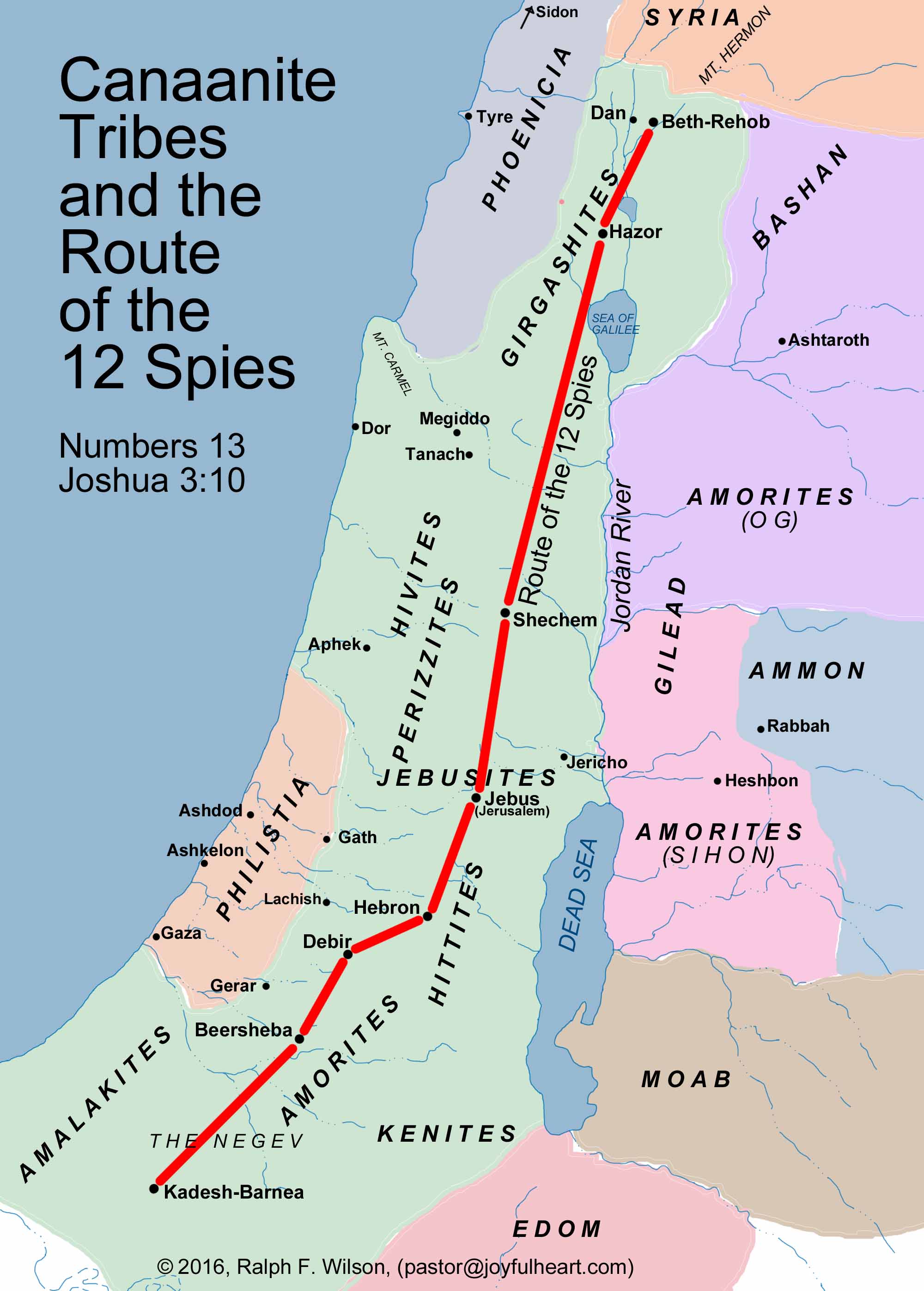
The list of the nations the Lord had let remain in the land of Canaan began with the Philistines, the lords of Gaza, Ashdod, Ashkelon, Gath, and Ekron (Joshua 13:3).  In Judges 1:18, we were told that Judah had taken Gaza, Ashkelon, and Ekron, after the death of Joshua, but apparently they recaptured the cities and remained thorns in Israel's sides.  The Canaanites remained.  In Judges 1:4, the Lord had delivered the Canaanites into Judah's hand.  That referred to the specific tribe of Canaanites, not Canaanites as the whole of all the tribes that inhabited Canaan.  Since the scripture said, "all the Canaanites," I am assuming this refers to all the Canaanites who were dispersed throughout the land.  The Sidonians, inhabitants of the city of Sidon, also remained, as well as the Hivites who dwelt in Mount Lebanon, north of where the Israelites dwelt to the east of Lebanon to Mount Hermon and northward to the entrance of Hamath.  This map from JesusWalk.com shows the areas left unconquered in white:

(4) And they were to prove Israel by them, to know whether they would hearken to the commandments of the Lord which He commanded their fathers by the hand of Moses.

Those nations were left in Canaan in order to try the Israelites' courage and prove their faithfulness to their Lord to know whether or not they would follow the commandments of the Lord that He gave them through His servant Moses.  It's not that the Lord had to do this in order to know what they would do.  Of course, the Lord already knew what they would do.  That's why He left the nations.  The people had to be repeatedly reminded of why they needed their Lord God.  They could not prosper without Him.

(5) And the children of Israel dwelt among the Canaanites, Hittites, and Amorites, and Perizzites, and Hivites, and Jebusites.

Because the Lord did not completely drive out all the nations from Canaan, the Israelites lived among the Canaanites, Hittites, Amorites, Perizzites, Hivites, and Jebusites.

(6) And they took their daughters to be their wives and gave their daughters to their sons and served their gods.

The Israelites intermarried with the pagan inhabitants of Canaan and served their pagan gods, which was disobedience to the direct command of God (Deuteronomy 7:3).  That is a natural occurrence in such situations.  That's why the Lord had told them to drive out all the nations.  That is the reason the Apostle Paul said, obviously by inspiration of the Lord, "Do not be unequally yoked together with unbelievers. For what fellowship has righteousness with unrighteousness? And what communion has light with darkness?" (2 Corinthians 6:14)

(7) And the children of Israel did evil in the sight of the Lord and forgot the Lord their God and served Baalim and the groves.

As a result of their intermarriages and serving of their spouses' gods, they forgot their one true God and did only evil in His sight.  They served the Baals and the groves, as trees and groves were worshipped by the Canaanites.  As the original word for groves is "asherah," perhaps Ashtaroth was meant, as the female gods were also often worshipped with groves of trees.

(8) Therefore the anger of the Lord was hot against Israel, and He sold them into the hand of Cushan-Rishathaim king of Mesopotamia, and the children of Israel served Cushan-Rishathaim eight years.

The anger of the Lord burned hot against Israel, and He allowed them to become subjects of Cushan-Rishathaim, which meant literally Cushan of double wickedness.  He was the king of Aram in the northeast corner of the map above.  Aram was the same as Syria.  Mesopotamia was the Greek name for Aram Naharaim, which is the name some other Bible translations besides the KJV used.  That name meant Aram or Syria of the two rivers (Tigris and Euphrates).  The Israelites became subjects of the king of that region in the northeast.  John Wesley, in his Notes on the Bible, pointed out that that region lay at such a far distance from Israel, one wouldn't think the Israelites would have any trouble with it, but that may be all the more reason to believe God's hand was in it.  The Israelites served that king for eight years.

(9) And when the children of Israel cried to the Lord, the Lord raised up a deliverer to the children of Israel, who delivered them, Othniel, the son of Kenaz, Caleb's younger brother.

When the Israelites cried out in distress to their Lord because of their oppression, He raised up a deliverer, the first judge, Othniel, the son of Kenaz who was Caleb's younger brother.  Othniel was Caleb's nephew who received the hand of his daughter Achsah in Judges 1:12, because he took Kirjath Sepher.

(10) And the Spirit of the Lord came upon him, and he judged Israel and went out to war, and the Lord delivered Cushan-Rishathaim king of Mesopotamia into his hand, and his hand prevailed against Cushan-Rishathaim.

The Spirit of the Lord came upon Othniel to move him to act as judge and deliverer of Israel, and he went to war against Cushan-Rishathaim, the king of Aram, and the Lord gave him victory over the king, and he delivered the people out of the hand of Aram.

(11) And the land had rest forty years. And Othniel the son of Kenaz died.

With Othniel as its judge, the land had rest from their enemies for forty years, and then Othniel died.

(12) And the children of Israel did evil again in the sight of the Lord, and the Lord strengthened Eglon the king of Moab against Israel because they had done evil in the sight of the Lord.

After forty years, another generation passing, the Israelites began to do evil in the sight of the Lord again, most likely serving idols again.  The Lord strengthened Eglon, the king of Moab, and stirred him to rise up against Israel.  Moab was southeast of Israel.

(13) And he gathered to him the children of Ammon and Amalek and went and struck Israel and possessed the city of palm trees.

Eglon gathered the Ammonites and the Amalekites to him, which may have been the strengthening the Lord gave him, and they went and struck Israel and possessed the city of palms, which was Jericho.

(14) So the children of Israel served Eglon the king of Moab eighteen years.

Therefore the Israelites became servants of the king of Moab for eighteen years.  It may be noteworthy that this was ten years longer than they had been in servitude to the king of Aram.  Perhaps it was God's will that they should have a longer oppression this time in order to press upon them more greatly their need to resist the temptation to follow after false gods and follow only their Lord God.

(15) But when the children of Israel cried to the Lord, the Lord raised them up a deliverer, Ehud the son of Gera, a Benjamite, a man left-handed, and by him the children of Israel sent a present to Eglon the king of Moab.

When the children of Israel cried out to the Lord after being so long oppressed, the Lord raised up another deliverer, or judge, Ehud, a Benjamite from the family of Gera, the son of Bela, Benjamin's first born.  It's interesting that it was of note that he was a left-handed man.  Albert Barnes, in his Notes on the Bible, wrote that this was most likely not to be seen as a defect but rather power to use left and right hands equally well, as was the sense in other scriptures (Judges 20:16, 1 Chronicles 12:2).  Ehud delivered a present to the king of Moab from the children of Israel.

(16) But Ehud made him a dagger which had two edges, of a cubit length, and he girded it under his clothing on his right thigh.

However, Ehud had made a dagger that had two edges and was about 18 inches in length.  He hid it under his clothing on his right thigh which was probably the proper side for a left-handed man.  It would probably give the appearance that he was unarmed and thus is the reason it was noted that he was a left-handed man.

(17) And he brought the present to Eglon king of Moab; and Eglon was a very fat man. (18) And when he had made an end to offer the present, he sent away the people who bore the present.

Ehud brought "the present" to King Eglon with attendants he had with him.  When he had made an end to offer the present, which may have been a speech to the king made in the name of the Israelites, he sent away his attendants, whom it appears had indeed borne a present.  It was noted that King Eglon was a very fat man.

(19) But he himself turned again from the quarries by Gilgal, and said, "I have a secret errand to you, O king," who said, "Keep silence!" And all who stood by him went out from him.

I believe the sense is that Ehud had turned away from the king to dismiss his attendants, and he now turned back to the king.  As the original word that was translated as "quarries" most often meant "graven or carved images, idols," I'm sure that is what was meant here.  Perhaps there was an abundance of them in one area.  Regardless of the exact meaning, the point was that Ehud now turned back to the king and told him that he had secret business for him.  With that, the king sent away his attendants.

(20) And Ehud came to him, and he was sitting in a summer parlor which he had for himself alone. And Ehud said, "I have a message from God to you." And he arose out of his seat. (21) And Ehud put forth his left hand and took the dagger from his right thigh and thrust it into his belly.

The king was now alone sitting in his summer parlor.  Ehud told him that he had a message from God for him.  As the original word for message was "dabar" which actually meant either a word or a thing, it is true Ehud had something he called from God for the king.  The king arose out of his seat to receive the message, either out of some sort of respect or perhaps fear.  John Wesley wrote that the name Ehud used for God was Elohim which did not always mean the one true God, but gods in general.  Ehud then took the dagger from his right thigh with his left hand and thrust it into the king's belly.

(22) And the haft also went in after the blade, and the fat closed on the blade so that he could not draw the dagger out of his belly, and the dirt came out.

Ehud had thrust so hard that the handle of the dagger went into the king's fat belly as well as the blade.  The king's excessive fat closed over the blade so that Ehud could not draw it back out.  Dirt here actually meant excrement; either the content of his bowels came out as the intestines were ripped, or his bowels emptied the normal way as they often do upon death.

(23) Then Ehud went forth through the porch and shut the doors of the parlor on him and locked them.

It appears that instead of running for his life, Ehud calmly and methodically went forth in that sun porch and shut and locked the doors of the summer parlor and went calmly on his way with confidence that he had performed the will of God.

(24) When he was gone out, his servants came and when they saw that, behold, the doors of the parlor were locked, they said, "Surely he covers his feet in his summer chamber."

After Ehud had left, the king's servants attempted to enter the summer parlor and found it locked.  The consensus of the commentators I study is that the servants used an expression that the Jews used that meant "he was going to the bathroom," as we would say today.  As one would sit down to relieve himself, his long garments would naturally fall and cover his feet.  The servants assumed the king had locked his parlor as he desired privacy for that reason.

(25) And they tarried till they were ashamed, and behold, he did not open the doors of the parlor; therefore they took a key and opened, and behold, their lord was fallen down dead on the earth.

The servants waited embarrassingly long and still the king had not opened the doors of his parlor.  They finally took a key and opened the doors themselves, and there they found their king dead on the ground.

(26) And Ehud escaped while they tarried and passed beyond the quarries and escaped to Seirath.

While the king's servants waited on their lord to open the doors of the summer parlor, Ehud was able to escape.  He passed beyond the quarries of idols which would have been in the king's kingdom and escaped to Seirath.  It is not known exactly where Seirath was located, but as seen in the next verse, it was located in the mountainous area of Ephraim.

(27) And it came to pass when he had come, that he blew a trumpet in the mountain of Ephraim, and the children of Israel went down with him from the mount, and he before them. (28) And he said to them, "Follow after me, for the Lord has delivered your enemies the Moabites into your hand." And they went down after him and took the fords of Jordan toward Moab and did not allow a man to pass over.

When Ehud had come to Mount Ephraim, he blew a trumpet which summoned the Israelites, and he led the people down from the mountain.  He told them to follow him and be assured that the Lord had delivered the Moabites into their hands.  The people went down after him and took the fordable places of the Jordan River and did not allow anyone of the Moabites to cross over.  There were surely Moabites in Israel as they controlled their land, so the Israelites wouldn't let those Moabites go back into their country, nor would they let any Moabites back into Israel.

(29) And they killed of Moab at that time about ten thousand men, all stout and men of valor, and there escaped not a man. (30) So Moab was subdued that day under the hand of Israel. And the land had rest eighty years.

The Israelites killed ten thousand Moabites, even though they were large men of bravery.  Not one Moabite was able to escape the Israelites.  Moab was subdued under Israel.  It's not that the Israelites destroyed Moab, but they killed the Moabites in their land and were therefore no longer subject to them.  Israel then had rest for eighty years.  

Adam Clarke, in his Commentary on the Bible, struggled with and took many pains to describe how what Ehud had done to the king was an immoral sin of murder.  Indeed, the Lord commanded man not to murder.  Clarke points out that the scripture does not indicate that Ehud ever inquired of the Lord before his action.  However, I have to believe that Ehud was justified in what he did.  The Lord had initially told the people to kill all the inhabitants of the land which they had failed to do.  It was always His will that the Canaanites should be punished for their wickedness.  Additionally, verse 15 states that the Lord raised up Ehud to deliver the people from the Moabites.  And the fact that they had rest for eighty years thereafter certainly seems like a blessing from the Lord after a job well done.  Yes, it seems harsh and immoral, but the Old Testament times were different times.  God used mortal men to exact His punishment.  When God told someone to kill, it cannot be seen as murder.  God cannot murder; He is without sin and only holy.  He cannot abide sin, and it must be eliminated.  The Old Testament was the perfect illustration of what all sinners deserve.  And that is all of us!  Jesus came in the New Testament to provide salvation from what we deserve.  The Old Testament killings had a just purpose.  If there was nothing to be saved from, what would have been Jesus's purpose?  And we must remember that God is the author of life; He gives it and He takes it away.  But as a just and perfect God, we can be sure that anyone who died or was killed as a righteous person, is in eternal joy with Him in heaven.

(31) And after him was Shamgar the son of Anath, who slew of the Philistines six hundred men with an ox goad, and he also delivered Israel.

After Ehud, God raised up Shamgar as a judge.  He fought against the Philistines in the south and west regions of Israel and killed six hundred Philistines with only an ox goad, a prod for driving oxen.  That could have only been possible by the Lord, and he also delivered Israel.  

Saturday, April 12, 2025

The Continuing Conquest of Canaan

Continuing a chronological Bible study:

(Judges 1:1) Now after the death of Joshua, it came to pass that the children of Israel asked the Lord, saying, "Who shall go up for us against the Canaanites first, to fight against them?"

Joshua had died in the last chapter and post.  As he left no successor, no commander in chief, the people inquired of the Lord, either by prayer or the Urim and Thummim, which were some sort of objects worn by the high priest that were used to determine God's will, about who would go first to fight the Canaanites that remained in their land.

(2) And the Lord said, "Judah shall go up; behold, I have delivered the land into his hand."

The Lord said that the tribe of Judah should go first against the Canaanites that remained in their land.  He said He had already delivered that Canaanite land into their hand.

(3) And Judah said to Simeon his brother, "Come up with me into my lot that we may fight against the Canaanites, and I likewise will go with you into your lot." So Simeon went with him.

As the tribe of Simeon lay in the middle of the tribe of Judah, Judah's tribe asked the tribe of Simeon to go with them to fight the Canaanites, and in turn, Judah would go with Simeon when they were called to fight.  The tribe of Simeon agreed and went with the tribe of Judah.

(4) And Judah went up, and the Lord delivered the Canaanites and the Perizzites into their hand, and they slew of them in Bezek ten thousand men.

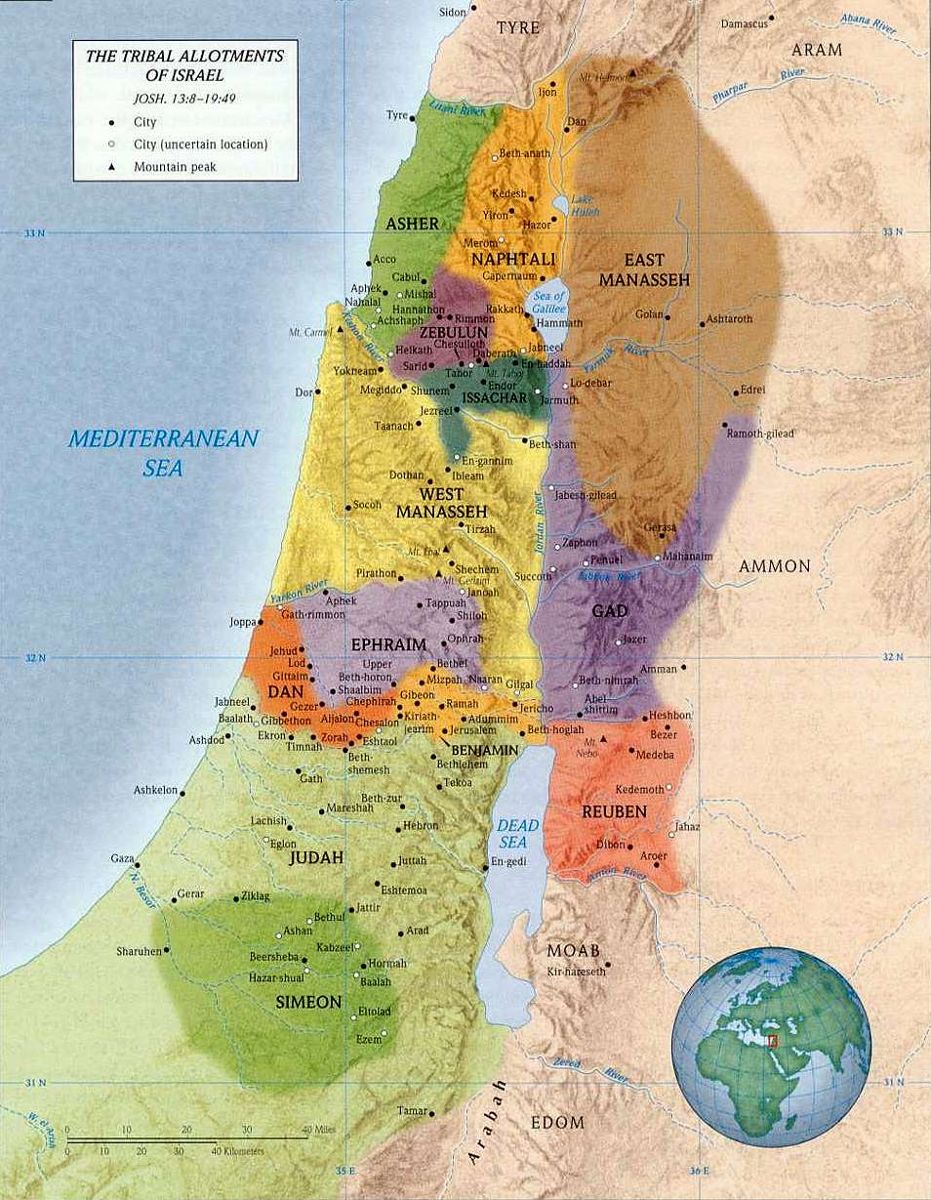
Judah with Simeon went up against the Canaanites and the Perizzites.  The term "Canaanites" often referred to the seven nations that occupied Canaan as a whole, but there was one nation of Canaanites, and it, as well as the nation of Perizzites, were delivered into Israel's hand by the Lord.  The Israelites killed ten thousand men in and around the area of Bezek which was just west of Jerusalem.  This section of a map borrowed from Psalms to God shows the tribes of Judah and Simeon and where they went up to fight in the northeastern part of Judah:


(5) And they found Adoni-Bezek in Bezek, and they fought against him, and they slew the Canaanites and the Perizzites. (6) But Adoni-Bezek fled, and they pursued after him and caught him and cut off his thumbs and his big toes.

The Israelites found the king of Bezek there and fought against him.  They slew the Canaanites and the Perizzites, but King Adoni-Bezek fled from them.  They pursued him and eventually caught him, and they cut off his thumbs and his big toes.  This would have disabled him from fighting as he would not be able to hold a weapon, and he would no longer be able to run.  It was unusual for the Israelites to inflict such torture and punishment, but it may have been God's will as the king himself recognized:

(7) And Adoni-Bezek said, "Seventy kings with their thumbs and big toes cut off gathered scraps under my table; as I have done, so God has requited me." And they brought him to Jerusalem, and there he died.

The king confessed that he had cut off the thumbs and big toes of seventy kings who were then left to gather scraps from under his table.  He said that as he had done so cruelly to others, God had repaid him by doing the same to him.  It's interesting that a pagan king would realize that God had done that to him, so it may be that he spoke under the influence of God's Holy Spirit.  The Israelites brought him to Jerusalem where he died.

(8) Now the children of Judah had fought against Jerusalem and had taken it and struck it with the edge of the sword and set the city on fire.

Judah had previously conquered Jerusalem which was how they were able to take the king there.  During the time of Joshua, the Israelites had not yet been able to drive the Jebusites out of Jerusalem (Joshua 15:63), but apparently Judah had been able to do it.

(9) And afterward the children of Judah went down to fight against the Canaanites who dwelt in the mountains, and in the south, and in the valley.

After the death of King Adoni-Bezek, the Israelites went southward to fight against the Canaanites who still dwelt in other areas of Judah, in the mountains, in the valley, and in the southern part of Judah.

(10) And Judah went against the Canaanites who dwelt in Hebron (now the name of Hebron before was Kirjath Arba), and they killed Sheshai, and Ahiman, and Talmai.

The tribe of Judah went against the Canaanites who still dwelt in Hebron.  The city of Hebron was before named Kirjath Arba for Arba, a chief among the Anakims who were giants in the city.  Caleb had previously driven out the giants, Sheshai, Ahiman, and Talmai (Joshua 15:14), but it seems they must have regained at least parts of the city.  This time the tribe of Judah killed the three giants.

(11) And from there he went against the inhabitants of Debir, and the name of Debir before was Kirjath Sepher.

This and what follows in the next few verses appears to be a retelling of Joshua 15:15-19.  It couldn't have happened after Joshua died because Joshua wrote about it.  Since Jewish tradition considers the prophet Samuel to be the author of Judges, and he would have written this about 300 years after the fact, it may be reasonable to believe he might not have gotten the chronology exactly right.  However, here Samuel was writing about the lands that were conquered after Joshua's initial conquest, and the conquest of Hebron did happen after that.  It was after the tribe of Judah had been given their allotment that Caleb (of Judah) went against the inhabitants of Debir.  Before it was renamed Debir the city was called Kirjath Sepher.

(12) And Caleb said, "He who strikes Kirjath Sepher and takes it, to him I will give Achsah my daughter to wife."

Caleb had said at the time that whoever was able to take Kirjath Sepher would be given his daughter Achsah in marriage (Joshua 15:16).

(13) And Othniel the son of Kenaz, Caleb's younger brother, took it, and he gave him Achsah his daughter to wife.

It was Caleb's nephew Othniel, the son of Kenaz who was Caleb's younger brother, who took Kirjath Sepher, and Caleb indeed gave him his daughter Achsah in marriage.

(14) And it came to pass when she came, that she moved him to ask of her father a field, and she dismounted, and Caleb said to her, "What do you want?" (15) And she said to him, "Give me a blessing, for you have given me a south land; give me also springs of water." And Caleb gave her the upper springs and the lower springs.

When Achsah came to Othniel on her donkey, she persuaded him to ask for a field from her father.  She dismounted her donkey, and Caleb asked her what she wanted.  She asked for an extra blessing.  He had already given her a south land, which might indicate a dry land, so she now asked for springs of water.  Caleb gave her upper springs and lower springs.

The fact that this account was written twice made me look harder at the reason why it was so important.  I read many commentaries and understood what others had found.  It was an illustration of how we can boldly approach our Father in heaven with our requests.  Imagine that!  The holy God of the universe wants to have a father/child relationship with us sinful creatures, and He urges us to come to Him with our petitions.  However, we must remember that the only way we unclean sinners are able to approach Him is because of the blood sacrifice of Jesus Christ that purifies us when we accept His gift.  Jesus said in Matthew 7:11, “If you then, being evil, know how to give good gifts to your children, how much more will your Father who is in heaven give good things to those who ask Him?"  However, we are to use wisdom and discernment as Achsah did.  She didn't ask for a gold-plated castle, but for springs for her dry land to make it more fruitful for her family.  James said in James 4:3, "You ask and do not receive, because you ask amiss, that you may spend it on your pleasures."  Our Father in heaven wants to bless us with the things that will help us grow and be more effective servants for His church, not with worthless trinkets.  He knows what is best for us, but He invites us to come confidently to Him with our requests, having faith that He will give us what we need, but perhaps not always what we want.

(16) And the children of the Kenite, Moses's father-in-law, went up out of the city of palm trees with the children of Judah into the wilderness of Judah, which is in the south of Arad, and they went and dwelt among the people.

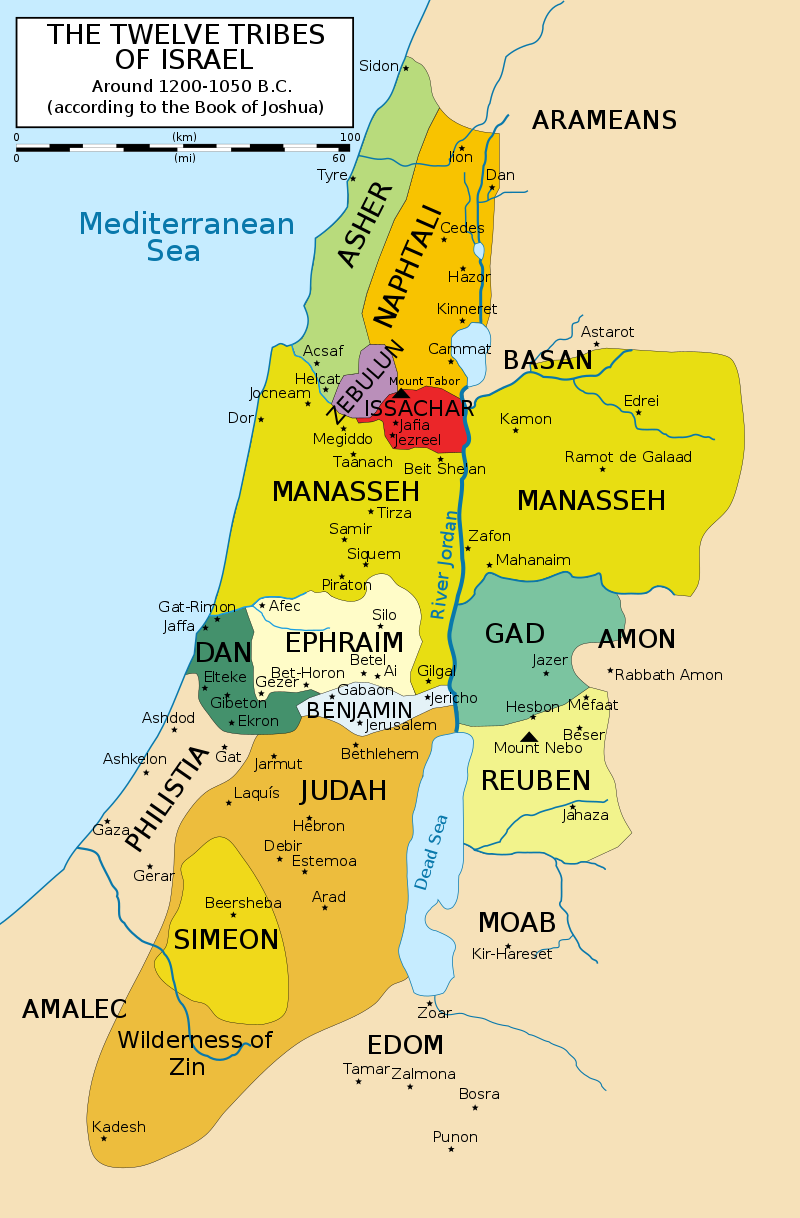
Moses's father-in-law was Jethro, a Kenite.  There is no consensus for whom the Kenites were named, but they were an ancient people living in Canaan in the time of Abraham (Genesis 15:19).  They were among ten tribes whose land God said He was giving to Abram.  However, during the time of Moses and Joshua, only seven nations were named as occupying Canaan.  The Kenites, the Kenizzites, and the Kadmonites, had either become extinct, moved out of Canaan, or mixed with other nations.  Jethro's daughter Zipporah married Moses.  Jethro and his son Hobab had joined with Moses, and Hobab's descendants lived among the Israelites in the land of Canaan; they were the Kenites.  The city of palm trees was Jericho (Deuteronomy 34:3).  The Kenites had apparently resided in Jericho, but they now left it to go with the tribe of Judah and settled in the wilderness of Judah which was south of Arad, which would put them east of the tribe of Simeon according to the map above.  According to Albert Barnes in his Notes on the Bible, the rabbinical story was that Jericho had been given to Hobab.  Joshua had cursed that city and any person who rose up to rebuild it (Joshua 6:26), so apparently the descendants of Hobab had determined to leave that cursed city and dwell among the tribe of Judah in the wilderness.

(17) And Judah went with Simeon his brother, and they slew the Canaanites that inhabited Zephath and utterly destroyed it. And the name of the city was called Hormah.

As the tribe of Judah had promised, they went with the tribe of Simeon and killed the Canaanites who inhabited a city called Zephath in eastern Simeon, and they renamed it Hormah.

(18) Also Judah took Gaza with its territory, and Ashkelon with its territory, and Ekron with its territory.

Judah also took Gaza and Ashkelon on the Mediterranean coast and Ekron in the north.  The Biblical scholars I study wrote that the cities were later retaken and possessed by the Philistines.  John Wesley in his Notes on the Bible, observed that the scripture did not say they slew the people as it did in the verse before it.  The people, being spared, regained their control of the cities.

(19) And the Lord was with Judah, and he drove out the mountaineers, but could not drive out the inhabitants of the valley because they had chariots of iron.

The Lord was with Judah, and the tribe was able to drive out the inhabitants of the mountainous region of Judah.  However, it appears their faith failed when they feared the chariots of iron, and they were unable to drive out the inhabitants of the valley.  The Lord was with them, and there was no reason to believe that He wouldn't be with them to drive out those people, but it appears they didn't even try because of their fear.

(20) And they gave Hebron to Caleb, as Moses said, and he expelled from there the three sons of Anak.
 
Once again, the author of this book wrote in this chapter about the areas that had been left unconquered after Joshua's conquest. He referred again to Hebron which had been given to Caleb.  Caleb had driven out the three giants, Sheshai, Ahiman, and Talmai, whom Judah later killed (v.10).

(21) And the children of Benjamin did not drive out the Jebusites that inhabited Jerusalem, but the Jebusites dwell with the children of Benjamin in Jerusalem to this day.

The tribe of Benjamin did not drive out the Jebusites that inhabited Jerusalem.  Although the tribe of Judah had previously taken the city (v. 8), it appears it was reinhabited by the Jebusites.  They remained dwelling with the tribe of Benjamin to the day the author, probably Samuel, wrote this.  John Gill, in his Exposition of the Bible, wrote that Samuel wrote the book of Judges before the reign of David who would dispossess the Jebusites.

(22) And the house of Joseph, they also went up against Bethel, and the Lord was with them.

The house of Joseph, Ephraim and Manasseh, went up against Bethel in the southern portion of Ephraim.  The inhabitants of Bethel had been driven away from the city by Joshua (Joshua 8:17), but apparently the city had become reinhabited by the Canaanites.  The Lord was with Ephraim and Manasseh as they went against the inhabitants of Bethel.  This map borrowed from Precept Austin, shows all of the tribes, and Bethel is seen in southern Ephraim:


(23) And the house of Joseph sent to descry Bethel. (Now the name of the city before was Luz.)

The tribes of Ephraim and Manasseh sent spies into Bethel to examine the conditions.  The name of Bethel was formerly Luz.

(24) And the spies saw a man come forth out of the city, and they said to him, "Show us, we pray you, the entrance into the city, and we will show you mercy."

The spies saw a man coming out of Bethel.  They asked him to tell them how to get into the city, and they in turn would show him mercy.

(25) And when he showed them the entrance into the city, they struck the city with the edge of the sword, but they let the man and all of his family go.

The man showed the spies a way into the city, and the tribes of Joseph struck the city and killed its inhabitants, but they let the man and his entire family go free.

(26) And the man went into the land of the Hittites and built a city and called its name Luz, which is its name to this day.

The man and his family went into the land of the Hittites where the Hittites apparently dwelt after being expelled from Canaan.  He built a city and called it Luz after the city he had been forced to leave.  Luz was still there at the writing of this book, although it was no longer there at the writing of the Biblical scholars I study, as they didn't know where this city of Luz would have been.

(27) Neither did Manasseh drive out Beth Shean and her towns, nor Taanach and her towns, nor the inhabitants of Dor and her towns, nor the inhabitants of Ibleam and her towns, nor the inhabitants of Megiddo and her towns, but the Canaanites would dwell in that land.

Beth Shean, Taanach, Ibleam, Dor, and Megiddo, were cities given to the half tribe of Manasseh west of the Jordan River out of the lots of Issachar and Asher (Joshua 17:11).  Apparently, they never made any attempt to drive out the inhabitants of the cities and inhabit them as their cities, so the Canaanites dwelt in their land.  The map above shows most of these cities in northern West Manasseh.

(28) And it came to pass, when Israel was strong, that they put the Canaanites to tribute and did not utterly drive them out.

When Israel became strong, they still did not drive out the Canaanites but made them tributaries under them.

(29) Neither did Ephraim drive out the Canaanites that dwelt in Gezer, but the Canaanites dwelt in Gezer among them.

Neither did Ephraim, the other son of Joseph, drive out Canaanites in his land, specifically Gezer, and the Canaanites lived in Gezer among them.  

(30) Neither did Zebulun drive out the inhabitants of Kitron nor the inhabitants of Nahalol, but the Canaanites dwelt among them and became tributaries.

Zebulun did not drive out the inhabitants of Kitron or Nahalol, and the Canaanites there became tributaries.

(31) Neither did Asher drive out the inhabitants of Accho, nor the inhabitants of Zidon, nor of Ahlab, nor of Achzib, nor of Helbah, nor of Aphik, nor of Rehob, (32) But the Asherites dwelt among the Canaanites, the inhabitants of the land, for they did not drive them out.

The tribe of Asher appears especially slothful in driving the Canaanites out of their land as God had instructed.  Out of 22 cities they had been given (Joshua 19:30), they failed to drive the enemy out of seven of them, about one third of their allotted cities.

(33) Neither did Naphtali drive out the inhabitants of Beth Shemesh nor the inhabitants of Beth Anath, but he dwelt among the Canaanites, the inhabitants of the land; nevertheless, the inhabitants of Beth Shemesh and Beth Anath became tributaries to them.

The tribe of Naphtali failed to drive out the Canaanites from Beth Shemesh and Beth Anath, so they dwelt among the Canaanites, but they did make the Canaanites in those cities tributaries to them.

(34) And the Amorites forced the children of Dan into the mountain, for they would not allow them to come down to the valley.

The Amorites in the tribe of Dan's territory forced their tribe into the mountains and would not allow them to go down to the valley.  There must have been a serious lack of faith in God to drive out their enemies that their enemies were able to drive them from their land.

(35) But the Amorites would dwell in Mount Heres in Aijalon, and in Shaalbim, yet the hand of the house of Joseph prevailed so that they became tributaries.

It appears that the Amorites even dwelt among Dan in the mountains.  However, the house of Joseph helped its brother tribe, as Ephraim and Manasseh bordered Dan.  They at least made the Amorites tributaries in Mount Heres in Aijalon and in Shaalbim, however it doesn't appear that they were ever able to make tributaries of the Amorites in the valley.

(36) And the coast of the Amorites was from the going up to Akrabbim, from the rock and upward.

Akrabbim means "scorpion," so this is believed to be the Scorpion Pass, a pass between the south end of the Dead Sea and Zin.  "The rock" is believed to be Petra which was located east of that region on the east side of the Dead Sea.  Looking at the map above, I believe the territory of the Amorites at this time was from the eastern edge of the Wilderness of Zin, eastward below the Dead Sea, and upward on the east side of the Dead Sea, the regions of Edom and Moab.  The Amorites were said to be the most powerful people among the Canaanites and would prove to be very troublesome to Israel.

The Israelites were very careless with their duty to drive out all the Canaanites from their land.  Whether it was laziness or fear and a lack of faith, they did not do as their Lord God had told them to do.  Some of the cities where the Israelites failed to remove the Canaanites were cities that had been given to the Levites, including Taanach, Gezer, Nahalal, and Rehob, which may have been the reason they were lax in driving out the Canaanites.  However, you would think they would take better care of their priests and ministers who served their Lord God.  There may have been some covetousness on Israel's part as well, as they decided making the Canaanites pay tribute was more advantageous to them than driving them out.  However, God's way is always the best way, and by disobeying Him in their total conquest of Canaan, they brought troubles on themselves.  However, this may have been by divine design.  The Israelites had proved to be a people lacking faith and easily drawn away from their Lord.  Perhaps they needed adversity to keep them in check.  It's most often in adversity that people turn toward God.  It's not that God purposely designed things the way they were in order to punish His people.  He just allowed them to do or not do according to their own desires, letting them learn great lessons as He brought them through their adversities.

Sunday, February 16, 2025

The Inheritance of the Tribe of Judah

Continuing a chronological Bible study:

(Joshua 15:1) This then was the lot of the tribe of the children of Judah by their families, to the border of Edom, the wilderness of Zin southward, the uttermost part of the south coast.

In the last chapter, Caleb had requested and was granted the land of Hebron for his inheritance.  As he was from the tribe of Judah, it was within Judah's inheritance.  Now a description of all the boundaries of the tribe of Judah were given.  It ranged from Edom in the southeast to the wilderness of Zin in the south wherein lay Kadesh Barnea.  This map from the last chapter shows Judah's lot in the southern region of the land of Canaan:


(2) And their south border was from the shore of the Salt Sea, from the bay that looked southward.

Their south border ran from the southern tip of the Salt Sea, also called the Dead Sea.

(3) And it went out to the south side to Maaleh-Akrabbim and passed along to Zin, and ascended up on the south side to Kadesh Barnea, and passed along to Hezron, and went up to Adar, and fetched a compass to Karkaa.

The border went from the southern tip of the Salt Sea southward to the ascent of Akrabbim, which literally meant Mount of Scorpions, and went along Zin in the south, to Kadesh Barnea, and then up to Hezron and Adar, two cities evidently along the southwestern coast.  And it curved around to Karkaa.  I can't locate all those cities, so the general map above is good for me.  However, it was very important to God that the promised inheritance was well defined.  As discussed before, there will come a time when the people possess their full inheritance.

(4) It passed toward Azmon and went out to the river of Egypt, and the goings out of that coast were at the sea; this shall be your south coast.

The southern border continued toward Azmon out to the river of Egypt which might be the most eastern branch of the Nile, although Biblical scholars disagree on whether the promised land reached that far, so it might mean some other river of Egypt that extended to the promised land.  From there, the southern border ended at the Mediterranean Sea.

(5) And the east border the Salt Sea to the end of Jordan. And the border in the north quarter was from the bay of the sea at the mouth of the Jordan.

The eastern border was the Salt Sea, or the Dead Sea, to the place where the Jordan River flowed into it.  The northern border began from that point.

(6) And the border went up to Beth Hoglah and passed along by the north of Beth Arabah, and the border went up to the stone of Bohan the son of Reuben.

Beth Hoglah and Beth Arabah were said to be cities within the tribe of Benjamin, so they must have been on the border between Benjamin and Judah.  No one seems to know where the stone of Bohan was or why it was placed where it was, but it would have certainly been well known at the time.

(7) And the border went up toward Debir from the valley of Achor and so northward looking toward Gilgal, which is before the going up to Adummim, which is on the south side of the river, and the border passed toward the waters of En Shemesh, and the goings out of it were at En Rogel.

I begin to get lost here, except to look at the map above.  There has to be a third place called Debir as neither one of the other Debirs fits here.  Also there must be another Gilgal.  En Shemesh and En Rogel are along that northern border of Judah.

(8) And the border went up by the valley of the son of Hinnom to the south side of the Jebusite, the same is Jerusalem, and the border went up to the top of the mountain before the valley of Hinnom westward, which is at the end of the valley of the giants northward.

Again I can't locate the exact places, but the border runs along the line of the former Jebusite city, Jebus, renamed Jerusalem, on the border of the tribe of Benjamin.

(9) And the border was drawn from the top of the hill to the fountain of the water of Nephtoah and went out to the cities of Mount Ephron, and the border was drawn to Baalah, which is Kirjath Jearim. (10) And the border compassed from Baalah westward to Mount Seir and passed along to the side of Mount Jearim, which is Chesalon, on the north side, and went down to Beth Shemesh, and passed on to Timnah. (11) And the border went out to the side of Ekron northward, and the border was drawn to Shicron and passed along to Mount Baalah and went out to Jabneel, and the goings out of the border were at the sea.

The northern border of Judah continued to be drawn as described above and ended at the Mediterranean Sea.

(12) And the west border was to the great sea and its coast. This is the coast of the children of Judah round about according to their families.

The western border of the tribe of Judah was the Mediterranean Sea.  That ended the description of the boundaries of Judah's lot all around.

(13) And to Caleb the son of Jephunneh he gave a part among the children of Judah, according to the commandment of the Lord to Joshua, the city of Arba the father of Anak, which is Hebron.

Joshua gave Caleb his own part among the tribe of Judah, according to what the Lord had promised, and Caleb was given in the last chapter (Joshua 14:13).  He gave him the land of Hebron, formerly called Kirjath Arba for Arba, the father of Anak, a great man among the Anakim (Joshua 14:15).

(14) And Caleb drove out the three sons of Anak, Sheshai, and Ahiman, and Talmai, the children of Anak.

Caleb drove out the sons of Anak, the giants in the land, as he said he would if the Lord was with him (Joshua 14:12).

(15) And he went up from there to the inhabitants of Debir, and the name of Debir before was Kirjath Sepher.

After he conquered Hebron, Caleb went up to that third Debir which was surely close to Hebron, and was before named Kirjath Sepher.

(16) And Caleb said, "He who strikes Kirjath Sepher and takes it, to him I will give Achsah my daughter to wife."

Caleb announced that whoever struck and took Kirjath Sepher would be given his daughter Achsah as wife.  Such was the custom in those days, and to be married into the family of the chief prince of the tribe of Judah would have been a very great honor.

(17) And Othneil the son of Kenaz, the brother of Caleb, took it, and he gave him Achsah his daughter to wife.

Othneil, who appears to be Caleb's nephew, the son of his brother Kenaz, took Kirjath Sepher and was given Caleb's daughter Achsah as his wife.  Often the term brother was used to denote a kinsman, not necessarily a brother, but first cousins were allowed to be married then.

(18) And it came to pass as she came, that she moved him to ask of her father a field; and she lighted off her donkey, and Caleb said to her, "What do you want?"

As Achsah came to her husband Othneil, she persuaded him to ask for a field from her father.  I suppose she had been riding a donkey to go off with her new husband, but she dismounted, and her father asked her what she wanted.

(19) Who answered, "Give me a blessing, for you have given me a south land; give me also springs of water." And he gave her the upper springs and the lower springs.

Achsah asked her father Caleb to give her a blessing or a gift.  Apparently he had already given her land.  She called it a south land which may have meant it was dry, so she asked for the extra blessing of springs of water.  Caleb gave her springs in the upper part of her land or perhaps in an additional field adjacent to her land, and he also gave her springs in the lower part.

(20) This is the inheritance of the tribe of the children of Judah according to their families.

The description of the land in the first part of this chapter above and the following list of cities described the inheritance of the tribe of the children of Judah.

(21) And the uppermost cities of the tribe of the children of Judah toward the coast of Edom southward were Kabzeel, and Eder, and Jagur,

I found the following map on the same page previously mentioned, Psalms to God, that shows a little more detail of the cities within the tribe of Judah.  Judging by the location of Kabzeel, I suppose the meaning of the verse is that the "outermost" cities southward, the southern boundary, went from the coast of Edom at the tip of the Dead Sea westward across to Gaza on the Mediterranean Sea, and included the cities of Kabzeel, Eder, and Jagur.  As most of the cities mentioned do not appear on any maps I can find, I'll let the general lines of the boundaries of the tribe depicted in the map below be the best interpretation I have at this point in my study:


(22) And Kinah, and Dimonah, and Adadah, (23) And Kedesh, and Hazor, and Ithnan, (24) Ziph, and Telem, and Bealoth, (25) And Hazor-Hadattah, and Kerioth-Hezron, which is Hazor, 

I am completely lost as to where all these cities are located and will rely only on the general location in the map above.  There must have been at least four different Hazors as supposedly the Hazor in verse 23 is not the same as Hazor in Joshua 11:1.  Then we have Hazor-Hadattah which means New Hazor, and Kerioth-Hezron which is Hazor.  That should be as clear as mud!  Continuing with a list of the cities in this section of Judah's inheritance:

(26) Amam, and Shema, and Moladah, (27) Hazar Gaddah, and Heshmon, and Beth Pelet, (28) And Hazar Shual, and Beersheba, and Bizjothjah, (29) Baalah, and Iim, and Azem, (30) And Eltolad, and Chesil, and Hormah, (31) And Ziklag, and Madmannah, and Sansannah, (32) And Lebaoth, and Shilhim, and Ain, and Rimmon; all the cities, twenty-nine, with their villages.

I counted thirty-six cities listed.  However, it is said that some of these cities were given to the tribe of Simeon (Joshua 19:1), which does indeed appear to be in the middle of the tribe of Judah.

(33) And in the valley, Eshtaol, and Zorah, and Ashnah, 

The valley within the tribe of Judah appears to begin in the north central part of Judah where Eshtaol and Zorah are seen on the map and continues south (north of the southern boundary) and westward:

(34) And Zanoah, and En Gannim, Tappuah, and Enam, (35) Jarmuth, and Adullam, Socoh, and Azekah, (36) And Sharaim, and Adithaim, and Gederah, and Gederothaim, fourteen cities with their villages.

Fourteen cities were in the valley region.  I counted fifteen, but ancient scholars said that Gederah and Gederothaim were one and the same, and it should have been translated "Gederah (or Gederothaim)."

(37) Zenan, and Hadashah, and Migdal Gad, (38) And Dilean, and Mizpeh, and Joktheel, (39) Lachish, and Bozkath, and Eglon, (40) And Cabbon, and Lahmam, and Kithlish, (41) And Gederoth, Beth Dagon, and Naamah, and Makkedah, sixteen cities with their villages.

These appear to be sixteen other cities in the valley region of Judah.

(42) Libnah, and Ether, and Ashan, (43) And Jiphtah, and Ashnah, and Nezib, (44) And Keilah, and Achzib, and Mareshah, nine cities with their villages.

This appears to be a list of nine more cities in the valley or plain region.

(45) Ekron with her towns and her villages, (46) From Ekron to the sea, all that is near Ashdod with their villages, (47) Ashdod with her towns and her villages, Gaza with her towns and her villages, to the river of Egypt and the great sea and its border.

Judah's inheritance included Ekron in the northwestern region to Ashdod on the Mediterranean Sea and along that coast down to Gaza with all their suburbs.

(48) And in the mountains, Shamir, and Jattir, and Socoh, (49) And Dannah, and Kirjath Sannah, which is Debir, (50) And Anab, and Eshtemoh, and Anim, (51) And Goshen, and Holon, and Giloh, eleven cities with their villages.

The mountain region included those eleven cities.

(52) Arab, and Dumah, and Eshean, (53) And Janum, and Beth Tappuah, and Aphekah, (54) And Humtah, and Kirjath Arba, which is Hebron, and Zior, nine cities with their villages.

These nine cities were also in the mountainous or hill country of Judea.

(55) Maon, Carmel, and Ziph, and Juttah, (56) And Jezreel, and Jokdeam, and Zanoah, (57) Cain, Gibeah, and Timnah, ten cities with their villages.

These were ten more cities in the mountainous or hill country.

(58) Halhul, Beth Zur, and Gedor, (59) And Maarath, and Beth Anoth, and Eltekon, six cities with their villages.

These appear to be six more cities in the mountain region of Judah.

(60) Kirjath Baal, which is Kirjath Jearim, and Rabbah, two cities with their villages.

These appear to be two more cities in the mountain region.

(61) In the wilderness, Beth Arabah, Middin, and Secacah, (62) And Nibshan, and the city of Salt, and En Gedi, six cities with their villages.

There were six cities in the wilderness region of Judah.

(63) As for the Jebusites, the inhabitants of Jerusalem, the children of Judah could not drive them out, but the Jebusites dwell with the children of Judah at Jerusalem to this day.

Although Jerusalem was within the tribe of Benjamin, it was on the border between Benjamin and Judah.  It is mentioned here because surely some of the Jebusites who had not been completely driven out of Jerusalem inhabited the outer regions of Jerusalem into Judah.  At the time of Joshua's writing, they still lived among the Israelites.

Thus ended the description of the allotment for the tribe of Judah, which included Caleb's portion and the blessing he gave his daughter.