Showing posts with label Dan. Show all posts

Tuesday, August 5, 2025

Micah's Idolatry

Continuing a chronological Bible study:

(Judges 17:1) And there was a man of Mount Ephraim whose name was Micah.

At the end of the last chapter and post, the life and reign of Samson as the last judge of Israel, ended.  Now begins the story of a man named Micah from Mount Ephraim.  Biblical scholars say that Micah's life did not follow chronologically after the life of Samson, but this chapter and the following four chapters of Judges contain a history of facts that probably occurred right after the time of Joshua before the time of the judges in Israel.  I have been disappointed in this particular chronological Bible study proposed by Skip Andrews as it does not always actually follow chronologically, but as I started with it, I must finish with it so as not to miss any part of the Bible.  As even Skip Andrews said, "there are several good ways to read the Bible each year. Choose a reliable version and stick with it all the way through."

(2) And he said to his mother, "The eleven hundred of silver that were taken from you, about which you cursed, and spoke of also in my ears, behold the silver is with me; I took it." And his mother said, "Blessed of the Lord, my son!"

Micah spoke to his mother about eleven hundred pieces of silver that had been taken from her which she had cursed when she realized it had been stolen from her.  It is interesting that it was exactly eleven hundred silver, the same amount that was given to Delilah in Judges 16:5.  I wonder if speculation that it could be the same silver is what caused confusion in the chronological order of events.  However, scholars are pretty certain these events with Micah happened long before the incident with Delilah.  Both events seem to have involved cursed silver.

Anyway, Micah had heard his mother speak of the silver that had been taken from her, and he heard that she had cursed it.  He now confessed to his mother that he had her silver, and she now blessed him, perhaps reversing her curse against the thief, realizing it was her own son.

(3) And when he had restored the eleven hundred silver to his mother, his mother said, "I had wholly dedicated the silver to the Lord from my hand for my son to make a graven image and a molten image; now therefore, I will restore it to you."

When Micah had restored the eleven hundred pieces of silver to his mother, she in turn, told him that she had dedicated the silver to the Lord and had intended it be used to have her son make engraved and molded images.  Therefore, she gave the silver back to her son.

(4) Yet he restored the money to his mother, and his mother took two hundred silver and gave them to the founder who made of it a graven and molten image, and they were in the house of Micah.

However, Micah, apparently wishing to be completely absolved from the initial taking of the silver, gave it back to his mother again.  She then took two hundred silver of it and gave it to a silversmith to make a molded and engraved image or images, and they were put in the house of Micah.

(5) And the man Micah had a house of gods, and made an ephod, and teraphim, and consecrated one of his sons, who became his priest.

Micah had a house of idols, and he made an ephod, a priestly garment, and teraphim, other household idols.  He consecrated one of his sons to be his priest.  This he did, perhaps not out of idolatry against his Lord, but maybe because the Levites had become corrupted at this time and neglected their duties.  For, as the next verse tells us:

(6) In those days there was no king in Israel; every man did right in his own eyes.

The people had no spiritual leadership, so everyone did what was right in their own eyes.  That may account for Micah's idolatry.

(7) And there was a young man out of Bethlehem Judah of the family of Judah, a Levite, and he sojourned there.

There was a young man in Bethlehem in Judah, distinguishing it from Bethlehem in Zebulun.  He was a Levite in the family of Judah, and he sojourned there in Bethlehem Judah.

(8) And the man departed out of the city from Bethlehem Judah to sojourn where he could find, and he came to Mount Ephraim to the house of Micah, as he journeyed.

The man left Bethlehem Judah and came to Mount Ephraim to the house of Micah.

(9) And Micah said to him, "Where do you come from?" And he said to him, "I am a Levite of Bethlehem Judah, and I go to sojourn where I may find."

Micah asked the man where he was from, and the man answered that he was a Levite from Bethlehem Judah, and he journeyed to find a place in which to dwell.

(10) And Micah said to him, "Dwell with me and be to me a father and a priest, and I will give you ten silver by the year, and a suit of apparel, and your victuals." So the Levite went in.

Micah asked the man to stay with him and be as a father and priest to him to instruct him in the knowledge of spiritual things.  He would pay him ten pieces of silver a year and would give him priestly garments and meals.  The Levite agreed and went in to stay with Micah.

(11) And the Levite was content to dwell with the man, and the young man was to him as one of his sons.

The Levite was content to live with Micah and became as one of Micah's sons.

(12) And Micah consecrated the Levite, and the young man became his priest and was in the house of Micah.

So Micah then consecrated the Levite to be his priest as he had once done with his son (verse 5).  The man lived in the house of Micah.

(13) Then Micah said, "Now I know that the Lord will do me good, seeing I have a Levite as priest."

Micah felt confident that he was doing the right thing and that he would be blessed by the Lord because he had a proper Levite priest.  I can't help but relate this to the present time when we have strayed so far from the things of God, but God knows our hearts, and He will guide us toward the right things.  It seems as if Micah had repented from taking his mother's silver and was trying to live in worship to God, although it was at that present time a mixture of the worship of God and the worship of idols.  God knew his heart and perhaps sent him a priest.

(Judges 18:1) In those days there was no king in Israel, and in those days the tribe of the Danites sought an inheritance to dwell in, for until that day their inheritance had not fallen to them among the tribes of Israel.

We are told again that there was no king in Israel during this time, no political or spiritual leader in Israel.  A tribe of Danites at that time sought a place in which to dwell because they had not received an inheritance for themselves.  The whole tribe of Dan had received their lot during the time of Joshua (Joshua 19:40), but this particular Danite family was looking for an inheritance of their own.

(2) And the children of Dan sent of their family five men from their coasts, men of valor, from Zorah and from Eshtaol, to spy out the land and to search it, and they said to them, "Go, search the land," who when they came to Mount Ephraim to the house of Micah, they lodged there.

This family of Danites sent five men from their territory, considered men of valor, men from Zorah and Eshtaol.  Again, there is a coincidence from the time of Samson, as this is where he was from.  Both these narratives were probably written at the same time which is why they are found next to each other in the book of Judges even though they did not happen chronologically at the same time.  These men of the tribe of Dan were instructed to search out the land, and they subsequently came to Mount Ephraim where the house of Micah was located, and they lodged there.

(3) When they were by the house of Micah, they knew the voice of the young man, the Levite, and they turned in there, and said to him, "Who brought you here? And what are you doing here? And what do you have here?"

When the Danite men were near to the house of Micah, they heard the voice of the young Levite and recognized it.  They turned in to the house of Micah and asked him questions about how he came to be there and what he was doing there.

(4) And he said to them, "Thus and thus Micah dealt with me and has hired me, and I am his priest."

The young man told them that all answers were in Micah.  He had hired him to be his priest.

(5) And they said to him, "Ask counsel, we pray you, of God, that we may know whether our way which we go shall be prosperous."

Learning he was a priest, and probably because they saw the ephod which traditionally held the Urim and Thummim, which when consulted, would reveal the will of God, they asked the man to consult God and ask if their way was going to be prosperous.

(6) And the priest said to them, "Go in peace, before the Lord is your way in which you go."

Presuming it was after he had consulted God, the priest told them to go their way in peace as the way they were going was before the Lord, or in His presence, suggesting they were on the right path.

(7) Then the five men departed and came to Laish and saw the people there, how they dwelt careless after the manner of the Sidonians, quiet and secure, and no magistrate in the land that might put to shame anything, and they were far from the Sidonians and had no business with anyone.

The five Danites departed from the house of Micah and went to Laish where they observed the people there who lived without care after the manner of the Sidonians.  They probably had been a part of the Sidonians but were now far from them with no business with them, but living as they did, with no cares, quiet and secure, with no magistrate or law in the land to put to shame anything they did.

(8) And they came to their brethren to Zorah and Eshtaol, and their brethren said to them, "What do you say?" (9) And they said, "Arise, that we may go up against them, for we have seen the land, and behold, it is very good; and are you still? Do not be slothful to go, to enter to possess the land."

The five men went back to their brethren in Zorah and Eshtaol where their brethren asked them for a report of what they had seen.  They told them to rise up and go against the present occupants of the land for the land was very good.  They asked how they could sit still when there was such a good land available for them to possess.

(10) "When you go, you will come to a people secure and to a large land, for God has given it into your hands, a place with no want of anything that is in the earth."

They told the people that they would find a large land with people secure or without care, insinuating that it would be easy to catch them off guard and capture their land.  They told them that God had given the land into their hands, a fruitful land with everything they wanted.  They apparently concluded that from the message they received from Micah's priest, that they were going the way of the Lord (verse 6).

(11) And there went from there of the family of the Danites, out of Zorah and out of Eshtaol, six hundred men appointed with weapons of war. (12) And they went up and pitched in Kirjath Jearim in Judah; therefore they called that place Mahaneh Dan to this day; behold, it is behind Kirjath Jearim.

So there went from the Danites six hundred armed men out of Zorah and Eshtaol.  They pitched a camp in Kirjath Jearim, or actually very near behind it.  To the day of the writing of this account, the place where they camped was called Mahaneh Dan, which literally meant "camp of Dan."

(13) And they passed from there to Mount Ephraim and came to the house of Micah. (14) Then answered the five men who went to spy out the country of Laish, and said to their brethren, "Do you know that there is in these houses an ephod, and teraphim, and a graven image, and a molten image? Now therefore, consider what you have to do."

The Danites came to Mount Ephraim to the house of Micah.  The five men who had spied out the land told them that there was an ephod, teraphim, and engraved and molded images within those houses of that village or area, specifically in the house of Micah.  They said they should consider what they should do at that point.  I'm not sure what they thought they should do, perhaps consult the priest further?

(15) And they turned there and came to the house of the young man the Levite, to the house of Micah and saluted him. (16) And the six hundred men appointed with their weapons of war, who were of the children of Dan, stood by the entering of the gate.

The Danites turned in to the house of Micah where they saw the young Levite man, and they greeted him.  The six hundred armed Danites stood by the entrance of the gate.

(17) And the five men who went to spy out the land went up, came in, took the graven image, and the ephod, and the teraphim, and the molten image, and the priest stood in the entering of the gate with the six hundred men appointed with weapons of war.

The five spies went in the house and took out the ephod, teraphim, and engraved and molded images, and the priest stood at the gate with the six hundred armed men.

(18) And these went into Micah's house and fetched the carved image, the ephod, and the teraphim, and the molten image.  Then the priest said to them, "What are you doing?"

It seems the five spies had gone into Micah's house and took the things without the priest's knowledge.  When he saw what they had done, he asked what they were doing.

(19) And they said to him, "Hold your peace; lay your hand upon your mouth and go with us and be to us a father and a priest. Is it better for you to be a priest to the house of one man or that you be a priest to a tribe and a family in Israel?"

The Danites told the priest to be quiet and go with them to be their father and priest.  They asked him if it was better to be a priest to one man or to an entire body of people, called a tribe here, although these six hundred didn't represent the entire tribe of Dan.

(20) And the priest's heart was glad, and he took the ephod, and the teraphim, and the graven image, and went in the midst of the people.

The priest was happy at the opportunity to serve more than just one man, and he took the spiritual things and went among the people.  However, didn't those things belong to Micah?

(21) So they turned and departed and put the little ones and the cattle and the carriage before them.

The Danites departed from Micah's house.  It appears they had been traveling with their wives, children, and livestock, as they were in search of a new land, never planning to return from where they came.  They let their children and cattle go before them.

(22) When they were a good way from the house of Micah, the men who were in the houses near to Micah's house were gathered together and overtook the children of Dan.

However, when Micah and his neighbors realized what the Danites had done, they gathered together and went after the Danites and caught up with them.

(23) And they cried to the children of Dan. And they turned their faces, and said to Micah, "What ails you, that you come with such a company?"

When Micah and his neighbors caught up to the Danites, they cried out to them.  Hearing them, they turned and directed their question to Micah, incredibly asking why he had come after them with so many people.

(24) And he said, "You have taken away my gods which I made and the priest, and you have gone away, and what more do I have? And what is this you say to me, 'What ails you?'"

Micah told them they had taken away his gods and his priest, leaving him with none of his spiritual things, and they had the audacity to ask him what ailed him.

(25) And the children of Dan said to him, "Let not your voice be heard among us, lest angry men run upon you and you lose your life with the lives of your household."

The Danites told Micah he should quit complaining in the ears of their men, as one of them might get angry and kill him and his household.

(26) And the children of Dan went their way, and when Micah saw that they were too strong for him, he turned and went back to his house.

The Danites went on their way.  Micah realized they were too strong for him, so he went back to his house.  The silver Micah had once stolen from his mother was made into idols that were stolen from him.  If Micah had truly repented and was trying to live for the Lord, then it was a good thing that his idols had been stolen, and he could return to the proper worship of his Lord.

(27) And they took what Micah had made and the priest whom he had and came to Laish to a people quiet and secure, and they killed them with the edge of the sword and burnt the city with fire.

They went their way with the things they had taken from Micah, including the priest, and they went to Laish where they found the people quiet and feeling secure, meaning not on guard against any enemies, and they killed them and burnt their city.

(28) And there was no deliverer because it was far from Sidon, and they had no business with anyone, and it was in the valley by Beth Rehob. And they built a city and dwelt in it.

There had been no one to save the people in Laish because they were far from the Sidonians under whose government they had appeared to be (verse 7), and they had no interactions with any other people.  It was in the valley by Beth Rehob, and the Danites rebuilt the city.

(29) And they called the name of the city Dan after the name of Dan their father who was born to Israel. However, the name of the city was Laish at first.

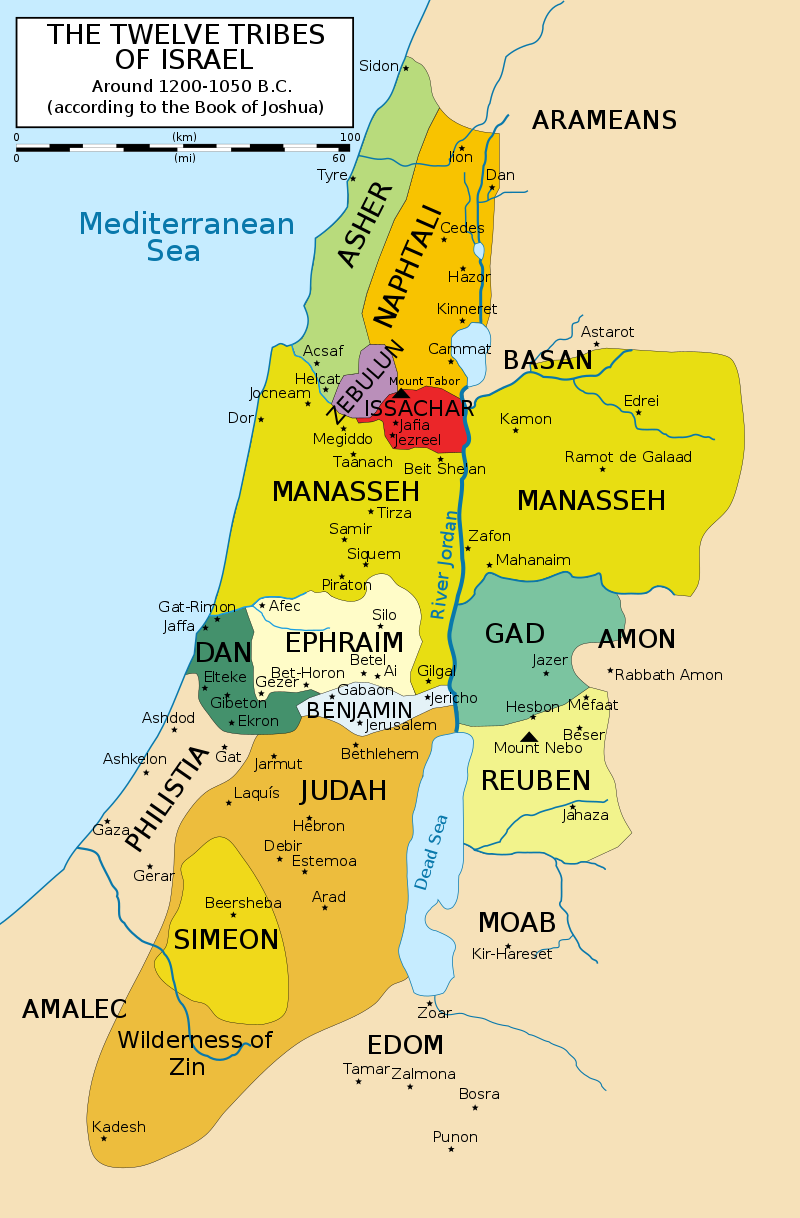
The Danites called the name of their rebuilt city Dan, after the son of Jacob or Israel.  The name of the city was Laish at first, which meant "lion."  As it turns out, this was the detailed story of how Dan came to enlarge its territory as we were told it did in Joshua 19:47.  In that account, the city was called Leshem which must have been the same place as Laish, as we were told there that the Danites took the city and renamed it Dan after their father, the son of Jacob.  The name of the place may have had something to do with the prophetic blessing Jacob gave Dan in Deuteronomy 33:22, that Dan, as a lion's whelp, would leap from Bashan, which it did when some of the tribe went from their original allotted inheritance to the far northeast corner of Israel, as seen in the map borrowed from Unique Sites of Israel Blog:


(30) And the children of Dan set up the graven image, and Jonathan, the son of Gershom, the son of Manasseh, he and his sons were priests to the tribe of Dan until the day of the captivity of the land.

The Danites set up the graven image, and probably the other spiritual things they had taken from Micah, and set those up in their new city.  Whether it was one or all the idols they set up, it was, no doubt, in veneration for the idol(s) to which they attributed their success.  They set up Jonathan, said to be the son of Gershom, the son of Manasseh, as priest, and his sons to continue as priests for this particular tribe of Dan until the captivity of the land, which probably refers to the Assyrian captivity (2 Kings 17:6).  

There is no consensus about who this Jonathan was.  Most agree that it was probably the same Levite whom Micah had set as priest of his house.  But was he the son of Gershom, the son of Manasseh?  Maybe only if these were a different Gershom and Manasseh than the ones we have come to know.  Manasseh, the son of Joseph, did not have a son named Gershom.  However, supposedly the only thing in the original spelling of the name Manasseh that made it indeed Manasseh, was a small "N" placed over the other letters.  With the N, it's Manasseh.  Without the N which may have been added at some subsequent time, it's Moses, and Moses did have a son named Gershom.  I don't think it really matters who this Levite was.  I believe the purpose of these two chapters was to demonstrate how far Israel had strayed from their original worship of their one true God.  Every man did what was right in his own eyes (Judges 17:6).  We were initially told that the Levite who became Micah's priest was from the tribe of Judah (Judges 17:7).  Even from that point, we see that the Levite was not living as he should, as Bethlehem was not a Levitical city.  Whether he was the grandson of Manasseh or Moses or some other Levite, he had strayed from his original purpose and worship.  And he allowed himself to be a part of a theft of Micah's belongings and continued in the worship of idols.  He may have thought he was worshipping the one true God, as Micah probably did.  The Danites may have sincerely thought they were doing proper worship by having a priest and the spiritual things they believed to be from God.  However, they had stolen and destroyed a peaceful city to get it.  But with no proper spiritual leadership and instruction, everyone was doing what was right in their own eyes and straying further and further from the true God.

(31) And they set them up Micah's graven image which he made, all the time that the house of God was in Shiloh.

Again we are told that these Danites set up Micah's engraved image, and it remained as long as the tabernacle of God was in Shiloh, which according to some Jewish writers, was three hundred and sixty years.

Saturday, May 17, 2025

Song of Deborah

Continuing a chronological Bible study:

(Judges 5:1) Then sang Deborah and Barak the son of Abinoam on that day, saying,

In the last chapter, Deborah and Barak had just defeated the king of Canaan and his army and its captain, Sisera, by the hand of the Lord who delivered their enemy to them.  Deborah wrote a song of praise that was sung by both her and Barak:

(2) "Praise you, the Lord, for the avenging of Israel, when the people willingly offered themselves."

Deborah began by praising the Lord for taking vengeance on Jabin king of Canaan, when, led by the Lord, the children of Israel willingly went to fight against their enemies for Israel.

(3) "Hear, O you kings! Give ear, O you princes! I, even I, will sing to the Lord; I will sing praise to the Lord God of Israel."

Deborah desired that all kings and princes hear her song of praise, that all might know the wonderful works of the Lord God of Israel.

(4) "Lord, when You went out of Seir, when You marched out of the field of Edom, the earth trembled, and the heavens dropped; the clouds also dropped water."

Seir and Edom are the same place, and Deborah here acknowledged that the Lord had led His people from there to their land in Canaan.  All the way, He struck dread in the hearts of their enemies with earthquakes and rain and hail storms.

(5) "The mountains melted from before the Lord, that Sinai from before the Lord God of Israel."

Even the mountains trembled and melted before the Lord, just as Mount Sinai had trembled and quaked at the presence of God on it.

(6) "In the days of Shamgar the son of Anath, in the days of Jael, the highways were unoccupied, and the travelers walked through byways."

Shamgar succeeded Ehud as judge, but did not appear to rule long or accomplish much (Judges 3:31), or at least not a perfect and complete deliverance of Israel.  But during his time and that of Jael, the wife of Heber (Judges 4:17), the highways were unoccupied by the Israelites because they were dangerous, occupied by their enemies who wished to do them harm.  They were forced to travel by less frequented paths.

(7) "The villages ceased; they ceased in Israel until that I, Deborah, arose, that I arose a mother in Israel."

Life in their villages as it once was ceased because the Israelites were so oppressed by their enemy.  That is, until Deborah rose up; being raised up by God, she was as a mother to the children of Israel, instructing, ruling, and protecting them.  

(8) "They chose new gods, then was war in the gates; was there a shield or spear seen among forty thousand in Israel?"

The children of Israel chose the false gods of the enemy, called new gods because they were new and previously unknown to them.  It's not as if they simply submitted to worshiping them when their enemy forced them, but it seems they willingly chose them.  There was war within the gates of their cities for they were completely taken over by their enemy.  Apparently, their enemy had totally disarmed the Israelites, as well.

(9) "My heart is toward the governors of Israel who offered themselves willingly among the people. Bless you the Lord!"

Deborah had a heart for the rulers of Israel who had offered themselves willingly to do the work of their Lord.  The original word "chaqaq" that was translated as "governors" came from a root that meant "engrave."  So she might have meant that she had a heart for the wise men and scribes who willingly taught the word of God and His commandments.  She blessed the Lord for giving those "governors" hearts to willingly engage in service to Him, whatever it might be.

(10) "Speak, you who ride on white donkeys, you who sit in judgment and walk by the way."

Deborah called for nobles and magistrates, or perhaps it was the wise men and scribes, who rode on white donkeys to speak out.  The original word that was translated as "judgment" was "mad," and it most often referred to garments or clothing.  I believe what is meant here is that Deborah called for the upper class of nobles and leaders, described as having white donkeys and fine raiment, who walked among the common people, to tell of God's great works.

(11) "From the noise of archers in the places of drawing water, there shall they rehearse the righteous acts of the Lord, the righteous acts of His villages in Israel; then shall the people of the Lord go down to the gates."

I'm not sure whether this means the places of drawing water were free from the noise of the archers who attacked the people, and there the nobles could celebrate the righteous acts of the Lord, or if even in spite of the noise of the attacks of their enemies, they were to celebrate the Lord.  "Celebrate" is a better translation of the original word "tanah" that was translated as "rehearse."  Most of the Biblical commentators I study see this as celebration after the Lord delivered them, but as the next verse calls on Deborah and Barak to rise up, I see this as happening before they were delivered.  Deborah had called on the nobles to speak out even in the people's oppression.  This they did, and the people cried out to the Lord (Judges 4:3).  Then they would be able to go in and out of the gates when the Lord delivered them.

(12) "Awake, awake, Deborah! Awake, awake, utter a song. Arise, Barak, and lead your captivity captive, you son of Abinoam."

Once again, I disagree with the commentators I study about the meaning of this verse.  They believe Deborah is stirring herself to more zeal and enthusiasm in her song after the Lord had delivered Israel.  Why then would the verse continue with raising up Barak against the enemy if that had already been done?  The commentators admit that there are some difficulties in the text of the song which probably lost something in translation.  However, I see this as Deborah relating the chronological order of things in her song.  She was called to rise up, and yes, she would eventually utter a song upon victory, but I believe it's also possible this was a call for her to prophesy when she was raised up.  Then she called on Barak to rise up and make those who held the children of Israel captive, themselves captive.

(13) "Then He made him who remained have dominion over the nobles among the people; the Lord made me have dominion over the mighty."

Then the Lord made those who remained of the Israelites after the oppression of the Canaanites to have dominion over the nobles and officers of the enemy among them.  The Lord had raised up Deborah to have dominion over their mighty enemy.

(14) "Out of Ephraim a root of them against Amalek; after you, Benjamin, among your people; out of Machir came down governors, and out of Zebulun they who handle the pen of the writer."

Out of the tribe of Ephraim, of which Deborah was a member, came the root and foundation of the campaign against the Amalekites, chief enemies of Israel among the Canaanites.  Then the tribe of Benjamin joined forces with the tribe of Ephraim against their enemy.  Machir, the son of Manasseh, represented his tribe on the west of the Jordan, and they sent leaders, probably meaning military leaders, to aid in the campaign against the Canaanites.  Even the tribe of Zebulun where normally clerks and scribes and those mighty with the pen dwelled, sent troops to aid Barak in his campaign against Jabin king of Canaan.

(15) "And the princes of Issachar were with Deborah, even Issachar, and also Barak, he was sent on foot into the valley. For the divisions of Reuben, great thoughts of heart."

The leaders of Issachar, as well as Issachar in general, were with Deborah in her campaign.  Barak of the tribe of Naphtali, which I believe means to include the whole tribe of Naphtali, were an integral part of the campaign, and they were sent forth into the valley of the river of Kishon where the Lord would draw Sisera of King Jabin's army to them (Judges 4:7).  Among the clans of Reuben, it appears there were many conflicting thoughts about the campaign, and they did not join their brothers on the western side of the Jordan against Sisera.

(16) "Why did you abide among the sheepfolds to hear the bleating of the flocks? For the divisions of Reuben, great searchings of heart."

Deborah chided the tribe of Reuben, asking why they would sit there with their flocks of sheep and not go to help their brethren.  Again, she mentions the great searchings of heart.  Either she was disappointed that they couldn't agree to accompany her, or perhaps she and Barak and the other tribes with them were the ones having to search their hearts for what they felt about their brethren who would not help them.

(17) "Gilead abode beyond Jordan, and why did Dan remain in ships? Asher continued on the seashore and abode in his breaches."

The land of Gilead belonged to Gad and the half tribe of Manasseh on the east side of the Jordan River.  Deborah was proclaiming that those tribes stayed put and did not join the campaign.  Neither did the tribes of Dan or Asher.  The tribe of Dan continued in its work in ships on the Mediterranean Sea, as did Asher tend to its business on the shore of the sea.  They abode in their breaks in the shore and ignored their brothers fighting against Canaan.

(18) "Zebulun and Naphtali, a people who jeopardized their lives to the death in the high places of the field."

Deborah commended the tribes of Zebulun and Naphtali who were the chief fighters in the war against Sisera, the 10,000 soldiers initially called by Deborah and Barak (Judges 4:6).  They jeopardized their lives in the height of battle in the battlefield while some of their brethren dwelt in safety within their tribes.

(19) "The kings came and fought, then fought the kings of Canaan in Taanach by the waters of Megiddo; they took no gain of money."

I believe both mentions of the kings refer to the kings of Canaan who came from diverse places within Canaan to fight Israel in Taanach not far from the Kishon River.  They were unable to win any spoils; they lost it all.

(20) "They fought from heaven; the stars in their courses fought against Sisera."

The Lord fought for Israel from heaven when what Deborah described as the stars themselves fought against Sisera.  I believe this lends credence to Josephus's assertion that Sisera's army was hit with rain and hail from heaven (see Judges 4:15).

(21) "The river of Kishon swept them away, that ancient river, the river Kishon. O my soul, you have trodden down strength."

The Kishon River may have swept away some dead bodies of the enemy, but I rather think this was a somewhat poetic way of saying that the enemy was conquered there because that is where the Lord drew them for battle (Judges 4:7).  An ancient river, although not a necessarily great one, that is where a strong and mighty army was totally trodden down and crushed.

(22) "Then were horse hooves broken by the means of the galloping, the galloping of their mighty ones."

The enemy's horses' hooves were broken because of their violent galloping, the violent galloping of their strong and mighty horses.  Or perhaps the second part meant they were broken because of the violent galloping through the rain and hail, driven hard by their mighty soldiers.

(23) "'Curse you, Meroz,' said the angel of the Lord, 'Curse you bitterly its inhabitants because they did not come to the help of the Lord against the mighty.'"

Meroz was apparently a city close to where they fought, but none of the Bible commentators I study know where exactly it was.  John Wesley, in his Notes on the Bible, suggested that it may have been part of the curse that there should be no remembrance of it left.  The angel of the Lord called it to be cursed, which was either Deborah's way of describing what the Spirit of the Lord had said to her, or perhaps Barak was called the angel of the Lord because he had been called by Him to deliver His people.  Meroz was cursed because they did not come to the aid of God's people against Sisera even though they had surely been called by the Lord.

(24) "Blessed above women shall Jael the wife of Heber the Kenite be, blessed shall she be above women in the tents."

However, Jael was blessed because she had helped Israel, even though she had not been initially called.  She was blessed above women in tents, women whose jobs were to take care of their homes, not to be as soldiers.

(25) "He asked water, she gave milk; she brought forth butter in a lordly dish."

Sisera had asked Jael for water, and she gave him milk.  It seems it was a very rich milk, cream, that she brought to him in a nice dish, rather than just a drink of water from a ladle or simple cup.  It was probably just meant to be a kind act on her part, but as God was about to direct her to do otherwise, the rich milk probably helped to make him sleepy.

(26) "She put her hand to the nail, and her right hand to the workmen's hammer, and with the hammer she struck Sisera; she smote off his head when she had pierced and stricken through his temples."

Jael had taken a tent spike and a hammer and struck the spike into Sisera's temple which went through and out the other temple, pinning him to the floor.  In that way she crushed his head, which is actually a better translation of the original word "machaq" which was translated as "smote off" by the King James translators.

(27) "At her feet he bowed, he fell, he lay down; at her feet he bowed, he fell; where he bowed, there he fell down dead."

After Jael had struck him, it was as if Sisera bowed before her feet.  Bible commentators struggled to explain how he must had stood up to bow down and fall.  However, again, I think Deborah is just being poetic in song.  Jael could not have stricken Sisera through the temples and pinned him to the floor (Judges 4:21) unless he was lying down.  Sisera fell dead at Jael's feet.

(28) "The mother of Sisera looked out at a window and cried through the lattice, 'Why is his chariot long in coming? Why do the wheels of his chariots tarry?'"

Deborah imagined Sisera's mother looking out a window and crying through the lattice that covered it, wondering why Sisera was so long in returning.  She wondered why she did not hear the clatter of the wheels of his nine hundred chariots returning.

(29) "Her wise ladies answered her, 'Yes,' she returned answer to herself, (30) 'Have they not sped, have they divided the prey, to every man a damsel or two, to Sisera a prey of diverse colors, a prey of diverse colors of needlework, of diverse colors of needlework on both sides for the necks of the spoilers?'"

Deborah imagined that Sisera's mother's wise maidens or women attending her would answer, and she answered herself that yes, Sisera and his army had surely sped through to victory and were still dividing the spoils.  The soldiers were probably taking the women, and Sisera was taking fine, beautiful, and colorful linens and garments either to be worn on his neck, but probably more likely to be carried on the necks or backs of the soldiers.

(31) "So let all of Your enemies perish, O Lord, but those who love Him as the sun when it goes forth in its might." And the land had rest for forty years.

Deborah ended her song with her desire that all the Lord's enemies perish as Sisera and his army had.  And she wished that all those who loved the Lord be as the sun at its brightest and hottest, with intense love and as a bright light to the world.  And then the land had rest from their enemies for forty years.

Saturday, April 12, 2025

The Continuing Conquest of Canaan

Continuing a chronological Bible study:

(Judges 1:1) Now after the death of Joshua, it came to pass that the children of Israel asked the Lord, saying, "Who shall go up for us against the Canaanites first, to fight against them?"

Joshua had died in the last chapter and post.  As he left no successor, no commander in chief, the people inquired of the Lord, either by prayer or the Urim and Thummim, which were some sort of objects worn by the high priest that were used to determine God's will, about who would go first to fight the Canaanites that remained in their land.

(2) And the Lord said, "Judah shall go up; behold, I have delivered the land into his hand."

The Lord said that the tribe of Judah should go first against the Canaanites that remained in their land.  He said He had already delivered that Canaanite land into their hand.

(3) And Judah said to Simeon his brother, "Come up with me into my lot that we may fight against the Canaanites, and I likewise will go with you into your lot." So Simeon went with him.

As the tribe of Simeon lay in the middle of the tribe of Judah, Judah's tribe asked the tribe of Simeon to go with them to fight the Canaanites, and in turn, Judah would go with Simeon when they were called to fight.  The tribe of Simeon agreed and went with the tribe of Judah.

(4) And Judah went up, and the Lord delivered the Canaanites and the Perizzites into their hand, and they slew of them in Bezek ten thousand men.

Judah with Simeon went up against the Canaanites and the Perizzites.  The term "Canaanites" often referred to the seven nations that occupied Canaan as a whole, but there was one nation of Canaanites, and it, as well as the nation of Perizzites, were delivered into Israel's hand by the Lord.  The Israelites killed ten thousand men in and around the area of Bezek which was just west of Jerusalem.  This section of a map borrowed from Psalms to God shows the tribes of Judah and Simeon and where they went up to fight in the northeastern part of Judah:


(5) And they found Adoni-Bezek in Bezek, and they fought against him, and they slew the Canaanites and the Perizzites. (6) But Adoni-Bezek fled, and they pursued after him and caught him and cut off his thumbs and his big toes.

The Israelites found the king of Bezek there and fought against him.  They slew the Canaanites and the Perizzites, but King Adoni-Bezek fled from them.  They pursued him and eventually caught him, and they cut off his thumbs and his big toes.  This would have disabled him from fighting as he would not be able to hold a weapon, and he would no longer be able to run.  It was unusual for the Israelites to inflict such torture and punishment, but it may have been God's will as the king himself recognized:

(7) And Adoni-Bezek said, "Seventy kings with their thumbs and big toes cut off gathered scraps under my table; as I have done, so God has requited me." And they brought him to Jerusalem, and there he died.

The king confessed that he had cut off the thumbs and big toes of seventy kings who were then left to gather scraps from under his table.  He said that as he had done so cruelly to others, God had repaid him by doing the same to him.  It's interesting that a pagan king would realize that God had done that to him, so it may be that he spoke under the influence of God's Holy Spirit.  The Israelites brought him to Jerusalem where he died.

(8) Now the children of Judah had fought against Jerusalem and had taken it and struck it with the edge of the sword and set the city on fire.

Judah had previously conquered Jerusalem which was how they were able to take the king there.  During the time of Joshua, the Israelites had not yet been able to drive the Jebusites out of Jerusalem (Joshua 15:63), but apparently Judah had been able to do it.

(9) And afterward the children of Judah went down to fight against the Canaanites who dwelt in the mountains, and in the south, and in the valley.

After the death of King Adoni-Bezek, the Israelites went southward to fight against the Canaanites who still dwelt in other areas of Judah, in the mountains, in the valley, and in the southern part of Judah.

(10) And Judah went against the Canaanites who dwelt in Hebron (now the name of Hebron before was Kirjath Arba), and they killed Sheshai, and Ahiman, and Talmai.

The tribe of Judah went against the Canaanites who still dwelt in Hebron.  The city of Hebron was before named Kirjath Arba for Arba, a chief among the Anakims who were giants in the city.  Caleb had previously driven out the giants, Sheshai, Ahiman, and Talmai (Joshua 15:14), but it seems they must have regained at least parts of the city.  This time the tribe of Judah killed the three giants.

(11) And from there he went against the inhabitants of Debir, and the name of Debir before was Kirjath Sepher.

This and what follows in the next few verses appears to be a retelling of Joshua 15:15-19.  It couldn't have happened after Joshua died because Joshua wrote about it.  Since Jewish tradition considers the prophet Samuel to be the author of Judges, and he would have written this about 300 years after the fact, it may be reasonable to believe he might not have gotten the chronology exactly right.  However, here Samuel was writing about the lands that were conquered after Joshua's initial conquest, and the conquest of Hebron did happen after that.  It was after the tribe of Judah had been given their allotment that Caleb (of Judah) went against the inhabitants of Debir.  Before it was renamed Debir the city was called Kirjath Sepher.

(12) And Caleb said, "He who strikes Kirjath Sepher and takes it, to him I will give Achsah my daughter to wife."

Caleb had said at the time that whoever was able to take Kirjath Sepher would be given his daughter Achsah in marriage (Joshua 15:16).

(13) And Othniel the son of Kenaz, Caleb's younger brother, took it, and he gave him Achsah his daughter to wife.

It was Caleb's nephew Othniel, the son of Kenaz who was Caleb's younger brother, who took Kirjath Sepher, and Caleb indeed gave him his daughter Achsah in marriage.

(14) And it came to pass when she came, that she moved him to ask of her father a field, and she dismounted, and Caleb said to her, "What do you want?" (15) And she said to him, "Give me a blessing, for you have given me a south land; give me also springs of water." And Caleb gave her the upper springs and the lower springs.

When Achsah came to Othniel on her donkey, she persuaded him to ask for a field from her father.  She dismounted her donkey, and Caleb asked her what she wanted.  She asked for an extra blessing.  He had already given her a south land, which might indicate a dry land, so she now asked for springs of water.  Caleb gave her upper springs and lower springs.

The fact that this account was written twice made me look harder at the reason why it was so important.  I read many commentaries and understood what others had found.  It was an illustration of how we can boldly approach our Father in heaven with our requests.  Imagine that!  The holy God of the universe wants to have a father/child relationship with us sinful creatures, and He urges us to come to Him with our petitions.  However, we must remember that the only way we unclean sinners are able to approach Him is because of the blood sacrifice of Jesus Christ that purifies us when we accept His gift.  Jesus said in Matthew 7:11, “If you then, being evil, know how to give good gifts to your children, how much more will your Father who is in heaven give good things to those who ask Him?"  However, we are to use wisdom and discernment as Achsah did.  She didn't ask for a gold-plated castle, but for springs for her dry land to make it more fruitful for her family.  James said in James 4:3, "You ask and do not receive, because you ask amiss, that you may spend it on your pleasures."  Our Father in heaven wants to bless us with the things that will help us grow and be more effective servants for His church, not with worthless trinkets.  He knows what is best for us, but He invites us to come confidently to Him with our requests, having faith that He will give us what we need, but perhaps not always what we want.

(16) And the children of the Kenite, Moses's father-in-law, went up out of the city of palm trees with the children of Judah into the wilderness of Judah, which is in the south of Arad, and they went and dwelt among the people.

Moses's father-in-law was Jethro, a Kenite.  There is no consensus for whom the Kenites were named, but they were an ancient people living in Canaan in the time of Abraham (Genesis 15:19).  They were among ten tribes whose land God said He was giving to Abram.  However, during the time of Moses and Joshua, only seven nations were named as occupying Canaan.  The Kenites, the Kenizzites, and the Kadmonites, had either become extinct, moved out of Canaan, or mixed with other nations.  Jethro's daughter Zipporah married Moses.  Jethro and his son Hobab had joined with Moses, and Hobab's descendants lived among the Israelites in the land of Canaan; they were the Kenites.  The city of palm trees was Jericho (Deuteronomy 34:3).  The Kenites had apparently resided in Jericho, but they now left it to go with the tribe of Judah and settled in the wilderness of Judah which was south of Arad, which would put them east of the tribe of Simeon according to the map above.  According to Albert Barnes in his Notes on the Bible, the rabbinical story was that Jericho had been given to Hobab.  Joshua had cursed that city and any person who rose up to rebuild it (Joshua 6:26), so apparently the descendants of Hobab had determined to leave that cursed city and dwell among the tribe of Judah in the wilderness.

(17) And Judah went with Simeon his brother, and they slew the Canaanites that inhabited Zephath and utterly destroyed it. And the name of the city was called Hormah.

As the tribe of Judah had promised, they went with the tribe of Simeon and killed the Canaanites who inhabited a city called Zephath in eastern Simeon, and they renamed it Hormah.

(18) Also Judah took Gaza with its territory, and Ashkelon with its territory, and Ekron with its territory.

Judah also took Gaza and Ashkelon on the Mediterranean coast and Ekron in the north.  The Biblical scholars I study wrote that the cities were later retaken and possessed by the Philistines.  John Wesley in his Notes on the Bible, observed that the scripture did not say they slew the people as it did in the verse before it.  The people, being spared, regained their control of the cities.

(19) And the Lord was with Judah, and he drove out the mountaineers, but could not drive out the inhabitants of the valley because they had chariots of iron.

The Lord was with Judah, and the tribe was able to drive out the inhabitants of the mountainous region of Judah.  However, it appears their faith failed when they feared the chariots of iron, and they were unable to drive out the inhabitants of the valley.  The Lord was with them, and there was no reason to believe that He wouldn't be with them to drive out those people, but it appears they didn't even try because of their fear.

(20) And they gave Hebron to Caleb, as Moses said, and he expelled from there the three sons of Anak.
 
Once again, the author of this book wrote in this chapter about the areas that had been left unconquered after Joshua's conquest. He referred again to Hebron which had been given to Caleb.  Caleb had driven out the three giants, Sheshai, Ahiman, and Talmai, whom Judah later killed (v.10).

(21) And the children of Benjamin did not drive out the Jebusites that inhabited Jerusalem, but the Jebusites dwell with the children of Benjamin in Jerusalem to this day.

The tribe of Benjamin did not drive out the Jebusites that inhabited Jerusalem.  Although the tribe of Judah had previously taken the city (v. 8), it appears it was reinhabited by the Jebusites.  They remained dwelling with the tribe of Benjamin to the day the author, probably Samuel, wrote this.  John Gill, in his Exposition of the Bible, wrote that Samuel wrote the book of Judges before the reign of David who would dispossess the Jebusites.

(22) And the house of Joseph, they also went up against Bethel, and the Lord was with them.

The house of Joseph, Ephraim and Manasseh, went up against Bethel in the southern portion of Ephraim.  The inhabitants of Bethel had been driven away from the city by Joshua (Joshua 8:17), but apparently the city had become reinhabited by the Canaanites.  The Lord was with Ephraim and Manasseh as they went against the inhabitants of Bethel.  This map borrowed from Precept Austin, shows all of the tribes, and Bethel is seen in southern Ephraim:


(23) And the house of Joseph sent to descry Bethel. (Now the name of the city before was Luz.)

The tribes of Ephraim and Manasseh sent spies into Bethel to examine the conditions.  The name of Bethel was formerly Luz.

(24) And the spies saw a man come forth out of the city, and they said to him, "Show us, we pray you, the entrance into the city, and we will show you mercy."

The spies saw a man coming out of Bethel.  They asked him to tell them how to get into the city, and they in turn would show him mercy.

(25) And when he showed them the entrance into the city, they struck the city with the edge of the sword, but they let the man and all of his family go.

The man showed the spies a way into the city, and the tribes of Joseph struck the city and killed its inhabitants, but they let the man and his entire family go free.

(26) And the man went into the land of the Hittites and built a city and called its name Luz, which is its name to this day.

The man and his family went into the land of the Hittites where the Hittites apparently dwelt after being expelled from Canaan.  He built a city and called it Luz after the city he had been forced to leave.  Luz was still there at the writing of this book, although it was no longer there at the writing of the Biblical scholars I study, as they didn't know where this city of Luz would have been.

(27) Neither did Manasseh drive out Beth Shean and her towns, nor Taanach and her towns, nor the inhabitants of Dor and her towns, nor the inhabitants of Ibleam and her towns, nor the inhabitants of Megiddo and her towns, but the Canaanites would dwell in that land.

Beth Shean, Taanach, Ibleam, Dor, and Megiddo, were cities given to the half tribe of Manasseh west of the Jordan River out of the lots of Issachar and Asher (Joshua 17:11).  Apparently, they never made any attempt to drive out the inhabitants of the cities and inhabit them as their cities, so the Canaanites dwelt in their land.  The map above shows most of these cities in northern West Manasseh.

(28) And it came to pass, when Israel was strong, that they put the Canaanites to tribute and did not utterly drive them out.

When Israel became strong, they still did not drive out the Canaanites but made them tributaries under them.

(29) Neither did Ephraim drive out the Canaanites that dwelt in Gezer, but the Canaanites dwelt in Gezer among them.

Neither did Ephraim, the other son of Joseph, drive out Canaanites in his land, specifically Gezer, and the Canaanites lived in Gezer among them.  

(30) Neither did Zebulun drive out the inhabitants of Kitron nor the inhabitants of Nahalol, but the Canaanites dwelt among them and became tributaries.

Zebulun did not drive out the inhabitants of Kitron or Nahalol, and the Canaanites there became tributaries.

(31) Neither did Asher drive out the inhabitants of Accho, nor the inhabitants of Zidon, nor of Ahlab, nor of Achzib, nor of Helbah, nor of Aphik, nor of Rehob, (32) But the Asherites dwelt among the Canaanites, the inhabitants of the land, for they did not drive them out.

The tribe of Asher appears especially slothful in driving the Canaanites out of their land as God had instructed.  Out of 22 cities they had been given (Joshua 19:30), they failed to drive the enemy out of seven of them, about one third of their allotted cities.

(33) Neither did Naphtali drive out the inhabitants of Beth Shemesh nor the inhabitants of Beth Anath, but he dwelt among the Canaanites, the inhabitants of the land; nevertheless, the inhabitants of Beth Shemesh and Beth Anath became tributaries to them.

The tribe of Naphtali failed to drive out the Canaanites from Beth Shemesh and Beth Anath, so they dwelt among the Canaanites, but they did make the Canaanites in those cities tributaries to them.

(34) And the Amorites forced the children of Dan into the mountain, for they would not allow them to come down to the valley.

The Amorites in the tribe of Dan's territory forced their tribe into the mountains and would not allow them to go down to the valley.  There must have been a serious lack of faith in God to drive out their enemies that their enemies were able to drive them from their land.

(35) But the Amorites would dwell in Mount Heres in Aijalon, and in Shaalbim, yet the hand of the house of Joseph prevailed so that they became tributaries.

It appears that the Amorites even dwelt among Dan in the mountains.  However, the house of Joseph helped its brother tribe, as Ephraim and Manasseh bordered Dan.  They at least made the Amorites tributaries in Mount Heres in Aijalon and in Shaalbim, however it doesn't appear that they were ever able to make tributaries of the Amorites in the valley.

(36) And the coast of the Amorites was from the going up to Akrabbim, from the rock and upward.

Akrabbim means "scorpion," so this is believed to be the Scorpion Pass, a pass between the south end of the Dead Sea and Zin.  "The rock" is believed to be Petra which was located east of that region on the east side of the Dead Sea.  Looking at the map above, I believe the territory of the Amorites at this time was from the eastern edge of the Wilderness of Zin, eastward below the Dead Sea, and upward on the east side of the Dead Sea, the regions of Edom and Moab.  The Amorites were said to be the most powerful people among the Canaanites and would prove to be very troublesome to Israel.

The Israelites were very careless with their duty to drive out all the Canaanites from their land.  Whether it was laziness or fear and a lack of faith, they did not do as their Lord God had told them to do.  Some of the cities where the Israelites failed to remove the Canaanites were cities that had been given to the Levites, including Taanach, Gezer, Nahalal, and Rehob, which may have been the reason they were lax in driving out the Canaanites.  However, you would think they would take better care of their priests and ministers who served their Lord God.  There may have been some covetousness on Israel's part as well, as they decided making the Canaanites pay tribute was more advantageous to them than driving them out.  However, God's way is always the best way, and by disobeying Him in their total conquest of Canaan, they brought troubles on themselves.  However, this may have been by divine design.  The Israelites had proved to be a people lacking faith and easily drawn away from their Lord.  Perhaps they needed adversity to keep them in check.  It's most often in adversity that people turn toward God.  It's not that God purposely designed things the way they were in order to punish His people.  He just allowed them to do or not do according to their own desires, letting them learn great lessons as He brought them through their adversities.

Friday, March 21, 2025

Cities Allotted to Levi

Continuing a chronological Bible study:

(Joshua 21:1) Then came near the heads of the fathers of the Levites to Eleazar the priest and to Joshua the son of Nun and to the heads of the fathers of the tribes of the children of Israel.

In the past chapters and posts, Eleazar the high priest and Joshua, along with heads of the tribes, had divided the land and given inheritance to each of the tribes.  Then the people appointed cities of refuge among their tribes.  Now the heads of the Levites came to Eleazar, and Joshua, and those heads of the other tribes.

(2) And they spoke to them at Shiloh in the land of Canaan, saying, "The Lord commanded by the hand of Moses to give us cities to dwell in, with the suburbs of them for our cattle."

The Levites reminded them that the Lord had commanded through Moses that they should have cities and suburbs within the other tribes, to live in and keep livestock.  The Levites had not been given a lot of their own as had been given the other tribes, because as the priests, God was to be their inheritance.  However, God did provide for them cities in which to dwell within the other tribes (Numbers 35:2).

(3) And the children of Israel gave to the Levites out of their inheritance at the commandment of the Lord, these cities and their suburbs.

The Israelites indeed gave to the Levites cities out of their inheritance in which to dwell, descriptions of which follow.

(4) And the lot came out for the families of the Kohathites, and the children of Aaron the priest of the Levites had by lot out of the tribe of Judah, and out of the tribe of Simeon, and out of the tribe of Benjamin, thirteen cities.

The first lot came out for the Kohathites, descendants of Kohath, a son of Levi.  The children of Aaron the priest, son of Amram who was a son of Kohath, were the only priests of the Levites.  The other Levites assisted the priests and acted as ministers for the people.  The children of Aaron, the priests, were given cities out of the tribes of Judah, Simeon, and Benjamin, thirteen cities in all.

(5) And the rest of the children of Kohath had by lot out of the families of the tribe of Ephraim, and out of the tribe of Dan, and out of the half tribe of Manasseh west of the Jordan River, ten cities.

The rest of the Kohathites, Levites, but not priests, had their cities assigned by lot within the tribes of Ephraim, Dan, and the half tribe of Manasseh, ten cities in all.

(6) And the children of Gershon had by lot out of the families of the tribe of Issachar, and out of the tribe of Asher, and out of the tribe of Naphtali, and out of the half tribe of Manasseh in Bashan, thirteen cities.

The children of Gershon, another son of Levi, had cities assigned by lot within the tribes of Issachar, Asher, Naphtali, and the half tribe of Manasseh east of the Jordan River.

(7) The children of Merari by their families, had out of the tribe of Reuben, and out of the tribe of Gad, and out of the tribe of Zebulun, twelve cities.

The children of Merari, the third son of Levi, were given cities within the tribes of Reuben, Gad, and Zebulun, twelve cities in all.  All the tribes were to give cities to the Levites as a sort of tithe.  They were to provide for the priests and the ministers who attended the priests and ministered to the people within each tribe.  Although it was a benefit to the other tribes to have Levite ministers living among them, it was the fulfillment of a curse made by Jacob, that because of their anger and cruel wrath, they would be scattered throughout Israel (Genesis 49:7).  A total of forty-eight cities were given to the Levites according to the commandment of the Lord (Numbers 35:7).

(8) And the children of Israel gave by lot to the Levites these cities with their suburbs, as the Lord commanded by the hand of Moses.

The Israelites gave by lot cities along with their suburbs within each of their tribes, just as the Lord had commanded.

(9) And they gave out of the tribe of the children of Judah, and out of the tribe of the children of Simeon, these cities which are mentioned by name, (10) Which the children of Aaron of the families of the Kohathites of the children of Levi had, for theirs was the first lot. (11) And they gave them the city of Arba the father of Anak, which is Hebron, in the hills of Judah with the suburbs of it round about it.

The Israelites gave the children of Aaron who were of the Kohathites, cities, names which follow in the text, out of the tribes of Judah and Simeon.  First, they gave them the city and suburbs of Kirjath Arba, "city of Arba," Arba being a son of the Anakims, a race of giants among whom Arba was chief.  It was renamed Hebron (Joshua 14:15) and it lay in the hill country of Judah.  

(12) But the fields of the city, and its villages, they gave to Caleb the son of Jephunneh for his possession.

However, the fields and villages surrounding Hebron belonged to Caleb (Joshua 14:13).  He had been given Hebron, but as with all the tribes, he gave a city in which the Levites could dwell.  According to Biblical scholars, the suburbs of the Levitical cities were generally 2000 cubits, about 1000 yards.  Anything beyond that belonged to the tribe that was giving the city for Levitical use.

(13) Thus they gave to the children of Aaron the priest Hebron with her suburbs, a city of refuge for the slayer, and Libnah and her suburbs.

The Israelites gave the children of Aaron, the priests, the city of Hebron which was also a city of refuge (Joshua 20:7) and the city of Libnah and their suburbs.

(14) And Jattir with her suburbs, and Eshtemoa with her suburbs, (15) And Holon with her suburbs, and Debir with her suburbs, (16) And Ain with her suburbs, and Juttah with her suburbs, Beth Shemesh with her suburbs, nine cities out of those two tribes.

The priests also had the cities of Jattir, Eshtemoa, Holon, Debir, Ain, Juttah, and Beth Shemesh, in which to live and dwell.  They had a total of nine cities within the tribes of Judah and Simeon, Simeon being within Judah.

(17) And out of the tribe of Benjamin, Gibeon with her suburbs, Geba with her suburbs, (18) Anathoth with her suburbs, and Almon with her suburbs; four cities.

Out of the tribe of Benjamin, the Levitical priests had the cities of Gibeon, Geba, Anathoth, and Almon, four cities and their suburbs.  Anathoth and Almon were not listed among the cities within Benjamin's tribe in chapter 18 and must have been a couple of the smaller villages that were said to be part of the larger cities.  The cities within Benjamin were described as cities with their villages rather than cities with their suburbs.

(19) All the cities of the children of Aaron, the priests, were thirteen cities with their suburbs.

All the cities of the children of Aaron, the priests, totaled thirteen cities with their suburbs.

(20) And the families of the children of Kohath, the Levites which remained of the children of Kohath, even they had the cities of their lot out of the tribe of Ephraim.

The rest of the Kohathites, those who were not of Aaron and the priests, also had cities, theirs from the tribe of Ephraim.

(21) For they gave them Shechem with her suburbs in mount Ephraim, a city of refuge for the slayer, and Gezer with her suburbs.

The rest of the Kohathites were given the cities of Shechem, also a city of refuge (Joshua 20:7), and Gezer.

(22) And Kibzaim with her suburbs, and Beth Horon with her suburbs, four cities.

The Kohathites were also given the cities of Kibzaim and Beth Horon in the tribe of Ephraim.

(23) And out of the tribe of Dan, Eltekeh with her suburbs, Gibbethon with her suburbs, (24) Aijalon with her suburbs, Gath Rimmon with her suburbs, four cities.

Out of the tribe of Dan, the Kohathites were given the cities of Eltekeh, Gibbethon, Aijalon, and Gath Rimmon, a total of four cities.

(25) And out of the half tribe of Manasseh, Tanach with her suburbs and Gath Rimmon with her suburbs, two cities.

Two cities were given out of the half tribe of Manasseh on the west side of the Jordan River, Tanach and Gath Rimmon, which appears to be a different city than the one in the tribe of Dan.

(26) All the cities were ten with their suburbs for the families of the children of Kohath who remained.

The Kohathites who were not descendants of Aaron, and therefore not priests, had a total of ten cities within the tribes of Ephraim, Dan, and West Manasseh.

(27) And to the children of Gershon of the families of the Levites, out of the half tribe of Manasseh, Golan in Bashan with her suburbs, a city of refuge for the slayer, and Be Eshterah with her suburbs, two cities.

The Levites who were children of Gershon received the city of Golan, which was also a city of refuge, and Be Eshterah, with their suburbs, out of the half tribe of Manasseh on the eastern side of the Jordan River.

(28) And out of the tribe of Issachar, Kishon with her suburbs, Daberath with her suburbs, (29) Jarmuth with her suburbs, En Gannim with her suburbs, four cities.

The Gershonites were also given four cities out of the tribe of Issachar, Kishon, Daberath, Jarmuth, and En Gannim, with their suburbs.

(30) And out of the tribe of Asher, Mishal with her suburbs, Abdon with her suburbs, (31) Helkath with her suburbs, and Rehob with her suburbs, four cities.

They were also given four cities out of the tribe of Asher, Mishal, Abdon, Helkath, and Rehob, with their suburbs.

(32) And out of the tribe of Naphtali, Kedesh in Galilee with her suburbs, a city of refuge for the slayer, and Hammoth Dor with her suburbs, and Kartan with her suburbs, three cities.

They were given three cities out of the tribe of Naphtali, Galilee, also a city of refuge, Hammoth Dor, and Kartan.

(33) All the cities of the Gershonites according to their families were thirteen cities with their suburbs.

The total number of cities given to the Levitical tribe of the Gershonites was thirteen.

(34) And to the families of the children of Merari, the rest of the Levites, out of the tribe of Zebulun, Jokneam with her suburbs, and Kartah with her suburbs, (35) Dimnah with her suburbs, Nahalal with her suburbs, four cities.

The rest of the Levites, children of Merari, were given four cities out of the tribe of Zebulun, Jokneam, Kartah, Dimnah, and Nahalal, with their suburbs.

(36) And out of the tribe of Reuben, Bezer with her suburbs, and Jahaz with her suburbs, (37) Kedemoth with her suburbs, and Mephaath with her suburbs, four cities.

They were also given four cities out of the tribe of Reuben, Bezer, Jahaz, Kedemoth, and Mephaath.

(38) And out of the tribe of Gad, Ramoth in Gilead with her suburbs, a city of refuge for the slayer, and Mahanaim with her suburbs, (39) Heshbon with her suburbs, Jazer with her suburbs, four cities in all.

The children of Merari also received four cities out of the tribe of Gad, Ramoth, also a city of refuge, Mahanaim, Heshbon, and Jazer, with their suburbs.

(40) So all the cities for the children of Merari by their families, which were remaining of the families of the Levites, were their lot, twelve cities.

The children of Merari were given twelve cities in all.

(41) All the cities of the Levites within the possession of the children of Israel were forty-eight cities with their suburbs. (42) These cities were every one with their suburbs round about them, thus all these cities.

All the cities given to the Levites within all the other tribes of Israel numbered forty-eight, just as God had commanded (Numbers 35:7).  They were also given the suburbs, said to be about 2000 cubits, or about 1000 yards, round about the cities so that they would have space for livestock and provisions.

(43) And the Lord gave to Israel all the land which he swore to give to their fathers, and they possessed it and dwelt in it.

Thus the Lord had given to Israel all the land of Canaan as He had sworn to their fathers.  All the tribes having received their lots of inheritance, they possessed their land and dwelt in it.

(44) And the Lord gave them rest round about according to all that He swore to their fathers, and there stood not a man of all their enemies before them; the Lord delivered all their enemies into their hand.

At that time, the Lord gave Israel peace and rest in their land flowing with milk and honey as He had sworn to their forefathers.  Finally, they had settled into their promised land, that land promised so many years before, and there were no enemies before them, as the Lord had delivered all their enemies into their hand.

(45) There failed not one of any good thing which the Lord had spoken to the house of Israel; all came to pass.

Every good thing the Lord had promised Israel came to pass.  God's promises were exactly fulfilled down to the prophetic blessings and curses that told where some of the tribes might live.  "Your word is true from the beginning, and every one of Your righteous judgments endures forever" (Psalm 119:160).  Every word of promise God made from the beginning of the world is true and has never failed.  If anything has not yet been fulfilled, you can be sure it will be in the future.  The Lord is not slack concerning His promises, but is ever-patient, giving us all time to come to repentance (2 Peter 3:9).

Tuesday, March 18, 2025

The Inheritance of the Tribes of Naphtali and Dan

Continuing a chronological Bible study:

(Joshua 19:32) The sixth lot came out to the children of Naphtali, for the children of Naphtali according to their families.

The past couple of chapters and posts have been describing the lots given to seven remaining tribes that had not yet been given their inheritances after a pause in time (Joshua 18).  The sixth of the seven lots went to the tribe of Naphtali.

(33) And their coast was from Heleph, from Allon to Zaanannim, and Adami, Nekeb, and Jabneel, to Lakum, and the outgoings of it were at Jordan.

This map from Biblical Toolbelt shows the inheritance of the tribe of Naphtali:


This map also from Biblical Toolbelt shows Naphtali in the context of Israel as a whole:


The only city from verse 33 I can find on the map is Jabneel in the southeast corner, and going southward from there, the border was the Jordan River which continues south of the Sea of Galilee.

(34) And the coast turned westward to Aznoth Tabor and goes out from there to Hukkok and reaches to Zebulun on the south side, and reaches to Asher on the west side, and to Judah on Jordan toward the sunrising.

The southern border went roughly from Jabneel to Hukkok, bordering Zebulun in the south.  Their territory bordered Asher in the west and the Jordan River in the east, where a city called Judah must have been, as it cannot mean the tribe of Judah.

(35) And the fenced cities Ziddim, Zer, and Hammath, Rakkath, and Chinnereth, (36) And Adamah, and Ramah, and Hazor, (37) And Kedesh, and Edrei, and En Hazor, (38) Iron, and Migdal El, Horem, and Beth Anath, and Beth Shemesh, nineteen cities with their villages.

Their territory included the sixteen fenced cities above, several of which can be found on the map, and Jabneel from verse 33.  It's hard to say which two of the other places mentioned in verse 33 are their cities as nothing appears to be known about them, other than the possibility of Zanaaim that was a plain (Judges 4:11). 

(39) This is the inheritance of the tribe of the children of Naphtali according to their families, the cities and their villages.

That ended the description of the inheritance of the tribe of Naphtali.

(40) The seventh lot came out for the tribe of the children of Dan according to their families.

The seventh lot of the seven that were remaining as of Joshua 18, and the last of all the lots went to Dan.

(41) And the coast of their inheritance was Zorah, and Eshtaol, and Ir Shemesh,

This map also from Biblical Toolbelt shows the allotment of the tribe of Dan:


And this map from the same site shows where the tribe of Dan lay among the other tribes:


The southern border was at Zorah and Eshtaol in northern Judah.  The description of Judah's lot included these cities (Joshua 15:33).  It is not known where Ir Shemesh was.  It's unclear if Dan merely bordered those cities in Judah, or if they were taken out of Judah and given to Dan because Judah was so large and Dan so small.  The map above of the tribe of Dan as well as this snippet taken from the larger map borrowed from Psalms to God show that the cities appear to belong to Dan:


(42) And Shaalabbin, and Ajalon, and Jethlah, (43) and Elon, and Thimnathah, and Ekron, (44) And Eltekeh, and Gibbethon, and Baalath, (45) And Jehud, and Bene Berak, and Gath Rimmon, (46) And Me Jarkon, and Rakkon, with the border before Japho.

The lot of the tribe of Dan contained all of the cities named above.  Ekron was another city that was originally included in Judah (Joshua 15:45) but was apparently given to Dan.  Japho is said to be the same as Joppa in the northeast corner of Dan.

(47) And the coast of the children of Dan went out too little for them; therefore the children of Dan went up to fight against Leshem, and took it, and struck it with the edge of the sword, and possessed it, and dwelt in it, and called Leshem, Dan, after the name of Dan their father.

First of all, the words "too little" were added by the KJV translators to aid in understanding the text.  Although the meaning might truly be that the boundaries of Dan were too small for the children of Dan, the meaning of the verse might just have been that their coast went out for them, or was extended.  Judges 18 tells the story of the tribe of Dan going up to Leshem or Laish, as it was also called, in the far north of the land of Israel, and conquering it and renaming it Dan.  This map borrowed from the Unique Sites of Israel Blog shows where the city of Dan was in relation to the tribe of Dan:


(48) This is the inheritance of the tribe of the children of Dan according to their families, these cities with their villages.

And thus ended the description of the last tribe to receive their inheritance, Dan.

(49) When they had made an end of dividing the land for inheritance by their coasts, the children of Israel gave an inheritance to Joshua the son of Nun among them.

After all the lots had been cast for inheritance, the Israelites gave a separate inheritance to Joshua.  Although he was part of the tribe of Ephraim, the people honored him with his own inheritance.

(50) According to the word of the Lord, they gave him the city which he asked, Timnath Serah in mount Ephraim, and he built the city and dwelt in it.

Apparently, at the same time Moses had spoken the word of the Lord to Caleb regarding his inheritance, he said something about Joshua's as well, as Caleb referred to what the Lord had said regarding Caleb and Joshua, "You know the thing that the Lord said to Moses the man of God concerning me and you in Kadesh Barnea." (Joshua 14:6)  It appears that at some point Joshua had asked for Timnath Serah in the mountains of Ephraim for his own.  However, he had not made it a point to claim it as Caleb had when he first started dividing the land.  Additionally, what he had asked for was not the choicest land as it was a rough and mountainous place.  He had not demanded it, but the people sought to give it to him according to the word of the Lord.  Joshua was a humble man; he had not even written about the promise, but it was Caleb who mentioned it in Joshua 14:6, and it was the people who gave it to him.  Joshua built up the city and lived there.

(51) These are the inheritances which Eleazar the priest, and Joshua the son of Nun, and the heads of the fathers of the tribes of the children of Israel, divided for an inheritance by lot in Shiloh before the Lord at the door of the tabernacle of the congregation. So they made an end of dividing the country.

With Eleazar as high priest and Joshua as the chief leader, as well as with the heads of the tribes, the promised land had been divided by casting lots before the Lord in Shiloh.  With the last lot being given to Dan, the casting of lots to divide the land among the tribes ended. 

Saturday, September 28, 2024

The Blessing of Moses

Continuing a chronological Bible study:

(Deuteronomy 33:1) And this is the blessing with which Moses the man of God blessed the children of Israel before his death.

In the last chapter, Moses had recited the Song of Moses that the Lord had directed him to write and to teach to the people.  He now offered the following blessing to the people.

(2) And he said, "The Lord came from Sinai and rose up from Seir to them; He shined forth from Mount Paran, and He came with ten thousands of saints; from His right hand a fiery law for them."

Moses began his blessing by stating that the Lord had come from Sinai, where His first appearance to Moses was.  He showed Himself to the Israelites in Seir like the sun when it rose up and continued shining on them to Paran.  He came with tens of thousands of saints or holy angels of heaven who attended Him in His great and glorious work of delivering His fiery law which came directly from Him, a law which pierced and penetrated the consciences of men like fire.

(3) "Yea, He loved the people, all His saints in Your hand, and they sat down at Your feet and shall receive of Your words."

Moses declared that the Lord loved His people Israel, and now calls them His saints in His hands, in His care and protection.  His people sat at His feet, perhaps alluding to them being at the foot of Mount Sinai when He gave the law from the top of the mount, and they received His words.

(4) "Moses commanded us a law, the inheritance of the congregation of Jacob."

Moses spoke of himself in the third person and said he had commanded to the people the law that had been given to them by the Lord Himself, they the congregation of Jacob considered His inheritance, His own special people.

(5) "And He was king in Jeshurun when the heads of the people and the tribes of Israel were gathered together."

The Lord was king in Israel, Jeshurun being another name He sometimes gave Israel, when the heads and tribes of Israel were gathered at Mount Sinai to hear the law recited by Moses.

(6) "Let Reuben live and not die, nor let his men be few."

Moses's blessing was that the tribe of Reuben live and not die, although Reuben had deserved to be cut off or greatly diminished because of his sin against his father (Genesis 49:4).  

(7) And this of Judah, and he said, "Hear Lord, the voice of Judah, and bring him to his people; let his hands be sufficient for him and You be a help from his enemies."

Regarding Judah, Moses asked that the Lord hear the prayers of Judah, which John Gill believes "was eminently fulfilled in David, Asa, Jehoshaphat, Hezekiah, and other kings."  Bring him back safely and victorious to his people and make him able to defend and provide for himself with the Lord's protection and preservation from his enemies.

(8) And of Levi he said, "Your Thummim and Your Urim be with Your holy one whom You tested at Massah, with whom you strove at the waters of Meribah, (9) Who said to his father and to his mother, 'I have not seen him;' neither did he acknowledge his brothers, nor knew his own children, for they have observed Your word and kept Your covenant."

Regarding Levi, Moses said that the Lord's Thummim and Urim, objects used to determine God's will worn by the high priest, be with Aaron of the tribe of Levi, the same Aaron the Lord had reproved and contended with at Massah and Meribah.  I believe the sense of verse 9 is that the Levite priests had no natural affection or respect for their parents and family over the Lord.  They followed God and His command fully and kept His covenant.

(10) "They shall teach Jacob Your judgments and Israel Your law; they shall put incense before You and whole burnt sacrifice upon Your altar."

The Levite priests would teach Jacob, that is Israel, the Lord's statutes and laws, and they were the only ones who could put incense on the altar before the Lord and offer whole burnt sacrifices on His altar.

(11) "Bless, Lord, his substance, and accept the work of his hands; strike through the loins of them who rise against him and of those who hate him that they rise not again."

Moses asked that the Lord bless Levi's substance because the Levites had no inheritance of their own and were wholly dependent on the Lord's blessing.  He asked that the Lord accept the work of the priests' hands in their administration of their priestly duties and thoroughly destroy those who would rise up against them.

(12) Of Benjamin he said, "The beloved of the Lord shall dwell in safety by Him who shall cover him all the day long, and he shall dwell between His shoulders."

Regarding Benjamin, the temple would be built in Benjamin's lot.  Benjamin was the beloved of his father Jacob and is so called the beloved of the Lord.  His tribe would dwell in safety near the temple of the Lord who would continually protect him and support him as a father might carry his son upon his shoulders.

(13) And of Joseph he said, "Blessed of the Lord his land, for the precious things of heaven, for the dew, and for the deep that lies beneath, (14) And for the precious fruits by the sun, and for the precious things put forth by the moon, (15) And for the chief things of the ancient mountains, and for the precious things of the lasting hills, (16) And for the precious things of the earth and its fullness, and the good will of Him who dwelt in the bush, let the blessing come upon the head of Joseph, upon the top of the head of him separated from his brothers."

Regarding the tribe of Joseph, his land was blessed by the Lord and extremely fruitful, blessed by the precious rain from heaven, by the dew, by the deep springs of water coming out of the earth, by the light and warmth of the sun, and by the coolness and moisture put forth by the moon.  He was blessed by the excellent fruits, grapes, olives, and figs, which grew in the mountains, and the precious minerals that were contained there.  He would be blessed by all the precious things of the earth, and by the good will of the Lord who dwelt in the burning bush and appeared to Moses.  Let all these blessings come upon the tribe of Joseph, he who had been separated from his brothers when they sold him into slavery in Egypt.

(17) His glory the firstling of his bullock, and his horns the horns of unicorns; with them he shall push the people together to the ends of the earth, and they the ten thousands of Ephraim and they the thousands of Manasseh.

Joseph's glory was like that of a firstborn bull, an emblem of power and strength.  His horn was like the horn of a unicorn.  The unicorn in the Bible is not what we picture today.  It was more likely a now extinct wild bull with a single horn, more like a rhinoceros.  Wherever it is mentioned in the Bible, it is an animal of great strength.  That is the animal that could push the people together to the ends of the earth, referring to his enemies.  The tribes of Joseph were in his sons, Ephraim and Manasseh.  Although Manasseh was the eldest son of Joseph, fewer people were ascribed to him and more to the younger Ephraim, according to Jacob's prediction in Genesis 48:19.

(18) And of Zebulun he said, "Rejoice Zebulun, in your going out, and Issachar, in your tents."

Moses blessed the tribe of Zebulun as it went out to sea as it was a maritime tribe with its portion of land by the sea, also predicted by Jacob in Genesis 49:13.  He included his brother Issachar in the blessing, who would be just as blessed, but in his tents, or at home with his land and his livestock.

(19) "They shall call the people to the mountain; there they shall offer sacrifices of righteousness, for they shall suck the abundance of the seas and of treasures hid in the sand."

Referring again to Zebulun, his people would call people back to the mountain, to the temple of God, where they would offer sacrifices of righteousness.  They would grow rich by their traffic on the seas and by treasures hidden in the sand, but they would not forget their duty at home, and they would even call Gentiles to the true faith in the one true God.

(20) And of Gad he said, "Blessed He who enlarges Gad; he dwells as a lion and tears the arm with the crown of the head."

Regarding the tribe of Gad, Moses first acknowledged the Lord who enlarged Gad, delivering him out of his troubles mentioned in Genesis 49:19 that he would overcome at last.  He would then dwell as a lion, bold, courageous, and secure, and would destroy his enemies, both the arm of their strength and the crown, their kings and governors.

(21) "And he provided the first part for himself, because there a portion of the lawgiver, seated, and he came with the heads of the people; he executed the justice of the Lord and his judgments with Israel."

Gad provided the first part of the promised land for himself because he asked for and was given it by Moses, the lawgiver.  There he seated and secured his wives and children, while he would go with the heads of the people into war against Canaan.  He and the rest of the Israelites would execute the judgment of God against the Canaanites.

(22) And of Dan he said, "Dan, a lion's whelp; he shall leap from Bashan."

The tribe of Dan was like a young lion, bold and strong, and able to leap from Bashan, a mountain place inhabited by many lions.  This is not meant to be said of Dan himself as his tribe doesn't have any special relationship with Bashan, but with the strong lion that leapt from the mountain of Bashan upon its prey.  The tribe of Dan was courageous and strong like that lion.

(23) And of Naphtali he said, "O Naphtali, satisfied with favor and full with the blessing of the Lord; possess the west and the south."

Naphtali would have great favor, perhaps among men, but mainly with God, and he would have great blessing of the Lord.  Adam Clarke, in his Commentary on the Bible, pointed out the tribes of Naphtali and Zebulun enjoyed wondrous favor from the Lord as Jesus spent most of His time there in Capernaum (Matthew 4:13,15, 9:1).  Jesus called Capernaum "exalted unto heaven" (Matthew 11:23).  All the commentators I study agree that possessing the west and the south did not mean the tribe of Naphtali would inhabit the west and the south, as they did not.  The main definition of "yam" that was transcribed as "west," is more often "sea."  "Darom" transcribed as "south" also meant "south wind" and may be used here in a characteristic way here to mean warm and sunny.  Naphtali would possess a warm and sunny sea region.  Albert Barnes, in his Notes on the Bible, wrote, "The possession of Naphtali included nearly the whole west coast of the Sea of Galilee, the Lake of Merom, the modern Bahr el Hulch, and the well watered district near the springs of Jordan. It contained some of the grandest scenery and some of the most fertile land in Palestine."

(24) And of Asher he said, "Asher blessed with children, let him be acceptable to his brothers, and let him dip his foot in oil."

Asher would be blessed with large numbers, in union and harmony with the other tribes, and he would have such plenty that he would be able to dip his feet in oil, meaning not only anointing his head, but his feet also.

(25) "Your shoes iron and brass, and as your days, your strength."

It is said that mines of iron and copper were in Asher's portion, but this verse might also mean that the tribe was strong and steadfast.  Their strength would continue all their days; they would not become feeble with age.

(26) "None like the God of Jeshurun, riding upon the heaven to help you, and in His excellency on the sky."

There is no god who compares to the God of Israel.  Their almighty sovereign God of the heavens and the sky was there to help His people Israel.

(27) "The eternal God your refuge, and underneath the everlasting arms; and He shall thrust out the enemy from before you, and shall say, 'Destroy!'"

The eternal God was Israel's refuge and protection.  Underneath the everlasting arms of the eternal God, they were safe and secure.  God would thrust out their enemies from before them to clear the land for them and would direct them to carry out His righteous judgment by destroying them.

(28) "Israel then shall dwell in safety alone; the fountain of Jacob upon a land of corn and wine; also His heavens shall drop down dew."

Once their enemies were destroyed, Israel would dwell in safety alone.  I found the words of Adam Clarke on this verse to be profound, "This people shall not be incorporated with any other people under heaven. A prophecy which continues to be fulfilled to the very letter. Every attempt to unite them with any other people has proved absolutely ineffectual."  Even to this day there are attempts at a two-state solution in Israel which has never worked.  The descendants of Jacob that would spring forth as from a fountain would be in a fertile land abounding in corn and wine and all good things.  The Lord would continue to drop actual dew making the land fruitful, but also drop blessings as dew from heaven.

(29) "Happy, you, O Israel! Who is like you, a people saved by the Lord, the shield of your help and the sword of your excellency? And your enemies shall be found liars to you, and you shall tread upon their high places."

Israel should be the happiest in the world as there are no others like her, a people chosen and saved by the Lord, the one true God who shields and protects her and destroys her enemies and lifts her to excellency.  The Israelites' enemies would be found to be liars in that when they said they would destroy Israel, they would never be able to fulfill their intent.  Israel would possess their enemies' high places.

The Song of Moses in the last chapter highlighted the calamities that would befall Israel when she turned from God, but these blessings of Moses describe the glory and greatness that in God's love and mercy He would crown her.  Every tribe was blessed with the exception of Simeon.  Jacob had cursed Levi and Simeon as "instruments of cruelty" in Genesis 49:5 and said they would be scattered in Israel (Genesis 49:7).  In His mercy God chose the Levites to be His priests, but they would not have their own inheritance in the promised land.  Simeon was given only a select number of cities within Judah's inheritance (Joshua 19:1-9).