Showing posts with label Moses. Show all posts

Saturday, September 27, 2025

Samuel's Farewell Address as Judge

Continuing a chronological Bible study:

(1 Samuel 12:1) And Samuel said to all Israel, "Behold, I have hearkened to your voice in all that you said to me and have made a king over you."

Samuel had done what the people asked and what God told him to do, and he anointed Saul as the Israelites' king.  In the last chapter, Saul led Israel to a great victory over the Ammonites, and he gained the admiration and support of the people.  Now the prophet Samuel began an address to the people, telling them how he had listened to them and had done what they wanted and found them a king.

(2) "And now, behold, the king walks before you, and I am old and gray headed, and behold, my sons are with you, and I have walked before you from my childhood to this day."

Samuel told the people that they now had a king, and he was old and gray, indicating his plan to step aside and let the king rule the people.  He told them he had walked before them since his childhood, and now his sons were with them, too.  His point was that they had observed him since his childhood, and they could observe his sons, as well, so they knew him well.

(3) "Behold, here I am. Witness against me before the Lord and before His anointed. Whose ox have I taken? Or whose ass have I taken? Or whom have I defrauded? Whom have I oppressed? Or of whose hand have I received a bribe with which to blind my eyes? And I will restore it to you."

Samuel stood before the people encouraging them to tell him where he had wronged them.  Had he ever taken anything of theirs?  Had he defrauded or oppressed anyone?  If he had ever wronged anyone, he wanted them to tell him before God and His anointed king, and he would restore whatever he owed to them.

(4) And they said, "You have not defrauded us, nor oppressed us, neither have you taken anything of any man's hand." (5) And he said to them, "The Lord is witness against you, and His anointed is witness this day, that you have not found anything in my hand." And they answered, "Witness!"

The people said Samuel had never done any of those things to wrong anyone.  Then Samuel told the people that God and His king were witnesses to the fact they had said that, should anyone later try to accuse him of something.  He had been fully cleared before God and the king of any misdeeds.

(6) And Samuel said to the people, "It is the Lord who advanced Moses and Aaron, and who brought your fathers up out of the land of Egypt. (7) Now therefore stand still that I may reason with you before the Lord of all the righteous acts of the Lord, which He did to you and to your fathers."

Samuel reminded the people that it was the Lord who raised up Moses and Aaron to lead the people, and it was the Lord who brought their forefathers out of the land of Egypt.  He asked them to stand there while he reviewed all the great and righteous things the Lord had done for His people.

(8) "When Jacob had come into Egypt, and your fathers cried to the Lord, then the Lord sent Moses and Aaron who brought forth your fathers out of Egypt and made them dwell in this place."

Samuel reminded the people about when Jacob and his family had gone to Egypt and stayed there.  The posterity of Jacob became greatly oppressed by Pharaoh and the Egyptians, and the people cried out to the Lord.  In response to their cries, the Lord sent Moses and Aaron to deliver them out of Egypt and into their promised land flowing with milk and honey and all good things.

(9) "And when they forgot the Lord their God, He sold them into the hand of Sisera, captain of the host of Hazor, and into the hand of the Philistines, and into the hand of the king of Moab, and they fought against them."

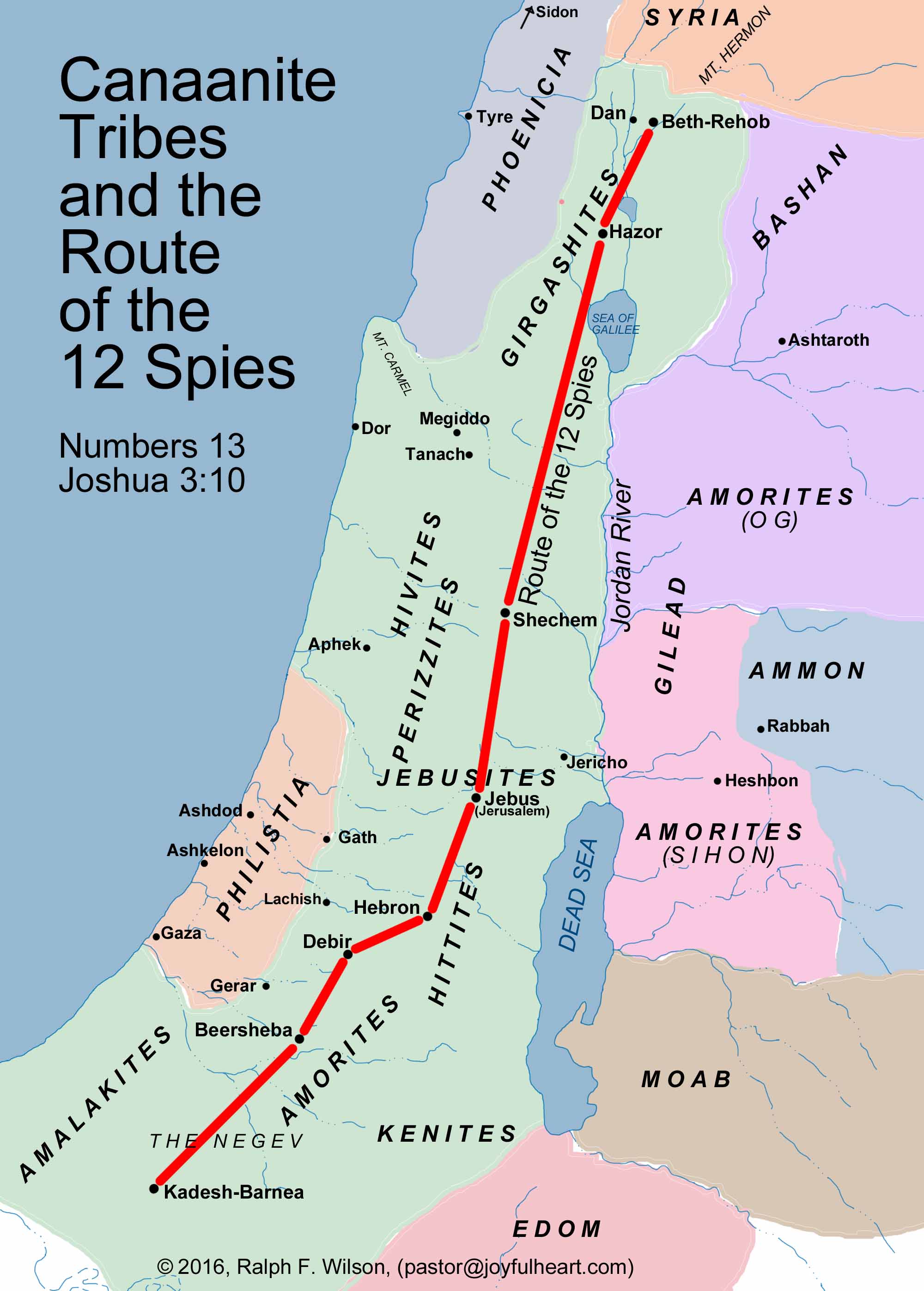
When their fathers had forgotten their Lord God and turned away from Him and toward idolatry, the Lord put them into the hand of Sisera, captain of the army of Jabin, king of Canaan, who reigned in Hazor (Judges 4:2).  Other times the Lord sold them into the hand of the king of Moab (Judges 3:14), and into the hand of the Philistines (Judges 13:1).  Sisera, and the king of Moab, and the Philistines all fought against the Israelites and overcame them so that they fell into their hands.  It was a merciful thing when the Lord allowed His people to become oppressed by an enemy.  When they chose to turn away from Him, He allowed them to have what they wanted and turned away from them.  Then they would see their need for Him, which He knew to be the best for their welfare, and they would willingly come back to Him.

(10) "And they cried to the Lord, and said, 'We have sinned because we have forsaken the Lord and have served Baalim and Ashtaroth, but now deliver us out of the hand of our enemies, and we will serve you.'"

Each time they were oppressed by their enemy, the people would cry out to the Lord, repenting of their sins, praying that He deliver them from their enemy, and promising to serve Him only.

(11) "And the Lord sent Jerub-Baal, and Bedan, and Jephthah, and Samuel, and delivered you out of the hand of your enemies on every side, and you dwelled safe."

Samuel reminded the people how each time they cried out to the Lord and repented, He sent the people a deliverer, one in Jerub-Baal who was Gideon.  The Lord also sent "Bedan."  There was no judge named Bedan in the history of the judges.  Biblical scholars have different ideas about who this might be.  Some say it might refer to Samson, as it could be interpreted "of Dan" rather than as a name.  However, in 1 Chronicles 7:17, there was a Bedan who was the son of Ulam, but it doesn't necessarily mean that it was the same Bedan.  Other scholars think that the name was meant to be Barak, and others say that Bedan could be a textual corruption or a scribal error arising from the similarity of Hebrew letters. This theory suggests that the original text may have intended to refer to a different deliverer entirely.  Whoever was meant, the people would have understood who Samuel meant.  Samuel told the people that the Lord had also sent Jephthah and Samuel himself to deliver the people out of the hands of their enemies, and they had dwelt in safety.

(12) And when you saw that Nahash the king of the children of Ammon came against you, you said to me, "No, but a king shall reign over us when the Lord your God was your king."

Even though the Lord had always saved them from their enemies, raising up judges to deliver them, when Nahash king of the Ammonites came against them, they decided they would rather have a king, when the Lord had always been their king.

(13) "Now therefore, behold the king whom you have chosen, whom you have desired! And behold, the Lord has set a king over you. (14) If you will fear the Lord and serve Him and obey His voice and not rebel against the commandment of the Lord, then shall both you and also the king who reigns over you continue following the Lord your God."

Samuel told the people to observe the king whom they had desired.  Even though the Lord and Samuel saw it as a rejection of the Lord, still the Lord gave them the king they desired.  And He even told them through Samuel that if they would fear the Lord, serve Him, and obey Him, and not rebel against His commandments, then both the people and their king could continue in the Lord's guidance and protection, as always.

(15) "But if you will not obey the voice of the Lord and rebel against the commandment of the Lord, then shall the hand of the Lord be against you as against your fathers."

However, Samuel continued, if the people did not obey the Lord and rebelled against His commandments, then the Lord would be against them with His righteous judgments, just as He had done with their fathers.

(16) "Now therefore, stand and see this great thing which the Lord will do before your eyes. (17) Is it not wheat harvest today? I will call to the Lord and He shall send thunder and rain, that you may perceive and see that your wickedness is great, which you have done in the sight of the Lord, in asking for a king."

Samuel instructed the people to stand there and observe the great thing the Lord was about to do.  He pointed out that it was wheat harvest time.  He was going to call on the Lord to send thunder and rain, which was very unusual for that time of year.  Proverbs 26:1 speaks of things extremely rare and unheard of, like "snow in summer" and "rain in harvest."  Therefore, the people would know that it was the Lord sending the thunder and rain as judgment against them, that they would understand their wickedness in rejecting the Lord as their king.

(18) So Samuel called to the Lord, and the Lord sent thunder and rain that day, and all the people greatly feared the Lord and Samuel.

Samuel indeed called to the Lord, and He sent thunder and rain that day.  The historian Josephus said that He sent a terrible storm with thunder, lightning, and hail.  No wonder the people feared God and His power and Samuel who had such favor and therefore power from God.

(19) And all the people said to Samuel, "Pray for your servants to the Lord your God, that we do not die, for we have added to all our sins evil, to ask for a king." 

In their fear, they asked Samuel to pray for the people that they not die, for they could perceive and understand that they had added to their sins by asking for a king.  Note that the people had rejected Samuel as their judge in desiring a king, but they now called themselves his servants.

(20) And Samuel said to the people, "Fear not; you have done all this wickedness, yet do not turn aside from following the Lord, but serve the Lord with all your heart, (21) And do not turn aside after vanity which cannot profit nor deliver, for they are nothing."

Samuel told the people not to fear, for even though they had done all that wickedness, God was not going to destroy them as they feared, provided they follow Him and serve Him with all their hearts and did not turn aside to vain idols that could do nothing for them because they were nothing.

(22) "For the Lord will not forsake His people for His great name's sake, because it has pleased the Lord to make you His people."

Samuel assured the people that God would not forsake them, not because of anything they had done, but for His great name because it had pleased Him to make them His people, again not because of their merit.  If God had given the people what they deserved, there would have been no more Israelite people and therefore no Christian church.  God's purpose in preserving His people was not yet accomplished, so He would always save at least a remnant of His people no matter how wicked they were.  

It pleased the Lord to make Israel His people, and it pleased Him to graft us Gentiles into the vine of Israel.  God first made us only for His pleasure and fellowship.  He did not need us for any fulfillment.  God is already all perfect.  It pleased Him to make us in His own image and after His own likeness (Genesis 1:26).  Micah 6:8 said that the Lord had shown us what was good, and all He required from us was that we "do justly, and to love mercy, and to walk humbly with your God."  Be righteous, love, and walk with God.  That gives Him pleasure.  However, we let sin come between us and God.  God is all-good and all-perfect and cannot abide in sin.  But because God's nature is love, He provided a way for us to remain in communion with Him through the sacrifice of Jesus Christ whose shed blood covers our sins.  Why would He do that?  Why not destroy us all because we did not live up to the purpose for which He created us in the first place?  Because He is love, and because it pleased Him to have us in fellowship with Him.

(23) "Moreover, as for me, God forbid that I should sin against the Lord in ceasing to pray for you, but I will teach you the good and the right way."

I believe Samuel's point was that he would also forgive them for rejecting him as their judge.  He would not sin against the Lord by being arrogant and self-centered when the Lord Himself forgave His people.  He would not cease to pray for them as he always had, and he would teach them the good and right way of the Lord.

(24) "Only fear the Lord and serve Him in truth with all your heart, for consider how great He has done for you. (25) But if you shall still do wickedly, you shall be consumed, both you and your king."

In contrast to the fear Samuel spoke of in verse 20, this fear he spoke of was a reverential fear out of love for the Lord and the knowledge of how great and awesome He was.  He told the people to serve God in truth with all their hearts, considering all the great things He had done for them.  However, if they rebelled against their Lord and chose to depart from Him, they would be consumed.  Without God, they would be destroyed and die, and their king would not be able to save them, as he would perish with them.

Saturday, May 10, 2025

Deborah and Barak

After a brief interlude with the story of Ruth that was concurrent with the time of the first judges, Othniel, Ehud, and Shamgar, Judges 4 continues to chronicle Israel's judges.  Continuing the chronological Bible study:

(Judges 4:1) And the children of Israel again did evil in the sight of the Lord when Ehud was dead.

At the end of the third chapter of Judges, Ehud had delivered the Israelites from Moab.  Shamgar had a brief mention as he delivered them from at least 600 Philistines, but it appears that Ehud was the stabilizing force that allowed Israel rest for eighty years (Judges 3:30).  However, after he died, Israel returned to her wicked ways.

(2) And the Lord sold them into the hand of Jabin, king of Canaan, who reigned in Hazor, the captain of whose host was Sisera who dwelt in Harosheth of the Gentiles.

Because they did evil in His sight, the Lord delivered them into bondage to Jabin, the king of Canaan.  During the time of Joshua, there was a King Jabin of Hazor whom Joshua killed (Joshua 11).  This was evidently a successor by the same name who had rebuilt and reinhabited Hazor.  It appeared that Jabin kept a standing army to keep Israel in check, and Sisera was the captain of his army.  He dwelt in a place called Harosheth of the Gentiles.

(3) And the children of Israel cried to the Lord, for he had nine hundred chariots of iron, and twenty years he mightily oppressed the children of Israel.

The children of Israel cried out to the Lord after twenty years of oppression by Sisera.  He had cruelly kept them in check with nine hundred chariots of iron.  These were not chariots made of iron, but rather they were chariots equipped with iron scythes that stood out from the orbs of the wheels and could slash through any group of people, thus striking fear in the Israelites, and they cried out to their Lord for deliverance.

(4) And Deborah, a prophetess, the wife of Lapidoth, she judged Israel at that time.

Deborah, a prophetess, a female prophet who by the Spirit of God declared His will, judged Israel at that time.  It is said she was the wife of Lapidoth.  However, he is not mentioned anywhere else.  As the original word "ishshah" that was translated as "wife" can also mean "woman," this might have as easily been translated as "a woman of Lapidoth," making Lapidoth a place rather than a man.  However, there is not a place known by Bible scholars with the name of Lapidoth, so who knows?  The fact that it is only mentioned one time in the Bible makes it of little importance either way.

(5) And she dwelt under the palm tree of Deborah between Ramah and Bethel in Mount Ephraim, and the children of Israel came up to her for judgment.

It appears Deborah sat in judgment in the open air under a palm tree that was called by her name.  It was located between Ramah and Bethel in the mountains of Ephraim.  The Israelites came to her there for judgment.

(6) And she sent and called Barak the son of Abinoam out of Kedesh Naphtali, and said to him, "Has not the Lord God of Israel commanded, saying, 'Go and draw toward Mount Tabor and take with you ten thousand men of the children of Naphtali and of the children of Zebulun'?"

Deborah called for Barak, the son of Abinoam, from Kedesh in Naphtali.  She asked Barak if he knew it to be true that the Lord had commanded Israel to go to Mount Tabor and bring ten thousand men from Naphtali and Zebulun.  Whether or not Barak knew that the Lord had commanded him to do that, I'm not sure.  It might be that this was Deborah's way of informing him that that was what the Lord had said to her, and therefore he could not dare question it.  

(7) "'And I will draw to you to the river Kishon, Sisera, the captain of Jabin's army, with his chariots and his multitude, and I will deliver him into your hand.'"

Deborah continued with the words of the Lord, that He would draw Sisera, the captain of Jabin's army, to Barak at the river Kishon with all his army and 900 chariots of iron.  The Lord declared through Deborah that He would deliver them into his hand.

(8) And Barak said to her, "If you will go with me, then I will go, but if you will not go with me, I will not go."

I suppose Barak's answer does show faith that the Lord would deliver Sisera into his hand, as confirmed by Hebrews 11 where he is listed as one of the heroes of faith.  However, it seems to show a little weakness in him that he must have a woman, Deborah, go with him into battle.  Maybe it was because he highly regarded her as an oracle of God and wanted that word of the Lord leading him into battle.

(9) And she said, "I will surely go with you, notwithstanding the journey that you take shall not be for your honor, for the Lord shall sell Sisera into the hand of a woman." And Deborah arose and went with Barak to Kedesh.

Deborah instantly agreed to go with Barak, but she told him that by her accompanying him, he would not be given the glory for defeating Sisera, but the Lord would deliver Sisera into the hand of a woman.  Indeed, I believe Deborah is better remembered than Barak.  Deborah rose up and went with Barak to Kedesh.

(10) And Barak called Zebulun and Naphtali to Kedesh, and he went up with ten thousand men at his feet, and Deborah went up with him.

Barak called the tribes of Zebulun and Naphtali to him in Kedesh, where ten thousand men were chosen, and those being under Barak's command, and Deborah, went forward with him.

(11) Now Heber the Kenite of the children of Hobab, the father-in-law of Moses, had severed himself from the Kenites and pitched his tent to the plain of Zaanaim which is by Kedesh.

Heber, a Kenite from the children of Hobab, actually the son of Moses's father-in-law Jethro, along with all the children of Hobab (see Joshua 1:16), had severed himself from the Kenites, and he dwelt in the plain of Zaanaim which was close to Kedesh.

(12) And they showed Sisera that Barak the son of Abinoam had gone up to Mount Tabor.

It was reported to Sisera that Barak had gone up to Mount Tabor.  It does not say exactly who reported it.  It could have been Canaanites, but it also could have been some of the Kenites who had remained at peace with Jabin as we will see in verse 17.  Whether it was out of good will or perhaps ill will to further God's will, either way it was surely God's will that Sisera be informed about Barak being at Mount Tabor.

(13) And Sisera gathered together all his chariots, nine hundred chariots of iron, and all the people with him, from Harosheth of the Gentiles to the river of Kishon.

Therefore Sisera gathered together all his nine hundred chariots of iron and all his people from Harosheth of the Gentiles where he resided to the Kishon River which was near Mount Tabor where Barak and his men were.

(14) And Deborah said to Barak, "Up! For this is the day in which the Lord has delivered Sisera into your hand; is not the Lord gone out before you?" So Barak went down from Mount Tabor and ten thousand men after him.

Deborah told Barak to rise up for she had been told by a spirit of prophecy that that was the day when the Lord had delivered Sisera into his hand.  She assured Barak that the Lord had gone out before him so he might be sure of victory.  Therefore he and his ten thousand men went down from Mount Tabor.

(15) And the Lord discomfited Sisera, and all his chariots, and all his host, with the edge of the sword before Barak, so that Sisera lighted down off his chariot and fled away on his feet.

The word that was translated as "discomfited" literally meant "to put in commotion."  The Lord confused, troubled, and frightened Sisera and his men and even his chariots.  The historian Josephus wrote that there was a great storm of rain and hail, and a great wind blew rain in the faces of the enemy that blinded their eyes.  The hail numbed their hands so that they could not hold their swords.  If all that is true, there would be no doubt that it was the Lord who stirred up the commotion that allowed Barak to come in with the sword and destroy them.  However, Sisera jumped off his chariot and ran away.

(16) But Barak pursued after the chariots and after the host to Harosheth of the Gentiles, and all the host of Sisera fell on the edge of the sword; there was not a man left.

Barak pursued after the chariots and Sisera's army all the way back to where they had started at Harosheth of the Gentiles.  Everyone of Sisera's army was killed.  There was not a single man left of his army, but Sisera himself had escaped.

(17) However, Sisera fled away on his feet to the tent of Jael the wife of Heber the Kenite, for there was peace between Jabin the king of Hazor and the house of Heber the Kenite.

Sisera had fled to the tent of Jael, the wife of Heber, because there had been peace between Jabin the king and the house of Heber, so he felt he would be safe there.  

(18) And Jael went out to meet Sisera and said to him, "Turn in, my lord, turn in to me; fear not." And when he had turned in to her into the tent, she covered him with a rug.

Indeed, Jael went out to meet Sisera and invited him to turn into her tent and not be afraid, insinuating he would be safe there.  When he came into her tent, she covered him with a rug perhaps to hide him, or it may have been a blanket made similarly as a rug just to comfort and warm him.

(19) And he said to her, "Give me, I pray you, a little water to drink for I am thirsty." And she opened a bottle of milk and gave him drink and covered him.

Sisera asked Jael for some water because he was thirsty.  She actually gave him milk, possibly as a courtesy to give him something more nourishing, or perhaps something more than water to make him sleep.  She then covered him.

(20) Again he said to her, "Stand in the door of the tent, and it shall be when any man comes and enquires of you, and says, 'Is there any man here?' that you shall say, 'No.'"

Sisera spoke to Jael again and asked her to stand in the doorway of her tent, so that if anyone came looking for a man, they would have no need to enter her tent for she would be in the doorway and would answer that there was no one in her tent besides her.

(21) Then Jael, Heber's wife, took a nail of the tent and took a hammer in her hand and went softly to him and struck the nail into his temples and fastened it into the ground, for he was fast asleep and weary. So he died.

When Sisera was fast asleep for he was so weary, Jael took a tent spike and a hammer and went quietly to him and drove the spike through his temples, fastening him to the ground, where he, of course, died.  Some of the Biblical scholars I study had a moral dilemma with what Jael did.  Only God knows the heart, but He definitely used Jael to deliver Sisera into the hand of a woman as Deborah had prophesied (verse 9).  Jael may have been sincere when she encouraged Sisera to come into her tent, but she was later struck by the Spirit of God to kill him.  She may have witnessed the rain and hail and chaos that had struck Sisera and his army and may have come to realize that it was of God, and she was therefore led to do what she did.  Whatever was in her heart and spirit at the time, we can be sure that God put it there, or He knew what was there and used it for His purposes.

(22) And behold, as Barak pursued Sisera, Jael came out to meet him and said to him, "Come, and I will show you the man whom you seek." And when he came into her tent, behold, Sisera lay dead, and the nail was in his temples.

As Barak was still pursuing Sisera and neared Jael's tent, she went out to meet him and told him she would show him the man for whom he was seeking.  This tells me that she was probably Spirit led to do what she did as she knew without a doubt that Barak was looking for Sisera, and she felt safe to invite him into her tent to see him for himself.  Indeed, Barak went into Jael's tent and saw that Sisera was dead with the spike still in his temples.

(23) So God subdued on that day Jabin the king of Canaan before the children of Israel. (24) And the hand of the children of Israel prospered and prevailed against Jabin the king of Canaan until they had destroyed Jabin king of Canaan.

Thus God had subdued Jabin, the king of Canaan, before the children of Israel.  The Israelites prevailed against the king of Canaan until they had destroyed him.  Scripture does not tell specifically how King Jabin died, but his army and its captain being defeated, the king was apparently easily destroyed.

Monday, April 21, 2025

The First Judges, Othniel, Ehud, and Shamgar

Continuing a chronological Bible study:

(Judges 3:1) Now these are the nations which the Lord left to prove Israel by them, as many as had not known all the wars of Canaan.

The last chapter of Judges told how the Lord had purposely left some nations in the Israelites' promised land in order to prove their need for Him.  These were the people who had not lived during the time of Joshua and his conquest and did not personally know of God's mighty works in delivering Canaan to His people.  A list of the nations that remained follows.

(2) (Only that the generations of the children of Israel might know, to teach them war, at the least such as before knew nothing of it.)

It was important that the next generation of Israelites understand war as there would always be enemies in the world that would try to destroy them.  Adversity is an important teacher.  We learn the most through conflict and distress.  That which does not kill us makes us stronger.  And people draw closer to their God in times of trouble.

(3) Five lords of the Philistines, and all the Canaanites, and the Sidonians, and the Hivites who dwelt in Mount Lebanon, from Mount Baal Hermon to the entering in of Hamath.

The list of the nations the Lord had let remain in the land of Canaan began with the Philistines, the lords of Gaza, Ashdod, Ashkelon, Gath, and Ekron (Joshua 13:3).  In Judges 1:18, we were told that Judah had taken Gaza, Ashkelon, and Ekron, after the death of Joshua, but apparently they recaptured the cities and remained thorns in Israel's sides.  The Canaanites remained.  In Judges 1:4, the Lord had delivered the Canaanites into Judah's hand.  That referred to the specific tribe of Canaanites, not Canaanites as the whole of all the tribes that inhabited Canaan.  Since the scripture said, "all the Canaanites," I am assuming this refers to all the Canaanites who were dispersed throughout the land.  The Sidonians, inhabitants of the city of Sidon, also remained, as well as the Hivites who dwelt in Mount Lebanon, north of where the Israelites dwelt to the east of Lebanon to Mount Hermon and northward to the entrance of Hamath.  This map from JesusWalk.com shows the areas left unconquered in white:


(4) And they were to prove Israel by them, to know whether they would hearken to the commandments of the Lord which He commanded their fathers by the hand of Moses.

Those nations were left in Canaan in order to try the Israelites' courage and prove their faithfulness to their Lord to know whether or not they would follow the commandments of the Lord that He gave them through His servant Moses.  It's not that the Lord had to do this in order to know what they would do.  Of course, the Lord already knew what they would do.  That's why He left the nations.  The people had to be repeatedly reminded of why they needed their Lord God.  They could not prosper without Him.

(5) And the children of Israel dwelt among the Canaanites, Hittites, and Amorites, and Perizzites, and Hivites, and Jebusites.

Because the Lord did not completely drive out all the nations from Canaan, the Israelites lived among the Canaanites, Hittites, Amorites, Perizzites, Hivites, and Jebusites.

(6) And they took their daughters to be their wives and gave their daughters to their sons and served their gods.

The Israelites intermarried with the pagan inhabitants of Canaan and served their pagan gods, which was disobedience to the direct command of God (Deuteronomy 7:3).  That is a natural occurrence in such situations.  That's why the Lord had told them to drive out all the nations.  That is the reason the Apostle Paul said, obviously by inspiration of the Lord, "Do not be unequally yoked together with unbelievers. For what fellowship has righteousness with unrighteousness? And what communion has light with darkness?" (2 Corinthians 6:14)

(7) And the children of Israel did evil in the sight of the Lord and forgot the Lord their God and served Baalim and the groves.

As a result of their intermarriages and serving of their spouses' gods, they forgot their one true God and did only evil in His sight.  They served the Baals and the groves, as trees and groves were worshipped by the Canaanites.  As the original word for groves is "asherah," perhaps Ashtaroth was meant, as the female gods were also often worshipped with groves of trees.

(8) Therefore the anger of the Lord was hot against Israel, and He sold them into the hand of Cushan-Rishathaim king of Mesopotamia, and the children of Israel served Cushan-Rishathaim eight years.

The anger of the Lord burned hot against Israel, and He allowed them to become subjects of Cushan-Rishathaim, which meant literally Cushan of double wickedness.  He was the king of Aram in the northeast corner of the map above.  Aram was the same as Syria.  Mesopotamia was the Greek name for Aram Naharaim, which is the name some other Bible translations besides the KJV used.  That name meant Aram or Syria of the two rivers (Tigris and Euphrates).  The Israelites became subjects of the king of that region in the northeast.  John Wesley, in his Notes on the Bible, pointed out that that region lay at such a far distance from Israel, one wouldn't think the Israelites would have any trouble with it, but that may be all the more reason to believe God's hand was in it.  The Israelites served that king for eight years.

(9) And when the children of Israel cried to the Lord, the Lord raised up a deliverer to the children of Israel, who delivered them, Othniel, the son of Kenaz, Caleb's younger brother.

When the Israelites cried out in distress to their Lord because of their oppression, He raised up a deliverer, the first judge, Othniel, the son of Kenaz who was Caleb's younger brother.  Othniel was Caleb's nephew who received the hand of his daughter Achsah in Judges 1:12, because he took Kirjath Sepher.

(10) And the Spirit of the Lord came upon him, and he judged Israel and went out to war, and the Lord delivered Cushan-Rishathaim king of Mesopotamia into his hand, and his hand prevailed against Cushan-Rishathaim.

The Spirit of the Lord came upon Othniel to move him to act as judge and deliverer of Israel, and he went to war against Cushan-Rishathaim, the king of Aram, and the Lord gave him victory over the king, and he delivered the people out of the hand of Aram.

(11) And the land had rest forty years. And Othniel the son of Kenaz died.

With Othniel as its judge, the land had rest from their enemies for forty years, and then Othniel died.

(12) And the children of Israel did evil again in the sight of the Lord, and the Lord strengthened Eglon the king of Moab against Israel because they had done evil in the sight of the Lord.

After forty years, another generation passing, the Israelites began to do evil in the sight of the Lord again, most likely serving idols again.  The Lord strengthened Eglon, the king of Moab, and stirred him to rise up against Israel.  Moab was southeast of Israel.

(13) And he gathered to him the children of Ammon and Amalek and went and struck Israel and possessed the city of palm trees.

Eglon gathered the Ammonites and the Amalekites to him, which may have been the strengthening the Lord gave him, and they went and struck Israel and possessed the city of palms, which was Jericho.

(14) So the children of Israel served Eglon the king of Moab eighteen years.

Therefore the Israelites became servants of the king of Moab for eighteen years.  It may be noteworthy that this was ten years longer than they had been in servitude to the king of Aram.  Perhaps it was God's will that they should have a longer oppression this time in order to press upon them more greatly their need to resist the temptation to follow after false gods and follow only their Lord God.

(15) But when the children of Israel cried to the Lord, the Lord raised them up a deliverer, Ehud the son of Gera, a Benjamite, a man left-handed, and by him the children of Israel sent a present to Eglon the king of Moab.

When the children of Israel cried out to the Lord after being so long oppressed, the Lord raised up another deliverer, or judge, Ehud, a Benjamite from the family of Gera, the son of Bela, Benjamin's first born.  It's interesting that it was of note that he was a left-handed man.  Albert Barnes, in his Notes on the Bible, wrote that this was most likely not to be seen as a defect but rather power to use left and right hands equally well, as was the sense in other scriptures (Judges 20:16, 1 Chronicles 12:2).  Ehud delivered a present to the king of Moab from the children of Israel.

(16) But Ehud made him a dagger which had two edges, of a cubit length, and he girded it under his clothing on his right thigh.

However, Ehud had made a dagger that had two edges and was about 18 inches in length.  He hid it under his clothing on his right thigh which was probably the proper side for a left-handed man.  It would probably give the appearance that he was unarmed and thus is the reason it was noted that he was a left-handed man.

(17) And he brought the present to Eglon king of Moab; and Eglon was a very fat man. (18) And when he had made an end to offer the present, he sent away the people who bore the present.

Ehud brought "the present" to King Eglon with attendants he had with him.  When he had made an end to offer the present, which may have been a speech to the king made in the name of the Israelites, he sent away his attendants, whom it appears had indeed borne a present.  It was noted that King Eglon was a very fat man.

(19) But he himself turned again from the quarries by Gilgal, and said, "I have a secret errand to you, O king," who said, "Keep silence!" And all who stood by him went out from him.

I believe the sense is that Ehud had turned away from the king to dismiss his attendants, and he now turned back to the king.  As the original word that was translated as "quarries" most often meant "graven or carved images, idols," I'm sure that is what was meant here.  Perhaps there was an abundance of them in one area.  Regardless of the exact meaning, the point was that Ehud now turned back to the king and told him that he had secret business for him.  With that, the king sent away his attendants.

(20) And Ehud came to him, and he was sitting in a summer parlor which he had for himself alone. And Ehud said, "I have a message from God to you." And he arose out of his seat. (21) And Ehud put forth his left hand and took the dagger from his right thigh and thrust it into his belly.

The king was now alone sitting in his summer parlor.  Ehud told him that he had a message from God for him.  As the original word for message was "dabar" which actually meant either a word or a thing, it is true Ehud had something he called from God for the king.  The king arose out of his seat to receive the message, either out of some sort of respect or perhaps fear.  John Wesley wrote that the name Ehud used for God was Elohim which did not always mean the one true God, but gods in general.  Ehud then took the dagger from his right thigh with his left hand and thrust it into the king's belly.

(22) And the haft also went in after the blade, and the fat closed on the blade so that he could not draw the dagger out of his belly, and the dirt came out.

Ehud had thrust so hard that the handle of the dagger went into the king's fat belly as well as the blade.  The king's excessive fat closed over the blade so that Ehud could not draw it back out.  Dirt here actually meant excrement; either the content of his bowels came out as the intestines were ripped, or his bowels emptied the normal way as they often do upon death.

(23) Then Ehud went forth through the porch and shut the doors of the parlor on him and locked them.

It appears that instead of running for his life, Ehud calmly and methodically went forth in that sun porch and shut and locked the doors of the summer parlor and went calmly on his way with confidence that he had performed the will of God.

(24) When he was gone out, his servants came and when they saw that, behold, the doors of the parlor were locked, they said, "Surely he covers his feet in his summer chamber."

After Ehud had left, the king's servants attempted to enter the summer parlor and found it locked.  The consensus of the commentators I study is that the servants used an expression that the Jews used that meant "he was going to the bathroom," as we would say today.  As one would sit down to relieve himself, his long garments would naturally fall and cover his feet.  The servants assumed the king had locked his parlor as he desired privacy for that reason.

(25) And they tarried till they were ashamed, and behold, he did not open the doors of the parlor; therefore they took a key and opened, and behold, their lord was fallen down dead on the earth.

The servants waited embarrassingly long and still the king had not opened the doors of his parlor.  They finally took a key and opened the doors themselves, and there they found their king dead on the ground.

(26) And Ehud escaped while they tarried and passed beyond the quarries and escaped to Seirath.

While the king's servants waited on their lord to open the doors of the summer parlor, Ehud was able to escape.  He passed beyond the quarries of idols which would have been in the king's kingdom and escaped to Seirath.  It is not known exactly where Seirath was located, but as seen in the next verse, it was located in the mountainous area of Ephraim.

(27) And it came to pass when he had come, that he blew a trumpet in the mountain of Ephraim, and the children of Israel went down with him from the mount, and he before them. (28) And he said to them, "Follow after me, for the Lord has delivered your enemies the Moabites into your hand." And they went down after him and took the fords of Jordan toward Moab and did not allow a man to pass over.

When Ehud had come to Mount Ephraim, he blew a trumpet which summoned the Israelites, and he led the people down from the mountain.  He told them to follow him and be assured that the Lord had delivered the Moabites into their hands.  The people went down after him and took the fordable places of the Jordan River and did not allow anyone of the Moabites to cross over.  There were surely Moabites in Israel as they controlled their land, so the Israelites wouldn't let those Moabites go back into their country, nor would they let any Moabites back into Israel.

(29) And they killed of Moab at that time about ten thousand men, all stout and men of valor, and there escaped not a man. (30) So Moab was subdued that day under the hand of Israel. And the land had rest eighty years.

The Israelites killed ten thousand Moabites, even though they were large men of bravery.  Not one Moabite was able to escape the Israelites.  Moab was subdued under Israel.  It's not that the Israelites destroyed Moab, but they killed the Moabites in their land and were therefore no longer subject to them.  Israel then had rest for eighty years.  

Adam Clarke, in his Commentary on the Bible, struggled with and took many pains to describe how what Ehud had done to the king was an immoral sin of murder.  Indeed, the Lord commanded man not to murder.  Clarke points out that the scripture does not indicate that Ehud ever inquired of the Lord before his action.  However, I have to believe that Ehud was justified in what he did.  The Lord had initially told the people to kill all the inhabitants of the land which they had failed to do.  It was always His will that the Canaanites should be punished for their wickedness.  Additionally, verse 15 states that the Lord raised up Ehud to deliver the people from the Moabites.  And the fact that they had rest for eighty years thereafter certainly seems like a blessing from the Lord after a job well done.  Yes, it seems harsh and immoral, but the Old Testament times were different times.  God used mortal men to exact His punishment.  When God told someone to kill, it cannot be seen as murder.  God cannot murder; He is without sin and only holy.  He cannot abide sin, and it must be eliminated.  The Old Testament was the perfect illustration of what all sinners deserve.  And that is all of us!  Jesus came in the New Testament to provide salvation from what we deserve.  The Old Testament killings had a just purpose.  If there was nothing to be saved from, what would have been Jesus's purpose?  And we must remember that God is the author of life; He gives it and He takes it away.  But as a just and perfect God, we can be sure that anyone who died or was killed as a righteous person, is in eternal joy with Him in heaven.

(31) And after him was Shamgar the son of Anath, who slew of the Philistines six hundred men with an ox goad, and he also delivered Israel.

After Ehud, God raised up Shamgar as a judge.  He fought against the Philistines in the south and west regions of Israel and killed six hundred Philistines with only an ox goad, a prod for driving oxen.  That could have only been possible by the Lord, and he also delivered Israel.  

Monday, March 31, 2025

Joshua's Farewell Address and Death

Continuing a chronological Bible study:

(Joshua 23:1) And it came to pass a long time after that the Lord had given rest to Israel from all their enemies round about, that Joshua waxed old, stricken in age.

Israel had divided the land of Canaan among the tribes, and the people lived in peace and rest from all their enemies surrounding them.  Several years had passed, and Joshua had become very old.

(2) And Joshua called for all Israel, for their elders, and for their heads, and for their judges, and for their officers, and said to them, "I am old, stricken in age."

Joshua called to him all the elders and chief people in Israel, including heads of the tribes, judges, and officers.  He began by telling them that he had become very old.

(3) "And you have seen all that the Lord your God has done to all these nations because of you, for the Lord your God is He who has fought for you."

He reminded them that they had seen all that the Lord had done to the nations of Canaan for His people Israel.  He had fought for His people and had brought them to this point of peace and rest.

(4) "Behold, I have divided to you by lot these nations that remain, to be an inheritance for your tribes, from Jordan, with all the nations that I have cut off, even to the Great Sea westward."

I believe Joshua's point was that all of Canaan had been divided by lot to them, even the nations that remained unconquered.  Those unconquered parts, along with all the nations Joshua had cut off with the sword, all the way to the Mediterranean Sea, had been divided as an inheritance to the tribes.

(5) "And the Lord your God, He shall expel them from before you and drive them from out of your sight, and you shall possess their land, as the Lord your God has promised you."

Joshua encouraged the leaders of Israel that the Lord willed that they should inherit all of the land of Canaan, and He would drive the rest of the Canaanites out of their land, and they would be able to possess all of it, as their Lord had promised them.  It has been discussed before that they never did fully possess all the land that God had promised them because they were not obedient to the Lord to hold up their side of the covenant.  However, God said they would possess their land, and a passage in the book of the prophet Amos confirms that they eventually will possess it (Amos 9:15).

(6) "Be therefore very courageous to keep and to do all that is written in the book of the law of Moses, that you not turn aside from it to the right hand or to the left."

Joshua was giving the leaders of Israel the same words he had received from the Lord when the reins were handed over to him after the death of Moses (Joshua 1:7).  He cautioned them to be courageous in keeping the commandments of the law, that they not turn aside from it.

(7) "That you do not come among these nations, these that remain among you, neither make mention of the name of their gods nor cause to swear, neither serve them nor bow yourselves to them."

Specifically, Joshua cautioned them against going among the pagan nations of people that remained and acknowledging their gods.  They were not to even speak their names, much less swear by them, serve them, or bow down to them.

(8) "But cleave to the Lord your God as you have done to this day."

They were to cleave only to their Lord God through their obedience, service, and worship of Him alone, as they had done since their time in Canaan to that point.  It can't be said that they were always so faithful while in the wilderness.

(9) "For the Lord has driven out from before you great nations and strong, but you, no man has been able to stand before you to this day."

The reason Joshua gave for them always cleaving to their Lord was because of the good things He had done for them.  He had driven out great and strong nations from before them so that no man was able to stand before them even to that day.

(10) "One man of you shall chase a thousand, for the Lord your God is He who fights for you, as He promised you."

One man of them would be able to chase a thousand of his enemies only because it was their Lord who fought for them as He had promised He would (Leviticus 26:8, Deuteronomy 1:30).

(11) "Take good heed therefore to yourselves, that you love the Lord your God."

Joshua impressed upon them the need to be careful and on guard that they always love, honor, and obey their Lord God.

(12) "Else if you do in any way go back and cleave to the remnant of these nations, these that remain among you, and shall make marriages with them and go in to them and they to you, (13) Know for a certainty that the Lord your God will no more drive out these nations from before you, but they shall be snares and traps to you and scourges in your sides and thorns in your eyes, until you perish from off this good land which the Lord your God has given you."

For if they turned away from their Lord and attached themselves to the remnant of the pagan nations in their land and made and consummated marriages with them, they could know for absolute certain that their Lord would no longer go before them to drive out those remaining nations.  They would remain as snares and traps to them, very troublesome and distressing, drawing them into idolatry and immorality.

(14) "Behold this day, I am going the way of all the earth, and you know in all your hearts and in all your souls that not one thing has failed of all the good things which the Lord your God spoke concerning you; all have come to pass to you, and not one thing of it has failed."

Joshua told them that he was going to die just as all living things eventually do.  He was about to leave them without a human leader, but he reiterated why they should put all their love and faith and trust in their Lord God to lead them.  They knew in their hearts that He had not failed to give them any good thing He had promised.  All He had promised had come to pass; therefore, they should continue to have total faith in Him.

(15) "Therefore it shall come to pass, as all good things have come upon you, which the Lord your God promised you, so shall the Lord bring upon you evil things until He has destroyed you from off this good land which the Lord your God has given you. (16) When you have transgressed the covenant of the Lord your God which He commanded you and have gone and served other gods and bowed yourselves to them, then shall the anger of the Lord be kindled against you, and you shall perish quickly from off the good land which He has given to you."

However, Joshua warned them, just as the Lord had given them all good things as He had promised, He also most assuredly would bring bad things to them until they were destroyed off that good land if they turned away from Him and their covenant with Him to serve idols.  If they did that, His anger would burn against them, and they would perish quickly from off their good land that He had given them.  Just because they had all good things at that time, didn't mean they could keep them always if they chose to turn from their Lord.

I take note here that the number one sin that will always kindle God's anger against His people is idolatry.  It is just one of ten big commandments of the Lord, yet it is the one He always mentions that will cause Him to turn away from His people.  However, is not every sin rooted in idolatry?  It may be idolatry of money or power or even self, but there is always something that we choose to make more important than God and His commandments when we sin.  And when we choose something else over God, He may let us have our way, and He will turn away from us.  He will never force Himself on us; He gives us a choice.  However, we must live with the consequence of our choice.  When we begin to see all good things in our lives as blessings from Him, we naturally want to love and follow Him.  Why would we want to follow after some empty idol that can never give us more than some brief pleasure?  In God there is a lifetime of joy and fulfillment and eternal life.  Money and power or anything that we build of ourselves can never do that.

Joshua's farewell address continued in the next and last chapter of Joshua:

(Joshua 24:1) And Joshua gathered all the tribes of Israel to Shechem and called for the elders of Israel, and for their heads, and for their judges, and for their officers, and they presented themselves before God.

Joshua then gathered all the tribes, and especially the leaders of Israel, the elders, the judges, the officers, and the heads of the tribes, to Shechem, and they presented themselves before God.  Shechem was a significant place in Israel's history as it was the place where the Lord made His promise to Abraham that He would give his descendants that land, and he built an altar there (Genesis 12:6-7).  Jacob had also built an altar there (Genesis 33:18-20).  Mount Gerizim and Mount Ebal, where they shouted blessings and cursings (Joshua 8:33), were at Shechem.

(2) And Joshua said to all the people, "Thus says the Lord God of Israel, 'Your fathers dwelt on the other side of the flood in old time, Terah, the father of Abraham and the father of Nachor, and they served other gods.'"

Joshua spoke prophetically to the people the words of the Lord.  He began by telling them about their ancestors on the other side of the flood, or rather river, including Terah, the father of Abraham and Nachor, who served other gods.  The original word translated as "flood" most often meant "river" and was most of the time transcribed that way by the KJV translators, but for some reason they translated it as "flood" this time.  Perhaps the meaning might be that the people's ancestors since the flood had served other gods.  It was understood that before the flood all people except Noah and his family had served other gods, but for their fathers more recently to have turned to false gods would be a very grievous thing.  However, most Biblical scholars believe the meaning should be river rather than flood, and that Joshua spoke of their ancestors who had lived on the other side of the Euphrates River.

Some Biblical scholars think that the verse should read that their fathers, Terah, Abraham, and Nahor, served other gods.  Of course, it is possible that Abram served other gods as he saw his father do until God called him away from his family, but I saw no actual example of his serving other gods.  I read the verse as your fathers, including Terah, served other gods.  "The father of Abraham and Nachor" just described who Terah was.

(3) "'And I took your father Abraham from the other side of the flood and led him throughout all the land of Canaan, and multiplied his seed, and gave him Isaac.'"

The Lord took Abraham out of that idolatrous family and place, telling him to get out of his country and away from his family and his father's house (Genesis 12:1).  He took him through the land of Canaan and told him He would give his descendants that land (Genesis 12:7).  The Lord indeed gave Abraham many descendants, and he had given him his son Isaac.

(4) "'And I gave to Isaac, Jacob and Esau, and I gave to Esau Mount Seir to possess it, but Jacob and his children went down to Egypt.'"

Isaac had two sons, twins, Jacob and Esau, who had been "two nations" in their mother's womb (Genesis 25:23).  God gave Esau an inheritance in Mount Seir, leaving the promised land of Canaan to Jacob's descendants alone.  However, first Jacob and his children went to Egypt.

(5) "'I sent Moses also and Aaron, and I plagued Egypt, according to that which I did among them, and afterward I brought you out.'"

God sent Moses and Aaron to Egypt also to demand the release of His people who were in bondage in Egypt.  He plagued Egypt with ten plagues because they refused to let His people go, and then He brought them out.

(6) "'And I brought your fathers out of Egypt, and you came to the sea, and the Egyptians pursued after your fathers with chariots and horsemen to the Red Sea.'"

The Lord brought His people out of Egypt, and the Egyptians chased them with chariots and horsemen which would suggest they would soon be able to overtake the people on foot.  They chased them to the Red Sea.

(7) "'And when they cried to the Lord, He put darkness between you and the Egyptians, and brought the sea upon them, and covered them, and your eyes have seen what I have done in Egypt, and you dwelt in the wilderness a long time.'"

The people cried out in distress at the Red Sea.  The pillar of cloud that led them then went behind them and was a cloud of darkness to the Egyptians and light to the Israelites.  He then parted the sea and after His people crossed the Red Sea on dry land, He then let the waters back down to cover the Egyptians.  Many of the people who had been children at the time had seen what their Lord had done in Egypt.  They had been in the wilderness a long time, forty years, because of the unbelief of their fathers, and until those fathers had died in the wilderness.

(8) "'And I brought you into the land of the Amorites who dwelt on the other side of the Jordan, and they fought with you, and I gave them into your hand, that you might possess their land, and I destroyed them from before you.'"

The Lord brought His people to the kingdoms of Sihon and Og on the eastern side of the Jordan River.  Those nations fought with them, but the Lord had delivered their enemies into their hand and destroyed them so that they might possess that land.

(9) "'Then Balak the son of Zippor, king of Moab, arose and warred against Israel and sent and called Balaam the son of Beor to curse you.'"

Then Balak, the king of Moab, warred against the Israelites.  He called for the prophet Balaam to curse the Israelites.

(10) "'But I would not hearken to Balaam; therefore he blessed you still, so I delivered you out of his hand.'"

However, the Lord would not allow Balaam to speak curses to Israel, and he instead blessed them; thus the Lord had delivered His people out of the hand of Balaam and likewise, Balak.

(11) "'And you went over the Jordan and came to Jericho, and the men of Jericho fought against you, the Amorites, and the Perizzites, and the Canaanites, and the Hittites, and the Girgashites, the Hivites, and the Jebusites, and I delivered them into your hand.'"

Then the Israelites crossed over the Jordan River and came into their promised land where the men of Jericho fought against them, but the Lord delivered their enemies into their hand.

(12) "'And I sent the hornet before you which drove them out from before you, even the two kings of the Amorites, not with your sword nor with your bow.'"

The Lord sent hornets before them to drive out the Canaanites including two kings of the Amorites.  I'm not sure if these were actual hornets or figurative speech about how the Lord drove out their enemies, not by the Israelites' swords or bows, but by the Lord's power only.  Twice the Lord spoke prophetically about sending hornets to drive out their enemies (Exodus 23:28, Deuteronomy 7:20), and here the Lord through Joshua said that He had done just that.  However, in the actual battles, it doesn't say that the Lord sent hornets.  Joshua 10:10 told how the Lord discomfited their enemies and chased them, but it said nothing about Him sending hornets.  However, it did say that He then sent hailstones.  Again in Joshua 11:8 it says the Lord chased their enemies, but it doesn't say it was with hornets.  Of course, that might be an ideal way to chase soldiers and kings, but I think if actual hornets were sent, scripture would have specifically said so.  In many other places in the Bible, scripture said specifically what sort of pest was being sent, and immediately after Joshua 10:10, scripture was specific about sending hailstones, so I just believe it would have been specific about sending hornets, as well, if He had sent them.  I truly believe this was figurative speech or perhaps a word that the translators were not familiar with, and it just meant that God Himself chased and drove out the enemy by His own power.

(13) "'And I have given you a land for which you did not labor and cities which you did not build, and you dwell in them; of the vineyards and oliveyards which you did not plant, you do eat.'"

The Lord had given His people a ready-made land that they did not have to dig and cultivate, and He had given them cities they did not have to build, and He had given them fruits of the land that they did not plant.  He had given them, as He had promised, a land flowing with milk and honey and many good things.

(14) "Now therefore, fear the Lord and serve Him in sincerity and in truth, and put away the gods which your fathers served on the other side of the flood and in Egypt, and serve the Lord."

Having concluded the words of the Lord in verse 13, these are the words of Joshua telling the people that because of their Lord's mercies and goodness in all that He had done for them, they should reverence Him and serve only Him in sincerity with no hypocrisy and in the truth found only in His word.  He had told them in verse 2 about how their fathers since the flood had served other gods, and he urged them to put away those false gods and serve their Lord God.

(15) "And if it seems evil to you to serve the Lord, choose you this day whom you will serve, whether the gods which your fathers served on the other side of the flood, or the gods of the Amorites in whose land you dwell, but as for me and my house, we will serve the Lord."

Joshua challenged the people that if it seemed evil, or say just burdensome and unpleasant, to serve the Lord, then they should choose whom they would rather serve.  Did they wish to serve the gods of their fathers or the gods of the Amorites who had been in their land before them?  Let their choice be whatever they wished, but as for Joshua, he was resolute in the fact that he and his house would serve the Lord.

(16) And the people answered and said, "God forbid that we should forsake the Lord to serve other gods."

The people answered that they would never think of forsaking their Lord to serve other gods.

(17) "For the Lord our God, He who brought us up and our fathers out of the land of Egypt from the house of bondage, and who did those great signs in our sight and preserved us in all the way in which we went and among all the people through whom we passed, (18) And the Lord drove out from before us all the people, even the Amorites who dwelt in the land; we will also serve the Lord for He is our God."

The people went on to explain why they would never think of forsaking their Lord, because of all the great things He had done for them.  He had freed them from bondage, preserved them wherever they went among enemies, and then drove out the enemies who had dwelt in the land He was giving them.  They declared their choice was to also serve the Lord their God.

(19) And Joshua said to the people, "You cannot serve the Lord for He is a holy God; He is a jealous God; He will not forgive your transgressions nor your sins. (20) If you forsake the Lord and serve strange gods, then He will turn and do you hurt and consume you after He has done you good."

I believe both verses should be taken as one sentence.  I think Joshua's point was that the people would not be able to serve a holy God jealous that His people be only His and serve only Him, if they continued in sin.  As Jesus said in Matthew 6:24, "no man can serve two masters..."  They must wholeheartedly choose to serve their Lord or they would be forsaking Him, choosing another master, and then the Lord would turn away from them and that in itself would destroy them.  The Lord God is our only choice for life.  Since the beginning of time, since Adam and Eve brought sin on man, we sinful creatures are unable to stand before such a holy God.  It is only by His love and mercy that He gave us a way to be acceptable in His presence, but if we choose not to go that way, then we are doomed to be left in our sin, and in the righteous judgment of God, we have chosen to accept the consequences of sin, which is death.  God has set before each of us two choices, life and death, and He urges that we choose life if we want to live (Deuteronomy 30:19).  The other choice leads only to death.

(21) And the people said to Joshua, "No, but we will serve the Lord."

The people declared that they would not serve other gods but would serve their Lord God only.

(22) And Joshua said to the people, "You are witnesses against yourselves that you have chosen for you the Lord, to serve Him." And they said, "Witnesses!"

Joshua declared that they would be witnesses against themselves if they should turn away from their Lord after their testimony that day.  They would be self-condemned by their own words.  The people agreed that they were indeed witnesses to that truth.

(23) "Now therefore put away the strange gods which are among you and incline your heart to the Lord God of Israel."

Joshua told them therefore they were to put away the strange gods among them.  There may have been actual physical small idols of worship that had been kept from their fathers before them, or it might rather be that Joshua spoke of idols of the heart, secret sentiments they had toward some idol.  Whatever the idol that took their hearts away from their Lord, they were to put away, and they were to incline their hearts toward the Lord God of Israel only.

(24) And the people said to Joshua, "The Lord our God we will serve, and His voice we will obey."

The people confirmed that they would serve and obey their Lord God.

(25) So Joshua made a covenant with the people that day and set them a statute and an ordinance in Shechem.

Joshua established that covenant with the people and made it a permanent law that they and their descendants would always bind themselves to God only.

(26) And Joshua wrote these words in the book of the law of God, and took a great stone, and set it up there under an oak that was by the sanctuary of the Lord.

Joshua wrote the words of their covenant established that day in the book of the law that would have been in the ark of the covenant which must have been with him at Shechem that day.  He took a great stone and set it up under an oak tree that was by that holy place of the Lord.  I don't believe this was meant to have been at the actual sanctuary.  The word that was translated as "sanctuary" also means "a consecrated thing or place, holy place."  Joshua had brought the people to Shechem to a holy place of their fathers, and there he placed a memorial stone which wouldn't have been necessary if they were at the actual sanctuary.

(27) And Joshua said to all the people, "Behold, this stone shall be a witness to us, for it has heard all the words of the Lord which He spoke to us; it shall be therefore a witness to you, lest you deny your God."

Joshua told the people that that stone would act as a witness of the covenant they had made, as it was a symbolic reminder of the words of the Lord that had been spoken there that day and of the witness against the people should they turn from Him.

(28) So Joshua let the people depart, every man to his inheritance.

With that, Joshua let the people go back to their lands that they possessed as their inheritance from God.

(29) And it came to pass after these things that Joshua the son of Nun, the servant of the Lord, died a hundred and ten years old.

It was shortly after this that Joshua died at 110 years of age.  I think now is a good time to reflect on the reason why Joshua is always identified as the son of Nun.  Joshua is such an important figure in the Bible in his own right, and Nun is never mentioned other than being the father of Joshua.  As studied previously, I found that the original words were "Joshua bin Nun" rather than "Joshua ben Nun," which would have meant Joshua was the son of Nun.  "Bin Nun" or "binnun" meant the "understanding one."  From the beginning, Joshua was an excellent student of Moses and wouldn't leave the tabernacle even after Moses did (Exodus 33:11).  Additionally, he always demonstrated complete faith in God when others failed in their faith.  Perhaps this moniker of "Joshua the understanding one" did demonstrate that Joshua was a man in his own right.  

This time, in my study, I reflected on just the word "nun" which means "perpetuity."  The name Joshua, "yehoshua," means "Jehovah-saved."  Jehovah, the name of the Lord, the self-existent eternal God, which is what Jehovah means, saves eternally.  Was Joshua Jehovah-saved in perpetuity?  Biblical scholars often speak of Joshua being an Old Testament type of Jesus.  Actually, their names are the same in Hebrew, but in Greek in the New Testament, Jesus (in English) became Ieous.  Joshua was the one who brought the people into their promised land on earth, but Jesus brings them into the heavenly promised land.  Joshua succeeded Moses who represented the law, and Jesus's gospel succeeded the law.  Joshua made a new covenant with the people before he died, and Jesus brought a New Covenant of grace.  While names are very important in the Bible, and Joshua being eternally saved by Jehovah who saves, and being an Old Testament type of Jesus who was the one who ultimately fulfilled that salvation through His death and resurrection, I have to note that according to the genealogy in 1 Chronicles 7:27, Joshua was indeed the son of Nun.  Perhaps Joshua was always referred to as the son of Nun because all the symbology in both those names was the very essence of who he was.

(30) And they buried him in the border of his inheritance in Timnath Serah, which is in Mount Ephraim, on the north side of the hill of Gaash.

The people buried Joshua in his own inheritance in the mountains of Ephraim in the city which he built, Timnath Serah, on the north side of Mount Gaash in the mountainous region.

(31) And Israel served the Lord all the days of Joshua and all the days of the elders who outlived Joshua and who had known all the works of the Lord that He had done for Israel.

The Israelites kept their covenant and served the Lord all the days of Joshua and all the days of the elders who had lived during the time of Joshua and beyond, men who had known all the things the Lord had done for His people.

(32) And the bones of Joseph which the children of Israel brought up out of Egypt, they buried in Shechem in a parcel of ground which Jacob bought from the sons of Hamor, the father of Shechem, for a hundred pieces of silver, and it became the inheritance of the children of Joseph.

The Israelites had brought the bones of Joseph out of Egypt as he had requested (Genesis 50:25) and as Moses directed (Exodus 13:19).  They buried them in Shechem in a parcel of ground that Jacob had bought from the sons of Hamor, the father of Shechem, for a hundred pieces of silver (Genesis 33:19), in the land that became the inheritance of the sons of Joseph, specifically Ephraim.

(33) And Eleazor the son of Aaron died, and they buried him in a hill of Phinehas his son which was given him in Mount Ephraim.

Eleazar the priest, the son of Aaron, also died, and they buried him in a hill of Phinehas, Eleazar's son, which had been given to him in Mount Ephraim.  The priests had no land of their own but were given cities in which to live, so the Ephraimites had undoubtedly given this piece of land to either Eleazar or his son, Phinehas.

So ends the book of Joshua.  Obviously, the last five verses couldn't have been written by him but were added after his death.  Once again, I can't help but reflect on what a great man Joshua was and how like Jesus he was, the perfect illustration of the Christ to come.  In addition to the similarities before mentioned, it doesn't appear that Joshua ever married or had any children.  He devoted his entire life to the service of God, from his time as a young man learning from Moses up until his death.  Of course, Joshua was only human and must have sinned sometime in his life, but I don't recall any such thing being recorded thus far in the Bible.  Joshua never worked to provide for himself and never asked for much.  Even the inheritance he had apparently once asked for (Joshua 19:50), he didn't ask for when the time came to divide up the inheritance, but the people gave it to him.  And it wasn't even a choice land but rather a rough mountainous region where he built the city of Timnath Serah.  He lived as a servant of the people and most importantly of his God, and he led his people to their rest in their promised land.  Jesus, about 1400 years later, would bring people to that true eternal rest.

Also notable in the last chapter of Joshua is the retelling of history and of the marvelous things the Lord had done for His people.  Throughout the Bible, the people were retold history so that they would never forget the goodness of the Lord, and so should we always reflect on the good things the Lord has done for us.  No matter what circumstances we find ourselves in, we can always be thankful for the greatest gift of all, eternal salvation in Him that was only possible through the sacrifice and death of Jesus Christ.

Sunday, March 23, 2025

The Eastern Tribes' Altar of Witness

Continuing a chronological Bible study:

(Joshua 22:1) Then Joshua called the Reubenites, and the Gadites, and the half tribe of Manasseh,

In the past few chapters, all of the promised land had been divided and given to each of the tribes.  Cities of refuge had been established, and each tribe gave some of their cities to the Levites where they could dwell since they did not have their own land.  Then Joshua called to him the two and a half tribes who had their inheritance east of the Jordan River.

(2) And said to them, "You have kept all that Moses the servant of the Lord commanded you and have obeyed my voice in all that I commanded you."

When the tribes of Reuben, Gad, and the half tribe of Manasseh desired their lots to be east of the Jordan River, Moses agreed because they said they would leave their families there in safety but would fight with the other tribes west of the Jordan, and they promised not to return to their lots on the east until the land was subdued and every tribe had its inheritance (Numbers 32:18).  The two and a half tribes had obeyed Joshua's every command and went wherever he told them to go (Joshua 1:16).

(3) "You have not left your brethren these many days until this day but have kept the charge of the commandment of the Lord your God."

Joshua commended the men of the tribes of Reuben, Gad, and East Manasseh, for staying with their brethren on the west side of the Jordan up to that point.  It had been very many days according to Dr. John Gill in his Exposition of the Bible, who wrote that the consensus of the Jews was that it had been fourteen years, seven years subduing the land and seven years dividing it.

(4) "And now the Lord your God has given rest to your brethren as He promised them; therefore now return and go to your tents to the land of your possession which Moses the servant of the Lord gave you on the other side of Jordan."

Now that the Lord had given all Israel rest from their enemies and every tribe had been given his lot, Joshua gave the tribes of Reuben, Gad, and East Manasseh, permission to return to their homes on the east side of the Jordan.  They had fulfilled the condition that they wait until the land of Canaan was subdued and only then would they be given their inheritance east of the Jordan (Numbers 32:22).

(5) "But take diligent heed to do the commandment and the law which Moses the servant of the Lord charged you, to love the Lord your God and to walk in all His ways, and to keep His commandments, and to cleave to Him, and to serve Him with all your heart and with all your soul."

Joshua advised his brethren to make sure that they diligently followed the commandments of their Lord to love, honor, and serve Him with all their hearts and souls, and to cleave to Him, walk in His ways, and obey all His commandments.

(6) So Joshua blessed them and sent them away, and they went to their tents. (7) Now to the half of the tribe of Manasseh Moses had given in Bashan, but to the other half Joshua gave among their brethren on this side of Jordan westward. And when Joshua sent them away also to their tents, then he blessed them.

It appears that all of Manasseh had come before Joshua, but as only half of them had received land on the east of the Jordan, Bashan, the kingdom of Og, Joshua sent the half tribe living on the west side of the Jordan to their tents.  Then he sent the two and a half tribes back to their tents on the east of Jordan, and he blessed them.

(8) And he spoke to them, saying, "Return with much riches to your tents, and with very much cattle, with silver, and with gold, and with brass, and with iron, and with very much clothing; divide the spoil of your enemies with your brethren."

Joshua told them to return to their homes with a division of the spoil they had acquired from their enemies, of the cattle, silver, gold, brass, iron, and fine clothing.  Some Biblical scholars think this meant they were to divide the spoil with their brethren who had remained at home on the east of the Jordan to protect the women, children, and livestock.  That may be, as only 40,000 (Joshua 4:13) of the approximately 110,000 able to go to war, according to the census taken in Numbers 26, went to help their brethren in the west. 

(9) And the children of Reuben and the children of Gad and the half tribe of Manasseh returned and departed from the children of Israel out of Shiloh, which is in the land of Canaan, to go to the country of Gilead, to the land of their possession which they possessed according to the word of the Lord by the hand of Moses.

And so the men of the tribes of Reuben, Gad, and the half tribe of Manasseh, departed Shiloh in Canaan to return to their land east of the Jordan River, the country of Gilead (and Bashan), the land they were given according to the word of the Lord through Moses.

(10) And when they came to the borders of Jordan in the land of Canaan, the children of Reuben and the children of Gad and the half tribe of Manasseh built there an altar by Jordan, a great altar to see.

When the two and a half tribes arrived at the Jordan River, they built a great altar built very high to be seen from far away.  Although verse 10 makes it sound as if they built the altar in the land of Canaan, the next verse indicates they built it on their own side of the Jordan, but perhaps visible from Canaan.

(11) And the children of Israel heard say, "Behold, the children of Reuben and the children of Gad and the half tribe of Manasseh have built an altar across from Canaan in the borders of Jordan at the passage of the children of Israel."

The Israelites on the west side of the Jordan River learned by hearsay that the tribes of Reuben, Gad, and the half tribe of Manasseh, had built an altar across from Canaan on the banks of the Jordan where they had passed over when they first came into Canaan.

(12) And when the children of Israel heard, the whole congregation of the children of Israel gathered themselves together at Shiloh, to go up to war against them.

When the Israelites in the land of Canaan learned about the altar, they gathered themselves together at Shiloh where the tabernacle and altar of the Lord were.  They considered the altar built by the two and a half tribes an offense to the Lord that needed to be avenged, and they discussed going to war against them.

(13) And the children of Israel sent to the children of Reuben, and to the children of Gad, and to the half tribe of Manasseh, to the land of Gilead, Phinehas, the son of Eleazar the priest, (14) And with him ten princes, of each chief house a prince throughout all the tribes of Israel, and each one a head of the house of their fathers among the thousands of Israel.

The Israelites in Canaan on the west of the Jordan sent Phinehas, the son of Eleazar the priest, and ten princes, one from each tribe, each from the chief house in their tribe, over the Jordan River to Reuben, Gad, and the half tribe of Manasseh.

(15) And they came to the children of Reuben, and to the children of Gad, and to the half tribe of Manasseh, to the land of Gilead, and they spoke with them, saying, (16) "Thus says the whole congregation of the Lord, 'What trespass is this that you have committed against the God of Israel, to turn away this day from following the Lord, in that you have built you an altar, that you might rebel this day against the Lord?'"

The delegation came to the eastern tribes, telling them that the entire congregation in Canaan wanted to know why they had committed such iniquity against their Lord by building an altar to rebel against Him.  Many people before them had built altars to honor God, but God had said in Deuteronomy 12:13-14, that they were not to offer burnt offerings in any place they wanted, but only in the one place that the Lord Himself would choose.  The western Israelites must have assumed that the tribes on the east wanted to sacrifice at the altar they had made.

(17) "'Is the iniquity of Peor too little for us from which we are not cleansed until this day, although there was a plague in the congregation of the Lord? (18) But that you must turn away this day from following the Lord? And it will be, if you rebel today against the Lord, that tomorrow He will be angry with the whole congregation of Israel.'"

They asked if the sin of worshipping the idol Peor in the plains of Moab (Numbers 25:2) was so small a sin that they must add to it a much greater sin of what they assumed to be continuous idol worship.  They said they had not been cleansed from the shame and disgrace of that sin until this time when they started anew in their promised land, although there had been 24,000 people killed by a plague because of it (Numbers 25:9).  They were convinced that if the two and a half tribes continued with their altar the Lord would be angry with the entire congregation.

(19) "'Nevertheless, if the land of your possession is unclean, pass over to the land of the possession of the Lord where the Lord's tabernacle dwells and take possession among us, but do not rebel against the Lord, nor rebel against us, in building an altar besides the altar of the Lord our God.'"

I believe the sense is that if the two and a half tribes felt their land was unclean because it had not been cleansed from the sins of the former inhabitants, and they felt a need for an altar where they could sacrifice for the atonement of sin, then they should go back to the land of Canaan on the west of the Jordan and possess land there.  But they asked that they not rebel against the Lord and their brethren by building an altar besides the one altar of their Lord God.

(20) "'Did not Achan the son of Zerah commit a trespass in the accursed thing, and wrath fell on all the congregation of Israel? And that man did not perish alone in his iniquity.'"

They reminded them of the sin of Achan when he sinned against the Lord by taking of the accursed things against the commandment of the Lord (Joshua 7:11).  Achan had not perished alone in his iniquity.  The Israelites had lost their first battle with Ai where they fled before their enemies, and thirty-six of them were killed by the men of Ai (Joshua 7:5).

(21) Then the children of Reuben, and the children of Gad, and the half tribe of Manasseh, answered and said to the heads of the thousands of Israel, (22) "The Lord God of gods, He knows, and Israel shall know; if it is in rebellion or if in transgression against the Lord, do not save us this day, (23) That we have built us an altar to turn from following the Lord, or if to offer on it burnt offering or meat offering, or if to offer peace offerings on it, let the Lord Himself require it."

Then the tribes of Reuben, Gad, and the half tribe of Manasseh, answered their accusers.  Their Lord God knew their hearts, and now all of Israel would know, because if they had rebelled against the Lord or transgressed against Him, they asked that the Lord not save them alive that day.  If they had built that altar in order to turn away from following the Lord or to offer sacrifices on it, even if to their Lord God, then let the Lord Himself require their punishment.

(24) "And if we have not done it for fear of this, saying, 'In time to come your children might speak to our children, saying, "What have you to do with the Lord God of Israel? (25) For the Lord has made Jordan a border between us and you, you children of Reuben and children of Gad, you have no part in the Lord." So shall your children make our children cease from fearing the Lord.'"

However, they declared they had rather built the altar because they feared their children might turn away from the Lord.  They saw a time when the children of the Israelites in Canaan would notice a border between them and the two and a half tribes east of the Jordan and determine that it must mean the eastern tribes had no part in the Lord, that He Himself had placed a border between them.  They feared that their children might then cease from fearing and following their Lord God.

(26) "Therefore we said, 'Let us now prepare to build us an altar, not for burnt offering nor for sacrifice, (27) But as a witness between us and you and our generation after us, that we might do the service of the Lord before Him with our burnt offerings and with our sacrifices and with our peace offerings, that your children may not say to our children in time to come, "You have no part in the Lord."'"

Therefore the two and a half tribes built an altar, not for offerings or sacrifice, but as a symbol of their solidarity with Israel and in the worship of the Lord God of Israel.  In the future, children of the tribes in Canaan would know that the two and a half tribes indeed had a part in their Lord God and would allow them to come to Canaan to the altar of the Lord with their offerings and sacrifices.

(28) "Therefore we said that it shall be when they should say so to us or to our generations in time to come, that we may say, 'Behold the pattern of the altar of the Lord which our fathers made, not for burnt offerings, nor for sacrifices, but as a witness between us and you.'"

They built the altar so that in generations to come if the tribes in Canaan suggested that they had no part in their Lord, that they could point to the pattern of their altar built by their fathers, that it was an exact replica of the altar in Canaan, not for offerings or sacrifices, but as a witness between the tribes that they all worshipped the same God.

(29) "God forbid that we should rebel against the Lord and turn this day from following the Lord, to build an altar for burnt offerings, for meat offerings, or for sacrifices, besides the altar of the Lord our God that is before His tabernacle."

The two and a half tribes proclaimed that God forbid they should do such an abhorrent thing as to rebel against their Lord God and build an altar at which to bring sacrifices and offerings, besides the one true altar of the Lord at His tabernacle.  

(30) And when Phinehas the priest and the princes of the congregation and heads of the thousands of Israel with him heard the words that the children of Reuben and the children of Gad and the children of Manasseh spoke, it pleased them.

When Phinehas the priest and the ten princes representing thousands in Israel heard what the two and a half tribes said about the purpose of their altar, they were pleased.

(31) And Phinehas the son of Eleazar the priest said to the children of Reuben, and to the children of Gad, and to the children of Manasseh, "This day we perceive that the Lord is among us because you have not committed this trespass against the Lord; now you have delivered the children of Israel out of the hand of the Lord."

Phinehas the priest then told the two and half tribes that he was sure the Lord was among them all because they had not done what the western Israelites had feared they had done.  And because their hearts and motives were pure, they had saved all of Israel from the anger of the Lord.

(32) And Phinehas the son of Eleazar the priest and the princes returned from the children of Reuben and from the children of Gad, out of the land of Gilead to the land of Canaan to the children of Israel and brought them back word.

Phinehas and the ten princes returned to their tribes on the west of the Jordan River and told them what had transpired with the two and a half tribes on the east side.

(33) And the thing pleased the children of Israel, and the children of Israel blessed God and did not intend to go up against them in battle to destroy the land in which the children of Reuben and Gad dwelt.

All of western Israel was pleased to hear the outcome, and they blessed and thanked God that no trespass had been made against Him, and therefore they did not intend to go to battle against their brethren in the east.

(34) And the children of Reuben and the children of Gad named the altar, "For it is a witness between us that the Lord is God."

The eastern tribes named their altar as it was always to be remembered as a witness between the Israelites on both sides of the Jordan that the Lord was the one true God worshiped by both.  The KJV and many other translations inserted the word "Ed" which meant "witness" to say that the eastern tribes named the altar Ed because it was a witness.  However, the original text did not specify a name, only that it was named for it was to be remembered as a witness that the Israelites on both sides of the Jordan worshipped the same God.

The western tribes had jumped to a wrong conclusion about their eastern brethren.  It may have been wrong to judge them without knowing the facts, but they were zealous for their Lord, wanting no trespass against Him nor any sin in the house of Israel.  Although they had initially planned to go to war with them, they first sent a delegation to confront the two and a half tribes and gave them a chance to respond, so all was worked out peacefully.  It's a good lesson in how Christians ought to resolve conflicts, and additionally, they ought always to remember that God judges the heart, and they can't be too quick to jump to erroneous conclusions just because of how they think a thing looks.

Tuesday, March 18, 2025

Cities of Refuge Appointed

Continuing a chronological Bible study:

(Joshua 20:1) The Lord also spoke to Joshua, saying,

In the last chapter and post, Joshua had just given out the last lot of inheritance to all the tribes.  It appears that the Lord spoke to him at that same time.

(2) "Speak to the children of Israel, saying, 'Appoint for yourselves cities of refuge, of which I spoke to you by the hand of Moses.'"

Now that the whole land had been divided among the tribes, the Lord told Joshua to tell the people to appoint cities of refuge within their tribes as He had commanded through Moses (Numbers 35:11).

(3) "'That the slayer who kills a person unaware, unwittingly, may flee there, and they shall be your refuge from the avenger of blood.'"

These cities were designed to be places of safe refuge for anyone who fled there.  The law granted people the permission to avenge the blood of a loved one, so if someone accidentally killed another unintentionally and without malice, he might be protected from the avenger of blood.

(4) "'And when he who flees to one of those cities shall stand at the entering of the gate of the city and shall declare his cause in the ears of the elders of that city, they shall take him into the city to them and give him a place that he may dwell among them.'"

When someone fled to a city of refuge, he was to stand at the entrance of the gate of the city and declare his cause to the elders of that city, and then the elders were to take him into their city and give him a place where he might dwell among them.

(5) "'And if the avenger of blood pursues after him, then they shall not deliver the slayer into his hand, because he killed his neighbor unwittingly and did not hate him beforehand.'"

If the avenger of blood pursued him to the city of refuge, the elders of that city were not to deliver the slayer into his hand but were to protect him from the avenger because he had accidentally killed with no malice toward his victim.

(6) "'And he shall dwell in that city until he stands before the congregation for judgment, until the death of the high priest who shall be in those days; then the slayer shall return and come to his own city and to his own house, to the city from which he fled.'"

The slayer was allowed to dwell in that city until he stood for judgment of his actions.  If he was found guilty, having committed murder with malice, then he would be put to death.  However, if found innocent because it had been an accident, he could remain in the city, but he was confined to it until the death of the high priest at that time.  At that point, he was free to return to his own city.

(7) And they appointed Kedesh in Galilee in mount Naphtali, and Shechem in mount Ephraim, and Kirjath Arba, which is Hebron, in the mountain of Judah.

The people appointed Kedesh in the mountains of Naphtali, Shechem in the mountains of Ephraim, and Kirjath Arba, which was called Hebron, in the mountains of Judah, as cities of refuge.

(8) And on the other side of Jordan by Jericho eastward, they assigned Bezer in the wilderness on the plain out of the tribe of Reuben, and Ramoth in Gilead out of the tribe of Gad, and Golan in Bashan out of the tribe of Manasseh.

East of the Jordan River, the people assigned Bezer in the tribe of Reuben, Ramoth in the tribe of Gad, and Golan in the half tribe of Manasseh, as cities of refuge.

(9) These were the cities appointed for all the children of Israel and for the stranger who dwelt among them, that whoever killed a person unaware might flee there and not die by the hand of the avenger of blood until he stood before the congregation.

Those were the six cities of refuge appointed for all the Israelites as well as any strangers who dwelt among them.  God's mercies extend to the Jew and the Gentile.  Anyone who unknowingly or accidentally killed another person could flee there and have safe refuge from the avenger of blood until the time he stood before the congregation for judgment.

Sunday, March 9, 2025

The Inheritance of the Tribe of Benjamin

Continuing a chronological Bible study:

(Joshua 18:1) And the whole congregation of the children of Israel assembled together at Shiloh and set up the tabernacle of the congregation there. And the land was subdued before them. (2) And there remained among the children of Israel seven tribes which had not yet received their inheritance.

The past few chapters have been describing the lots of land the first few tribes had received.  The tribes of Benjamin, Simeon, Zebulun, Issachar, Asher, Naphtali, and Dan, had not yet received their inheritance.  It seems a break was taken from the casting of lots, and the whole congregation met together at Shiloh and set up the tabernacle of the congregation there, moving it from their camp in Gilgal.  The land was subdued and quiet at that time.

(3) And Joshua said to the children of Israel, "How long will you be slack to go to possess the land which the Lord God of your fathers has given you?"

Joshua spoke to the Israelites who had thus far not received their lots of inheritance.  He asked how long they would be slothful about going in to possess their land.  It's not that they could claim land that had not yet been assigned by lot, but they were apparently not eager to get on with it.  They were probably happy living in camps off the spoils of the enemy and not earnest about receiving their own land where they might have to work to clear or to drive out the Canaanites who remained or might have come back. 

(4) "Give out from among you three men per tribe, and I will send them, and they shall arise and go through the land and describe it according to the inheritance of them, and they shall come to me."

Joshua asked that each tribe select three men from their tribe, and Joshua would send them out to the unallotted land to survey and describe and bring the information back to him.

(5) "And they shall divide it into seven parts; Judah shall abide in their coast on the south, and the house of Joseph shall abide in their coasts on the north."

The three men selected from each of the remaining seven tribes were to divide the land into seven parts for those seven tribes.  Judah already had his lot in the south, and the sons of Joseph, Ephraim and Manasseh, had their lots north of Judah, so those were established, and there was no need to survey their lands.

(6) "You shall therefore describe the land in seven parts and bring it here to me, that I may cast lots for you here before the Lord our God."

Speaking about the three men from each of the seven tribes, Joshua said they were to survey and describe the land in each of the seven parts and bring that information back to him so that he could cast lots for each of the lots of land before their Lord God.

(7) "But the Levites have no part among you, for the priesthood of the Lord is their inheritance, and Gad, and Reuben, and half the tribe of Manasseh, have received their inheritance beyond Jordan on the east, which Moses the servant of the Lord gave them."

Joshua pointed out that the Levites would not be receiving any land inheritance because as priests, the Lord was their inheritance.  Also the tribes of Reuben and Gad and half the tribe of Manasseh had already received their lots on the east of the Jordan River.  He had already mentioned the tribes of Judah and the sons of Joseph who had their allotments, so that left the tribes of Benjamin, Simeon, Zebulun, Issachar, Asher, Naphtali, and Dan, who needed to receive their inheritance.

(8) And the men arose and went away, and Joshua charged them who went to describe the land, saying, "Go and walk through the land and describe it and come again to me, that I may here cast lots for you before the Lord in Shiloh."

Joshua spoke directly to the three surveyors from each tribe, telling them to go do their surveys and bring their descriptions back to him so that he could cast lots for the tribes there in Shiloh before the Lord.  The men arose and went their way.

(9) And the men went and passed through the land and described it by cities into seven parts in a book and came to Joshua to the host at Shiloh.

The men went through the remaining land and described it by cities and divided it into seven parts and put their information in a book that they brought back to Joshua at Shiloh.

(10) And Joshua cast lots for them in Shiloh before the Lord, and there Joshua divided the land to the children of Israel according to their divisions.

There in Shiloh Joshua cast lots for each of the seven remaining tribes, dividing the remaining land among them.

(11) And the lot of the tribe of the children of Benjamin came up according to their families, and the coast of their lot came forth between the children of Judah and the children of Joseph.

The first lot went to Benjamin.  It was a small lot, called "little Benjamin" in Psalm 68:27, but the land was said to be very pleasant and fruitful.  It lay between Judah and the children of Joseph, Ephraim and Manasseh.  This map borrowed from Biblical Toolbelt shows the lot of Benjamin:


(12) And their border on the north side was from Jordan, and the border went up to the side of Jericho on the north side and went up through the mountains westward, and the goings out of it were at the wilderness of Beth Haven.

The eastern border was the Jordan River.  The northern border went from the Jordan westward to just north of Jericho and through the mountains west of Jericho and went out to the wilderness of Beth Haven, which was said to be a place near Bethel and Ai, to which there was a wilderness adjacent.

(13) And the border went over from there toward Luz, to the side of Luz, which is Bethel, southward, and the border descended to Ataroth Addar near the hill on the south side of the lower Beth Horon.

The border went from Bethel southward to Ataroth Addar to near the hill on the south side of Lower Beth Horon.  These places are better seen on this map taken from Precept Austin:


(14) And the border was drawn and compassed the corner of the sea southward from the hill before Beth Horon southward, and the goings out of it were at Kirjath Baal, which is Kirjath Jearim, a city of the children of Judah; this was the west quarter.

The border went from the hill on the south side of Lower Beth Horon and went southward to Kirjath Jearim, a city on the border of Judah.  This described the western border of Benjamin.  No one seems to know what sea is meant in verse 14.

(15) And the south quarter was from the end of Kirjath Jearim, and the border went out on the west and went out to the well of waters at Nephtoah. (16) And the border came down to the end of the mountain before the valley of the son of Hinnom, which is in the valley of the giants on the north, and descended to the valley of Hinnom to the side of Jebusi on the south and descended to En Rogel.

The southern border went from west of Kirjath Jearim, and it went down and eastward to Jebusi, which is Jerusalem, and to En Rogel.  The southwestern corner reached the northern part of the Rephaim, giants.

(17) And was drawn from the north and went forth to En Shemesh and went forth toward Geliloth, which is across the going up of Adummim, and descended to the stone of Bohan, the son of Reuben.

The southern border then veered northward to En Shemesh, seen on the first map above.  It continued across some of the same unknown places that were mentioned when defining the northern border of Judah (Joshua 15:6-7).

(18) And passed along toward the side across from Arabah northward and went down to Arabah, (19) And the border passed along to the side of Beth Hoglah northward, and the outgoings of the border were at the north bay of the Salt Sea at the south end of Jordan; this was the south coast.

The language is difficult to follow, but you can see the southern border going across to Beth Hoglah and then to the Jordan River at the north bay of the Salt Sea.

(20) And Jordan was the border of it on the east side. This was the inheritance of the children of Benjamin by its coasts all around, according to their families.

The Jordan River was the eastern border of Benjamin's lot.  Thus ended the description of the borders of the inheritance of Benjamin.

(21) Now the cities of the tribe of the children of Benjamin according to their families were Jericho, and Beth Hoglah, and the valley of Keziz,

The cities belonging to the tribe of Benjamin were Jericho and Beth Hoglah in the eastern part of the lot of Benjamin, and the valley of Keziz which must have been in that region.

(22) Beth Arabah, and Zemaraim, and Bethel, (23) And Avim, and Parah, and Ophrah, (24) And Chephar Haammoni, and Ophni, and Geba, twelve cities with their villages.

These appear to be twelve cities in eastern Benjamin, a few of which can be seen on the maps.

(25) Gibeon, and Ramah, and Beeroth, (26) And Mizpah, and Chephirah, and Mozah, (27) And Rekem, and Irpeel, and Taralah, (28) And Zelah, Eleph, and Jebusi, which is Jerusalem, Gibeah, and Kirjath, fourteen cities with their villages. This is the inheritance of the children of Benjamin according to their families.

And these appear to be fourteen cities in western Benjamin, a few of which are seen on the maps.  All these cities and the description of the borders before that made up the inheritance of the tribe of Benjamin.